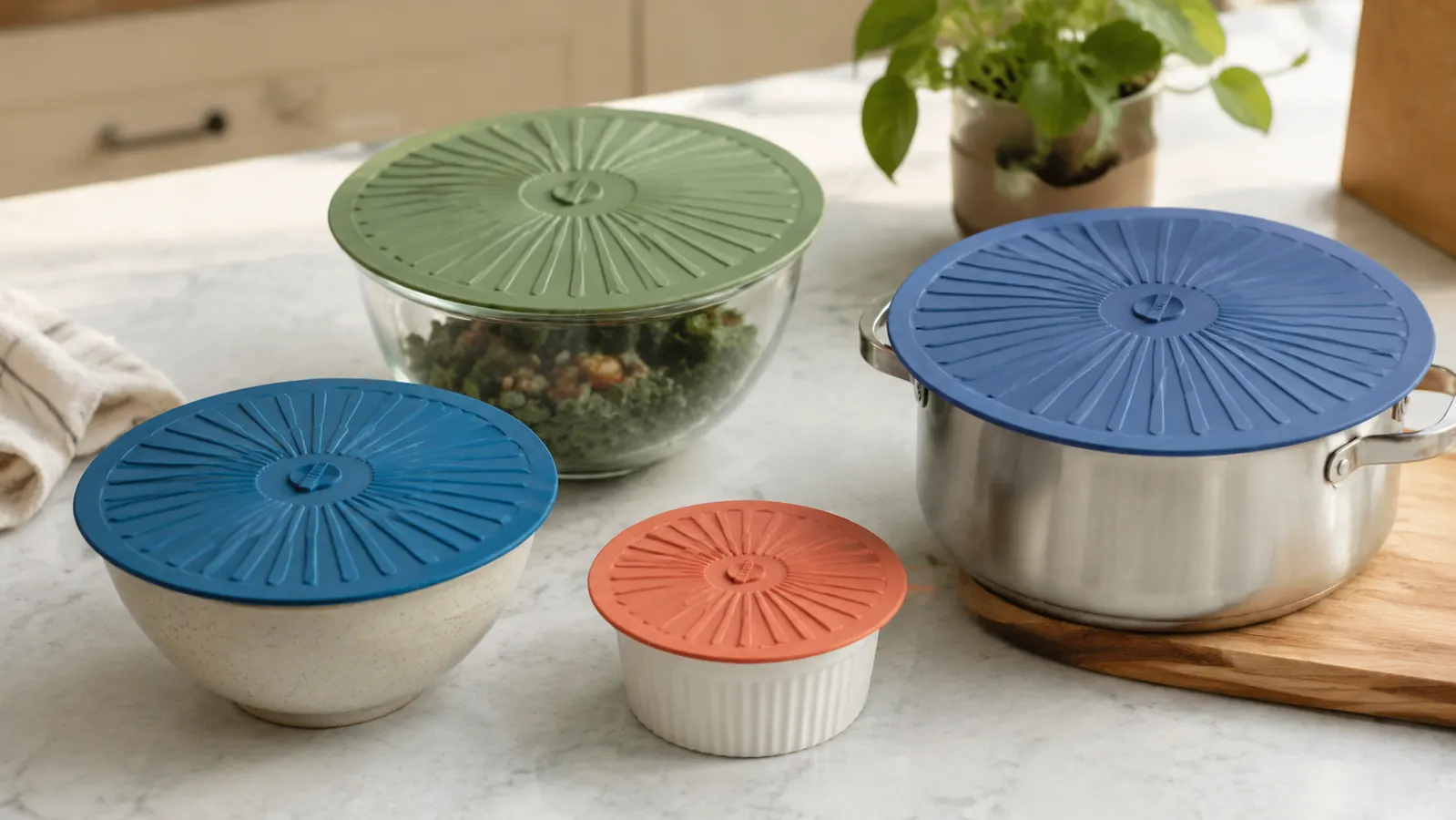
I used to throw away more food than I want to admit. Half a bell pepper going slimy in the crisper drawer. A bowl of rice pushed to the back of the fridge and forgotten for a week. Cut cantaloupe that dried out under a sheet of plastic wrap that never actually sealed the bowl. None of that was about buying too much at the store. It was about not seeing the food, not covering it well enough to keep it appetizing, and not having an easy way to store an odd-shaped leftover without digging out mismatched containers first. The GUANCI 8-pack of silicone lids changed more of that than I expected a box of stretchy silicone to change. Six sizes, eight lids, and every one stretches over whatever bowl, pot, or plate I already own instead of asking me to find a container built for a shape food almost never comes in.
Food waste in a normal kitchen is rarely one big decision. It's a dozen small ones: skipping the cover because it felt like extra effort, forgetting what's in an opaque container, letting a cut vegetable dry out because pulling out the plastic wrap roll felt like too much trouble. Here are ten specific ways these lids have cut down on that kind of waste in my own kitchen, not in theory, in the bowls I open every week.
The Box That Ended My 'I'll Just Throw It Out' Habit
Six sizes, eight lids, and a seal tight enough that half a bowl of anything gets eaten instead of pushed to the back of the shelf. See current availability and pricing on Amazon.
Amazon Check Today's Price on Amazon →It Fits the Bowl You Already Have, So You Actually Cover It
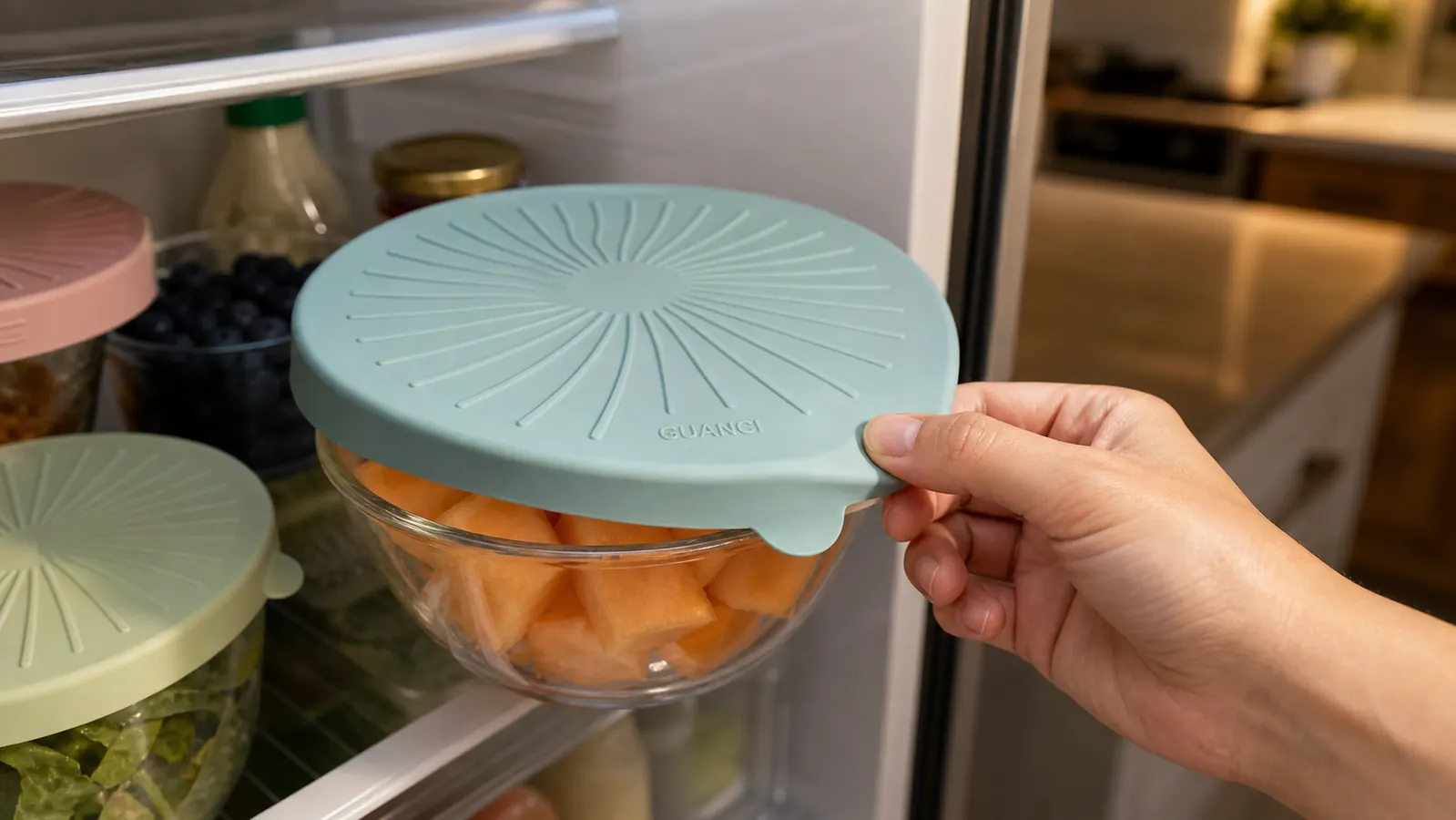
The biggest reason food went bad in my old routine wasn't spoilage speed, it was the extra step of transferring leftovers into a container before I'd bother storing them. A silicone lid skips that step. Whatever bowl the food is already in gets a lid stretched over the rim in about five seconds. When covering something drops to that little effort, I actually do it every time instead of leaving a bowl uncovered while I decide it's not worth the extra dishes.
Six Sizes Cover Shapes a Container Lid Never Will
Food doesn't come in the neat rectangles plastic storage containers are built for. Half an onion, a wedge of cut cantaloupe, a mismatched cereal bowl with no lid left in the cabinet, these used to get wrapped badly or skipped. With six sizes running roughly 2.5 to 8.5 inches, there's almost always one that fits what I'm storing, instead of forcing the food into whatever container happens to have a lid that day.
Reusable Means You're Never Just Out
Plastic wrap runs out at the worst moment, usually with three feet left, torn at an angle, stuck to itself before it reaches a bowl. When that happens, people often just leave the food uncovered rather than dig for foil. A reusable lid removes that failure point. It lives in the drawer, gets used, gets washed, goes back in, so there's never a night where the answer is 'we're out of a way to cover this.'
A Real Seal Keeps Cut Produce From Drying Out
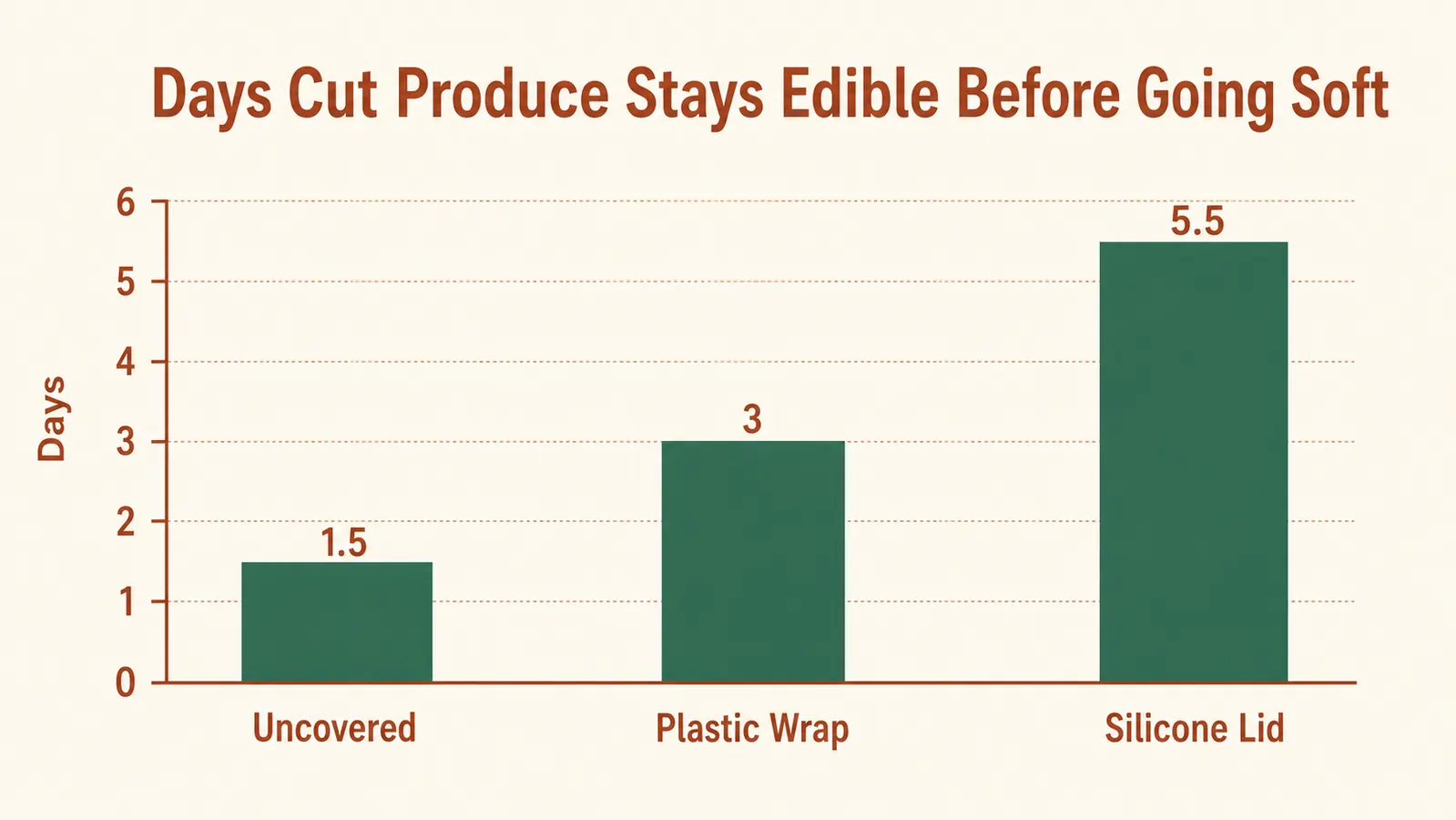
Plastic wrap looks sealed and often isn't, especially on anything round. Air gets in at the edges, and cut fruit goes leathery within a day. The silicone lid grips the rim with a raised lip underneath, and that tighter seal is the difference between cantaloupe still tasting like cantaloupe on day three versus a dried-out edge you slice off and toss. That trimmed-off edge, over a year of produce, is real waste a better seal simply prevents.
Nesting Storage Means the Lid Is Always Within Reach
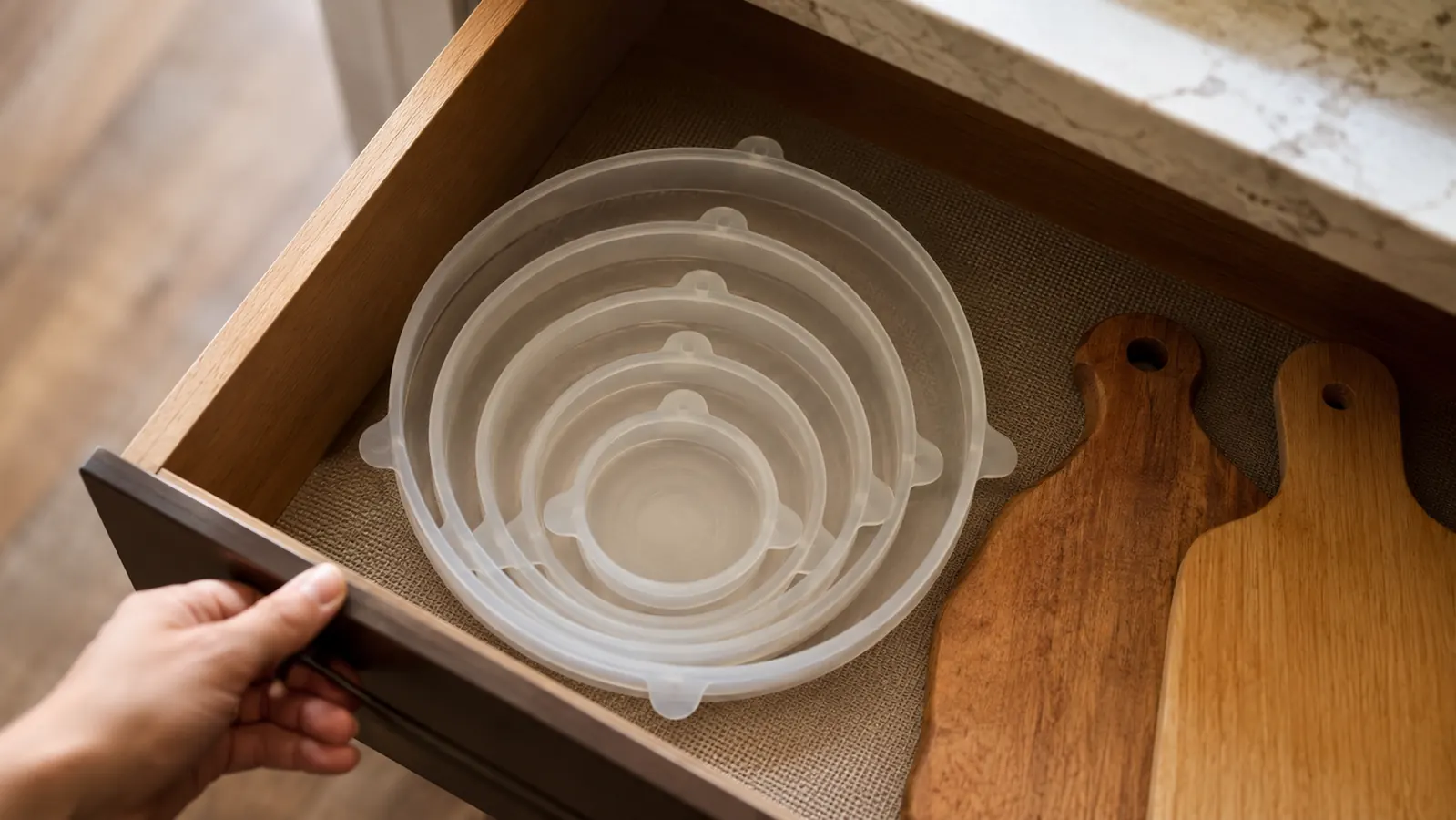
All eight GUANCI lids nest inside each other and fit flat in a shallow drawer, which sounds small until you notice how it changes your behavior. When the right size is one drawer-open away instead of buried under twist ties and old take-out lids, you actually grab it. A tool that's annoying to find is a tool that gets skipped, and skipping the cover is where food waste usually starts.
Microwave-Safe Means You'll Actually Reheat the Leftovers
A lot of leftovers get thrown away not because they've gone bad, but because reheating means dirtying a second dish or a splatter mess in the microwave. These lids go straight into the microwave over the same storage bowl, venting steam at the edges instead of trapping it. That's one less excuse to order takeout instead of eating the bowl of chili already in the fridge, which is where a lot of quiet food waste actually happens.
Dishwasher Safe, So the Habit Survives a Busy Week
Good storage habits usually fall apart the same way: something is annoying to clean, so it gets used less, then disappears into the back of a cabinet. These lids go straight into the top rack of the dishwasher and come out clean, no hand-washing required. On weeks I barely have time to cook, that's the difference between the habit continuing and reverting back to skipping the cover altogether.
Freezer Safe Means the Extra Portion Doesn't Get Tossed
Not every leftover is worth a whole freezer container. A half-cup of extra soup used to go straight in the trash because it wasn't enough to justify a dedicated container and lid. Now it goes into a small bowl with a small silicone lid, straight into the freezer, and actually gets used later instead of thrown out same-day because storing it properly felt like too much effort for too little food.
Bright Colors in the Drawer Act as a Visual Reminder
This one sounds small, but it matters more than I expected. Opening a drawer to a row of blue, green, and terracotta lids instead of a tangled ball of wrap and foil nudges me toward using them. A visible, colorful tool gets reached for automatically, where a roll of wrap buried in a drawer gets forgotten until you're already holding an uncovered bowl deciding it's not worth the search.
One Box Replaces a Rotating Cast of Failed Options
Before these, my kitchen ran on plastic wrap that tore, foil that never resealed twice, and mismatched container lids that lost their matching bottoms years ago. Each failed a little differently, and each failure meant a bowl going uncovered, or the food inside going bad and getting tossed with whatever packaging failed to protect it. One box of lids that actually work means fewer failure points, and less food quietly disappearing into the trash.
What I'd Skip
I wouldn't count on these GUANCI lids to replace a container for anything you need to carry somewhere, soup for a potluck, a marinade heading to a cookout. The seal is friction and suction against the rim, not airtight, and it can pop loose if a bowl tips sideways in a car. I also wouldn't buy the full 8-pack if you cook for one and rarely have leftovers, a smaller set covers the same ground. For the full breakdown of what held up over a year of daily use, see my year-long silicone lids review. If you want the exact routine I follow, here is how I store leftovers with silicone lids.
Most of my food waste was never about buying too much. It was a bowl that felt like too much effort to cover properly, so it didn't get covered at all.
Stop Losing Food to a Cover That Doesn't Actually Seal
If half your fridge waste comes down to wrap that never sealed right, this box of lids is the fix that's stuck for me. Check today's price below.
Amazon Check Today's Price on Amazon →