
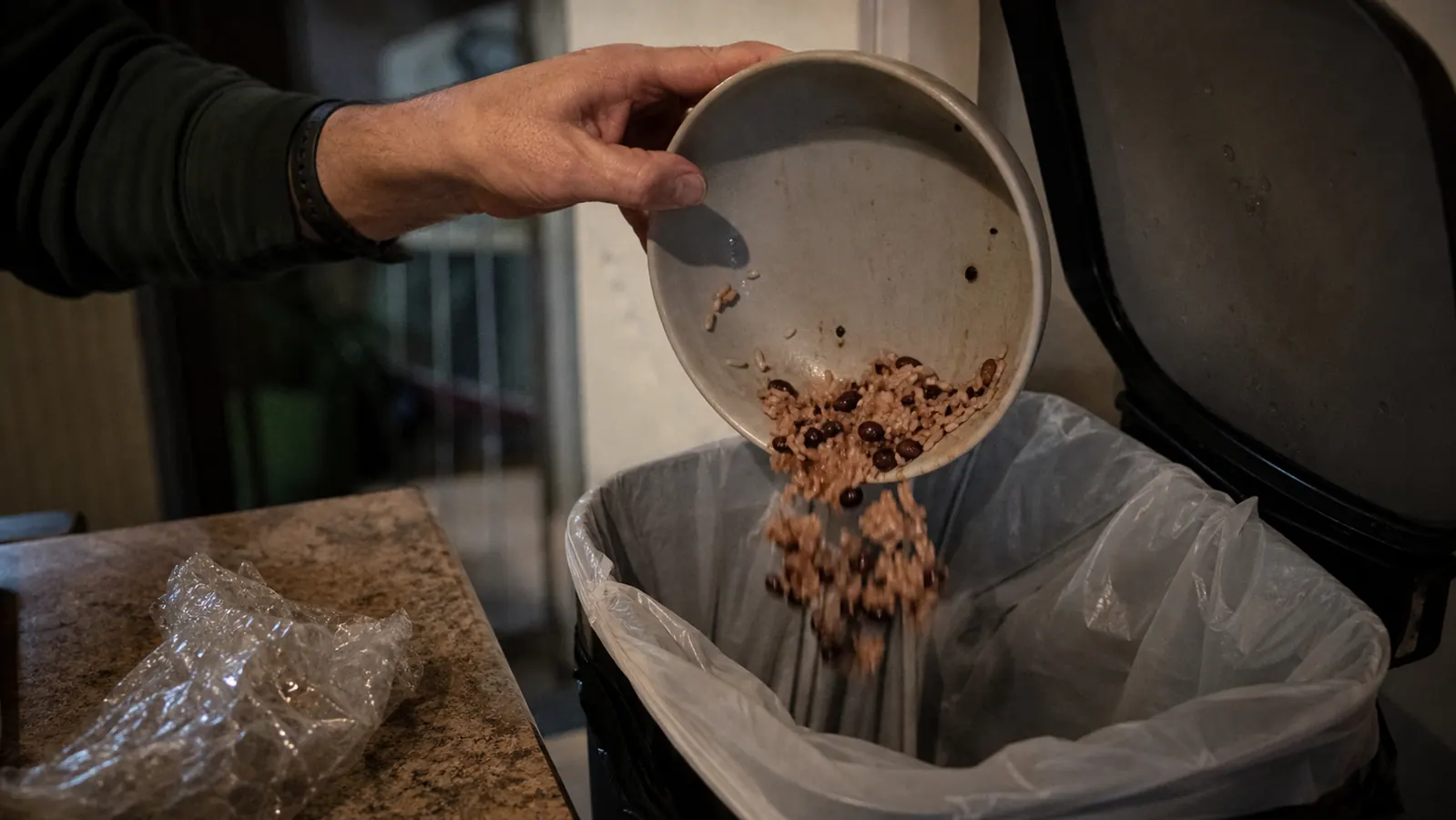
I started keeping a mental tally almost by accident. It was a Tuesday in February, I'd made a pot of black bean soup on Sunday, covered the leftover half with a sheet of plastic wrap that never quite sat flat, and by Tuesday the top layer had gone dry and slightly gray at the edges. I scraped the whole bowl into the trash without even tasting it first, because at that point it wasn't worth the risk. That was the third time that month I'd done the exact same thing with three different meals, and something about doing it a third time made me actually stop, notice, and go looking for a real fix, which is how a set of GUANCI silicone lids ended up in my cart by the end of that week.
I'm not a wasteful person, or at least I didn't think of myself as one. I meal prep on Sundays because my week is too busy to cook every night, and I buy groceries with a plan, not just whatever looks good in the store. So the waste wasn't coming from bad planning. It was coming from something smaller and dumber than that: the food was sitting in a fridge covered badly enough that by the time I got back to it, it wasn't appetizing anymore, and I'd rather toss it than eat something that looked half-dried-out.
My cabinet at the time was a graveyard of Tupperware, the kind everyone has, containers with no matching lid and lids with no matching container, stacked in a way that meant reaching for one always knocked two others onto the floor. Plastic wrap was the fallback, and it failed constantly. It stuck to itself before it made it over the bowl. It tore at an angle that left a gap at one edge. Roasted chicken thighs I'd made in bulk on a Sunday would dry out under a poorly sealed sheet by Wednesday, and I'd end up eating takeout instead because reheating something that looked sad wasn't appealing after a full day of work.
The week after the black bean soup, I actually counted. I went back through what I'd thrown out over the previous four weeks, roughly, from memory, because I don't keep a food waste journal like some kind of monk. Half a pot of soup. A third of a pan of roasted vegetables. Two servings of pasta salad that had gone slimy under a lid that never sealed. A full container of cut watermelon that dried out at the edges within a day. None of it was spoiled in the sense of being unsafe. It was just unappetizing enough that I chose the trash over eating it, and that choice, repeated four or five times a month, was adding up to real money and a genuinely uncomfortable amount of guilt every time I stood over the bin.
None of the food I threw away was actually spoiled. It just looked like something I'd rather not eat, and that's a cover problem, not a food problem.
The Fix Wasn't a Bigger Grocery Budget, It Was a Better Seal
A set of silicone lids that actually grip the rim of a bowl instead of a sheet of wrap that never quite sits flat. See today's price and current availability on Amazon.
Amazon Check Today's Price on Amazon →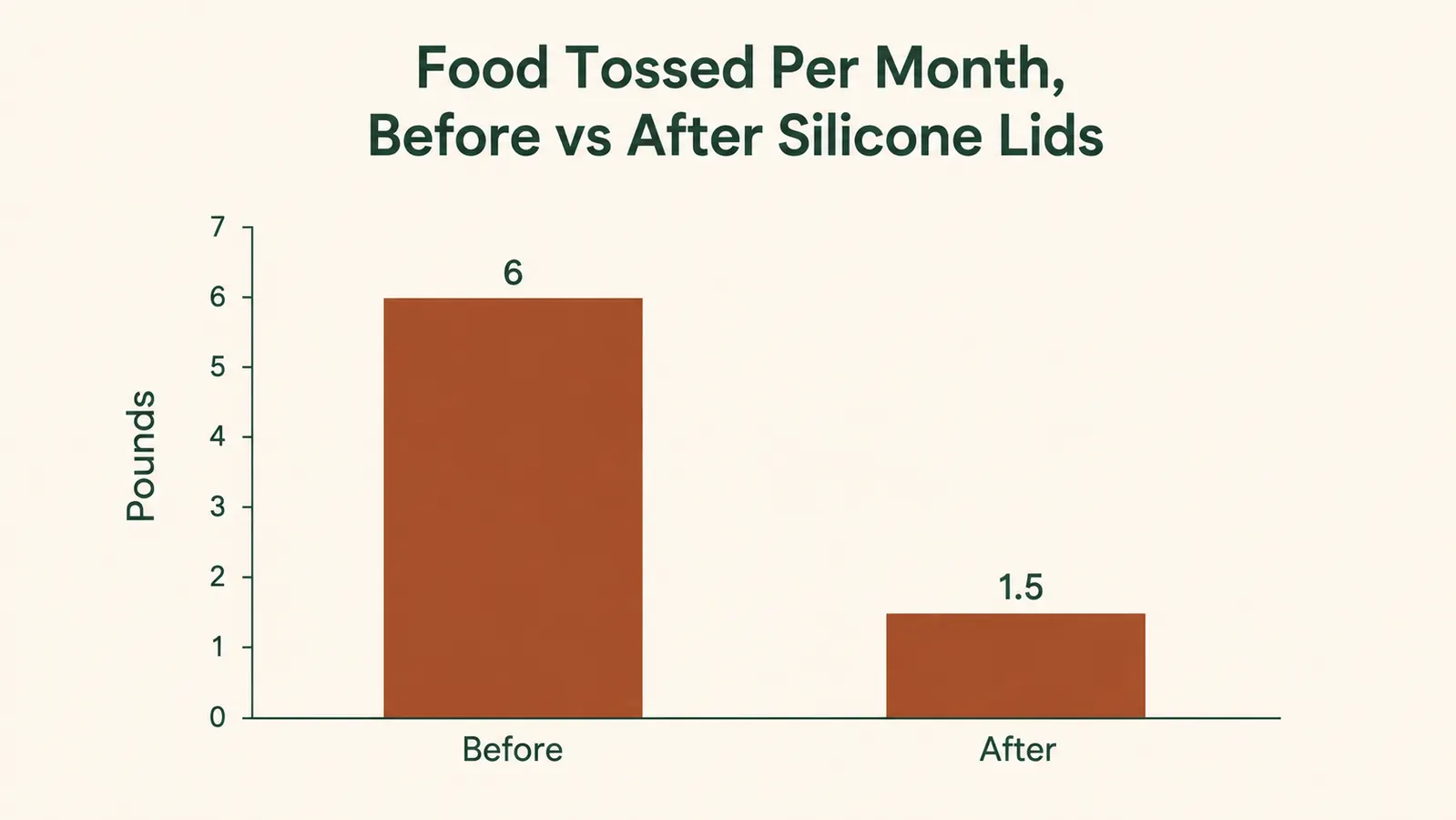
A friend of mine, Nadia, mentioned offhand that she'd switched to a set of silicone lids months earlier and hadn't bought plastic wrap since. I'll admit I was skeptical, mostly because I'd tried a similar-sounding product years before that turned out to be too stiff to actually stretch over anything, more of a novelty gift than a real kitchen tool. But the way she described it, grabbing a lid the way you'd grab a matching container lid, no measuring, no fighting with a torn sheet, was enough to get me to order the GUANCI 8-pack and actually try it before writing it off.
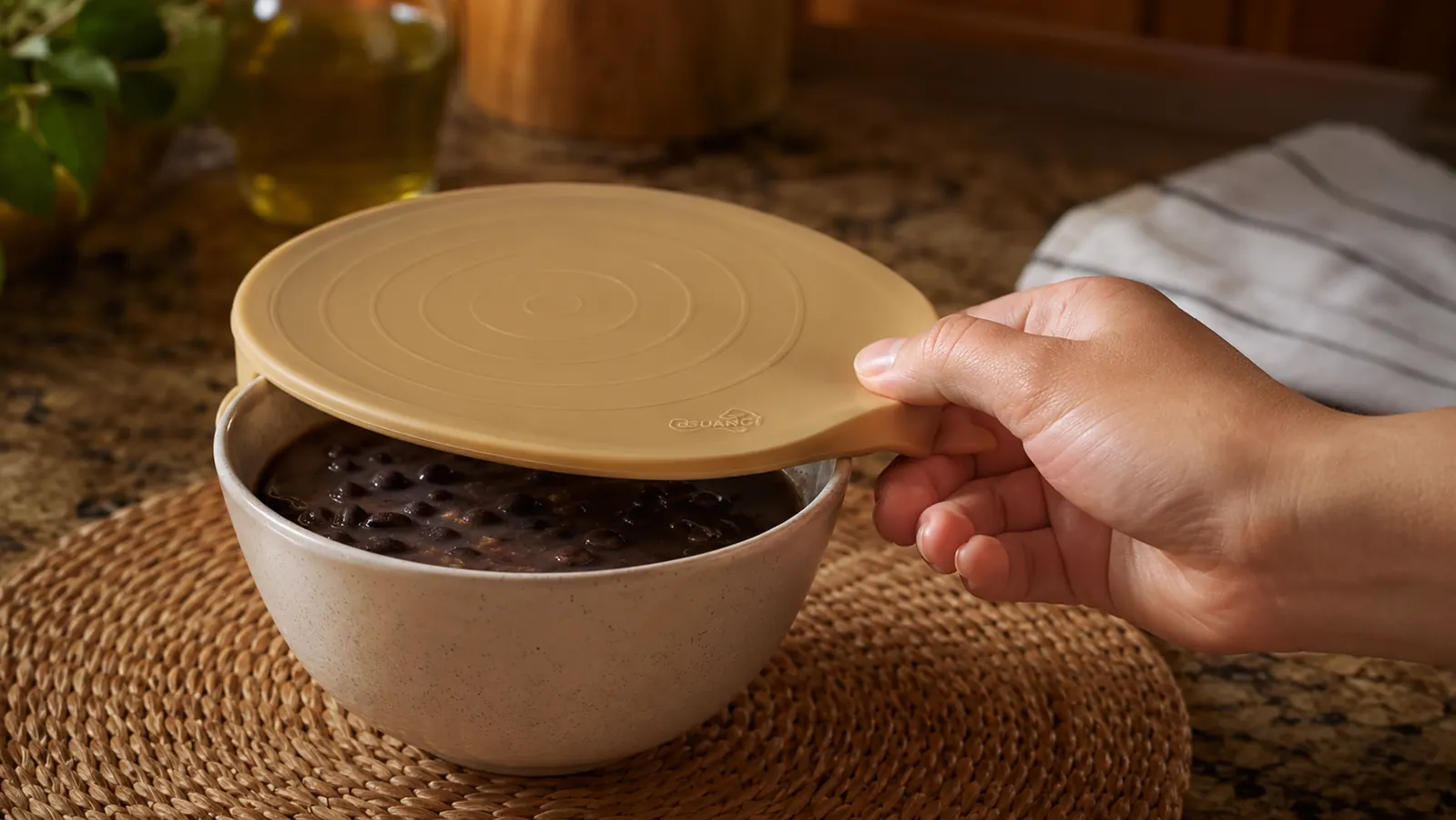
The first bowl I covered was leftover black bean soup, on purpose, the same food that had started this whole tally in my head. I stretched the mid-size lid over the rim, felt it snap down into a real seal, and put it in the fridge without thinking much more about it. Three days later, I pulled it out expecting the same dried-out edge I'd been throwing away for months. It wasn't there. The soup looked and tasted like it did the day I made it, and I ate the whole bowl standing at the counter, which felt like a small, slightly ridiculous victory over a problem I'd been quietly losing to for a year.
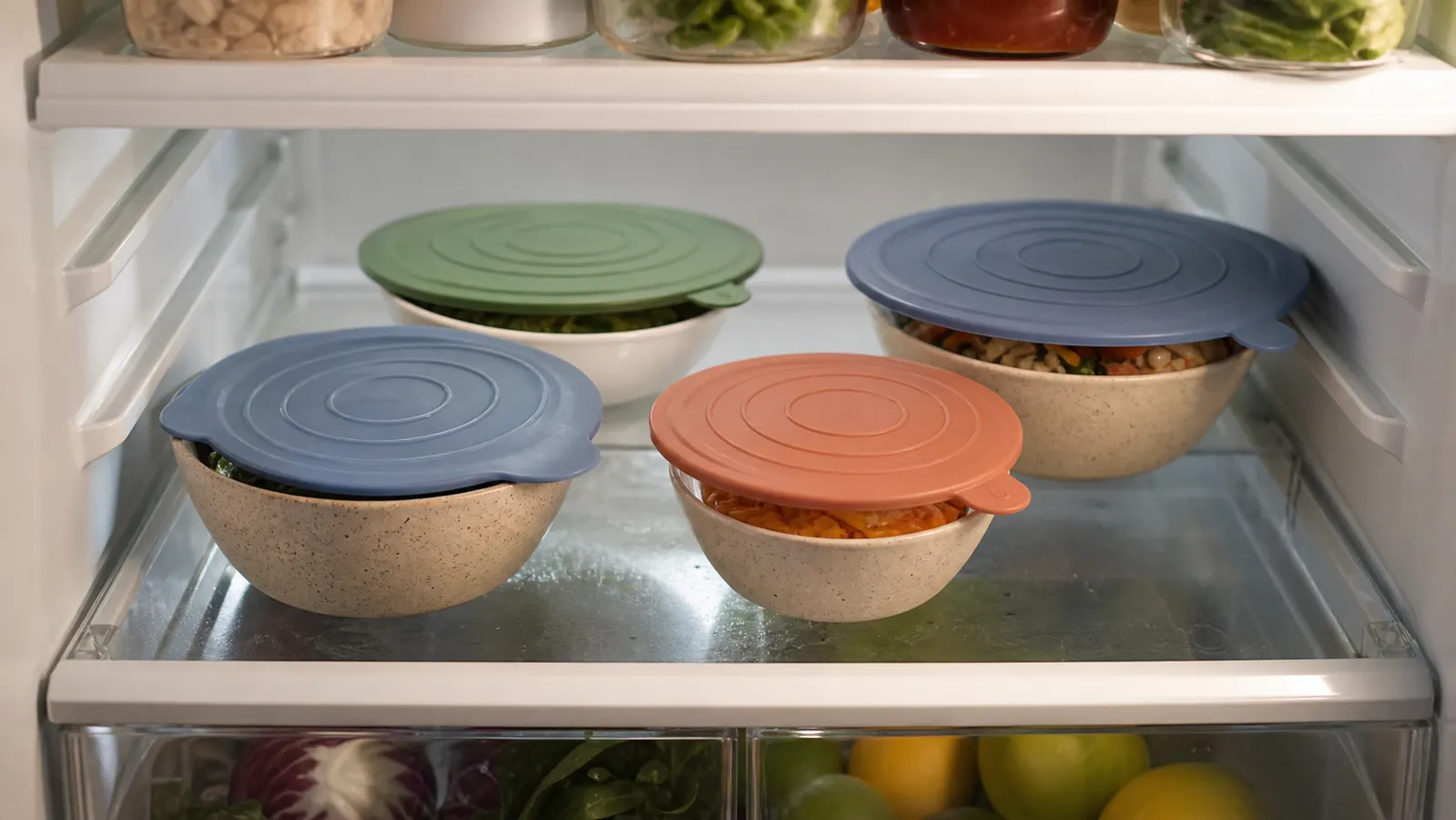
It wasn't one dramatic fix. It was a dozen small ones stacking up. Roasted chicken thighs that stayed moist under the GUANCI seal instead of drying out under wrap. A bowl of cut watermelon that lasted through the whole week instead of going soft by day two. Pasta salad that still tasted like pasta salad on day four, not day one. None of these are big wins on their own, but multiplied across a month, they added up to a fridge I actually trust, and a trash can I'm not embarrassed to open.
What I'd Tell You If We Were Sitting at My Kitchen Table
If you asked me straight, over coffee, whether these lids are worth the drawer space, I'd tell you the honest answer isn't about the lids being magic. It's that a proper seal changes whether you actually eat the food later, and eating the food later is the whole game. I still have weeks where I forget something in the back of the fridge and it goes bad anyway, that part of being human doesn't disappear because of a better lid. But the food that used to fail because of bad covering, the soup that dried out, the fruit that went soft, that category of waste has mostly stopped happening in my kitchen. If you're throwing food away for the same dumb reason I was, a bad seal and not a bad plan, this is a cheap and boring fix for a problem that was costing more than it looked like on paper.
Stop Losing Good Food to a Seal That Never Held
If your trash can has seen more good leftovers than it should, this is the swap that actually stuck for me. Check today's price and current availability on Amazon.
Amazon Check Today's Price on Amazon →