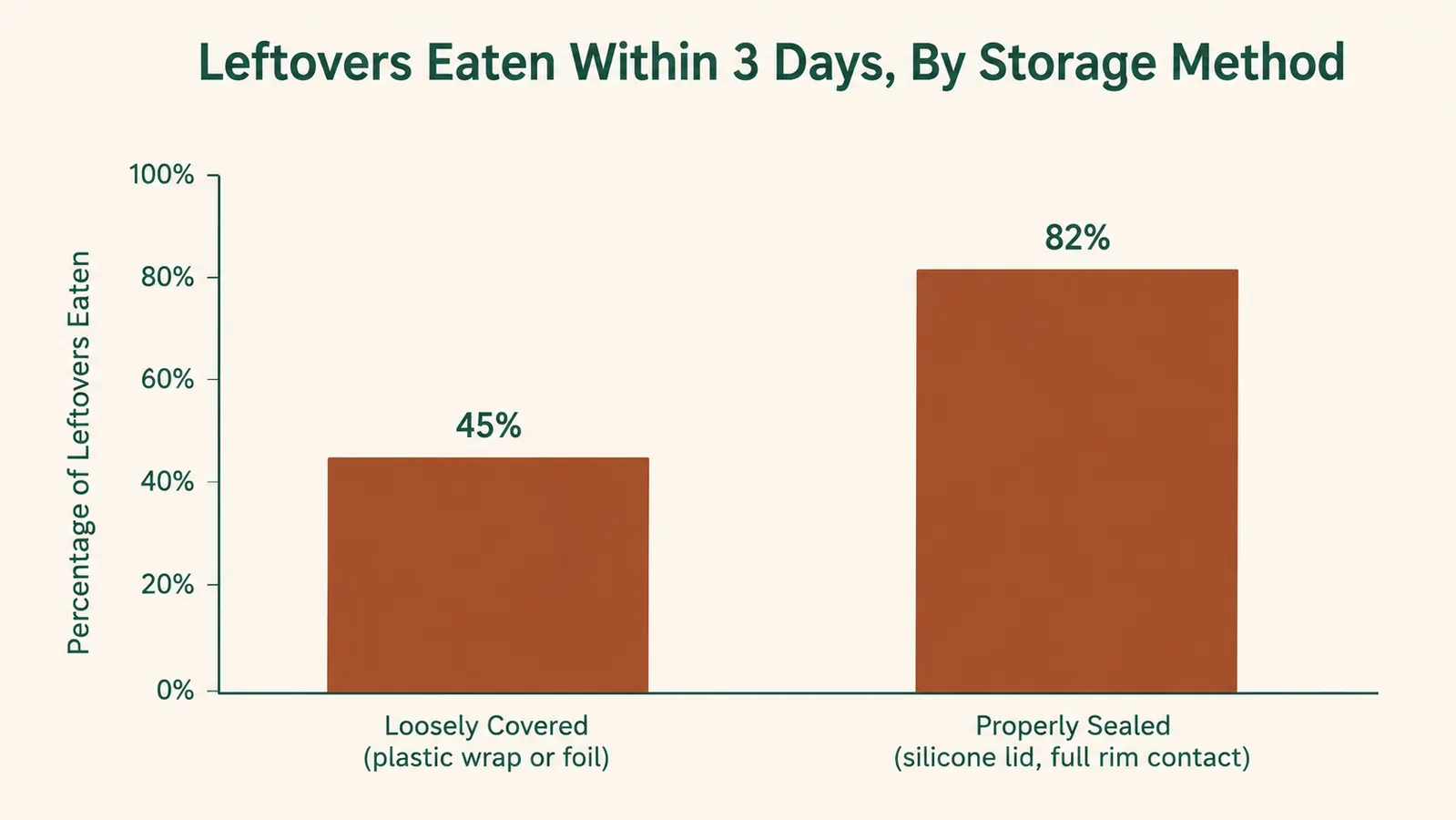
Most of the food that gets thrown out of a normal kitchen didn't go bad because it was old. It went bad because of how it sat in the fridge for three days first. A bowl of leftover jambalaya covered loosely with foil that never quite closed, a container of cut watermelon with a lid that popped off sometime overnight, a pint of quinoa salad pushed to the back of the shelf where nobody saw it again until it needed to be smelled before anyone would touch it. I've thrown away all of those, not because I forgot leftovers existed, but because the way they were covered didn't actually protect them, and once food looks even slightly off, most people won't risk it.
This is a step-by-step routine for storing leftovers so they hold up for the three to five days most cooked food is realistically good for, instead of the one and a half days a loosely wrapped bowl usually buys you. I've built this around GUANCI's reusable silicone lids because that's the tool that made the routine actually stick in my own kitchen, but the habits underneath it matter more than the specific gadget. Get the habits right and any decent cover will do a better job. Skip the habits and even the best lid on the market won't save a bowl that was doomed before it went in the fridge.
I learned most of this the slow way, by throwing out enough half-eaten bowls to notice a pattern instead of reading it off a food safety chart. None of the five steps below are complicated. None of them take more than a minute. What they have in common is that every one of them is easy to skip on a tired weeknight, and skipping any single one is usually enough to undo the other four. The routine only works as a whole.
Start With a Cover That Actually Seals
A set of reusable silicone lids in a few different sizes makes every step below faster to actually do. See current availability and pricing on Amazon.
Amazon Check Today's Price on Amazon →Step 1: Let it cool, but don't let it sit out too long either
There's a real tension here that most storage advice glosses over. Putting a steaming hot pot of soup straight into the fridge under an airtight cover traps moisture and warms the shelf around it, which isn't great for anything else already in there. But leaving food out on the counter to cool completely, especially something like roasted chicken thighs or a cream-based sauce, pushes it past the safe window before it ever gets covered at all.
The middle ground that actually works: transfer hot food into a shallow, wide bowl instead of a deep pot, which cuts cooling time dramatically because more surface area is exposed to air. Give it roughly fifteen to twenty minutes uncovered on the counter, just long enough that steam has mostly stopped rising, then cover it and get it into the fridge. That fifteen-minute window is short enough to stay well inside food safety guidelines and long enough that a silicone lid won't trap a wall of condensation against the food underneath it.
This step is where a lot of soggy leftovers get ruined before storage even starts. Rice and pasta especially will turn gummy if they're sealed while still steaming, because the trapped moisture keeps cooking them from the outside in. A few minutes of patience here changes the texture of what you're eating three days later.
Step 2: Use the smallest container the portion actually fits
This is the habit I broke the fastest once I had a set of GUANCI lids in six different sizes instead of two or three mismatched Tupperware pieces. Half a cup of leftover marinara doesn't need to sit in a quart-sized container with three inches of empty air above it. That extra air space speeds up oxidation and dries out the top layer of food faster than a snugly covered portion, which is part of why the top inch of a half-eaten dish so often looks worse than the rest of it.
Right-sizing the container isn't just about tidiness. Less exposed surface area means less contact with air, which means slower spoilage and less freezer-burn-style drying even in the regular fridge. With a stack of differently sized lids in a drawer, I actually bother to do this instead of grabbing whatever bowl is already clean and calling it good enough. That small bit of friction, matching size to portion, is exactly the kind of step that gets skipped when the right-sized option isn't sitting right there.
A quick gut check that works even without measuring: if the food doesn't reach at least halfway up the sides of the bowl, size down if you can. It's a small adjustment, but over a week of storing three or four different leftovers, it adds up to a noticeably fresher fridge by Thursday than one where everything sits in oversized containers with more air than food inside them.
Step 3: Get full contact around the entire rim, not just a drape
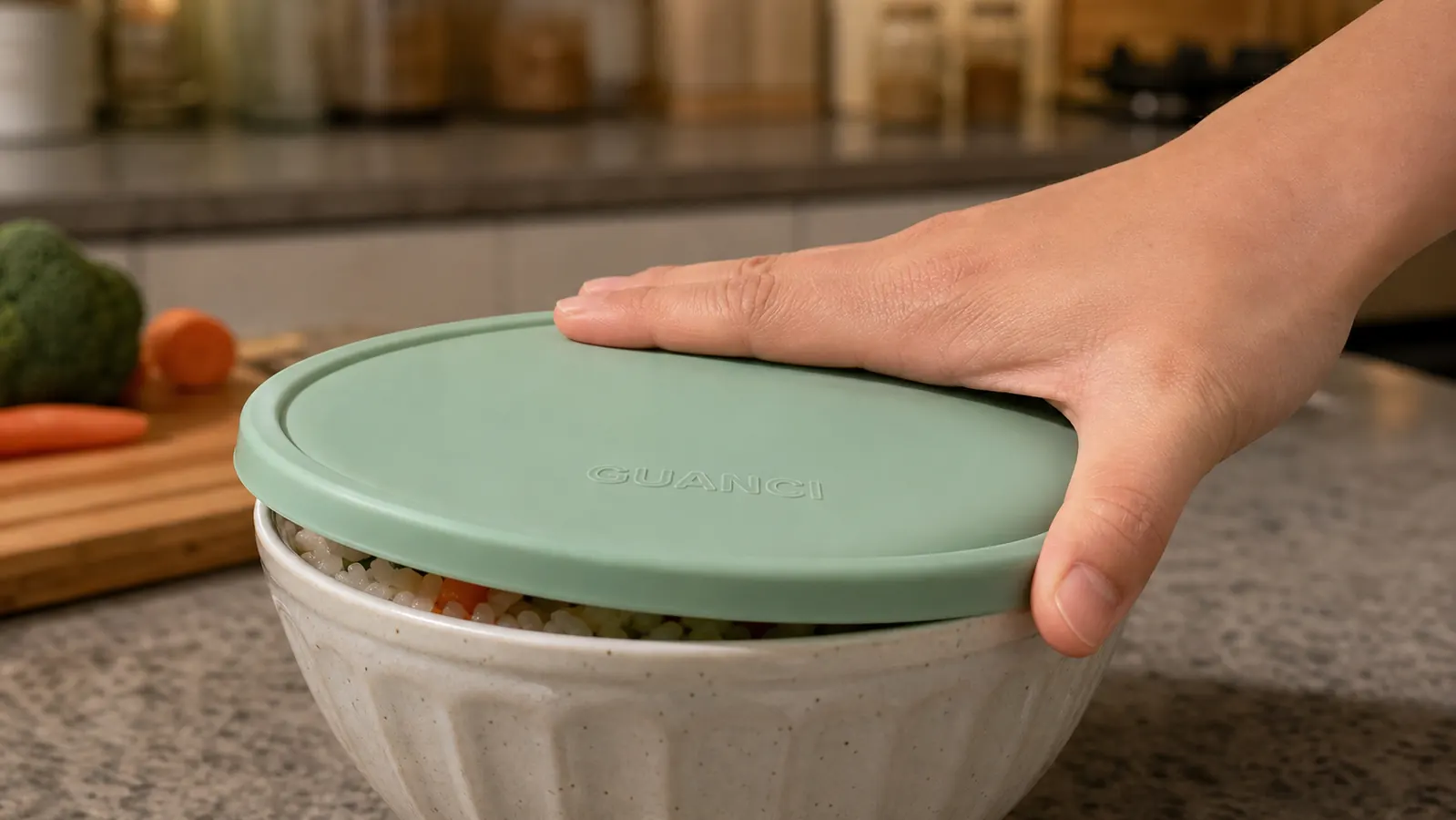
This is the step people get wrong even when they're using the right tool. A silicone lid stretched loosely over one side of a bowl and left uneven on the other side isn't sealed, it's just resting there, and it'll perform about as well as a sheet of plastic wrap that didn't fully stick. The seal only works when the raised lip on the underside of the lid makes continuous contact with the bowl's rim all the way around.
In practice that means pressing down with your fingers in a full circle after you stretch the lid over the top, not just laying it on and walking away. On a bowl with a slightly uneven or chipped rim, I'll go around twice to be sure. It takes maybe ten extra seconds and it's the difference between a bowl that holds its seal through three days of opening and closing the fridge door and one that's come loose by the next morning. If you're deciding whether this kind of lid is even worth switching to over what you're using now, I laid out where the tradeoffs land in silicone lids vs plastic wrap, since the honest answer depends a lot on the shapes of dishes you actually cook with.
One more thing worth checking here: match the lid size to the bowl, not just close enough. A lid that's noticeably larger than the rim will stretch thin and lose tension faster, and one that's too small won't reach the edge at all. Somewhere in the middle, sized just slightly smaller than the bowl's opening, is where the seal holds tightest and stays tight the longest.
Step 4: Store it where you'll actually see it again
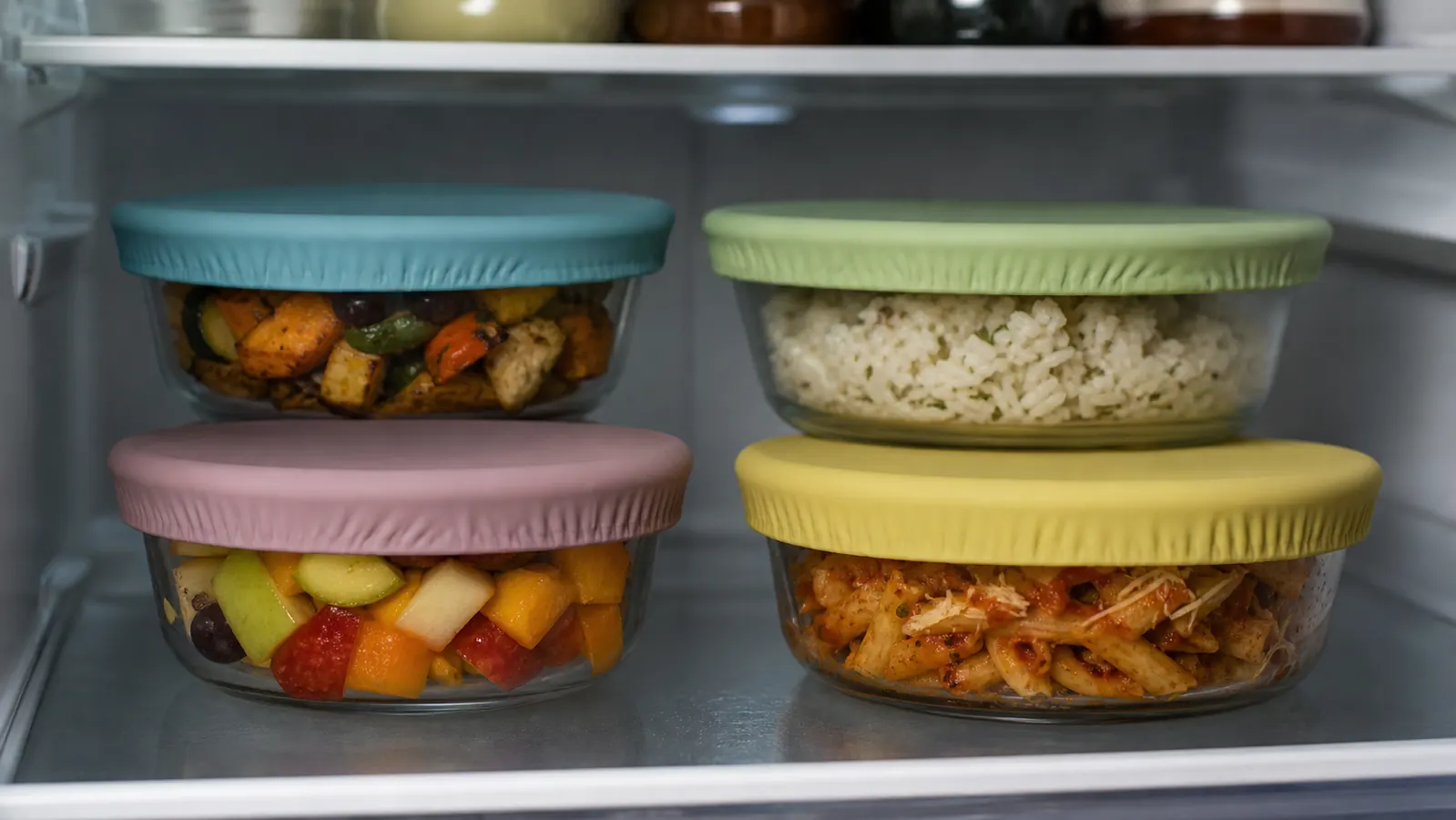
A perfectly sealed bowl of leftovers does no good if it gets pushed behind a jar of pickles and forgotten for a week. This sounds obvious written out, but it's the single biggest reason food gets wasted in a normal fridge, not spoilage, just being out of sight. I keep the front shelf, eye level, reserved for whatever needs to get eaten in the next two days, and I use clear glass bowls under the lids specifically so I can see what's in there without opening anything.
This is another spot where the right cover makes the habit easier instead of harder. A colorful GUANCI lid stretched over a clear bowl is visible and identifiable at a glance, cut fruit in one, leftover roasted vegetables in another, without needing a label or a guessing game. Opaque containers stacked three deep in the back of a shelf are where food actually disappears, not because anyone meant to waste it, but because nobody remembered it was in there.
I also try to run a loose first-in, first-out order on that front shelf, oldest bowl closest to the door, newest pushed slightly behind it. It's not a strict system, and I don't always follow it perfectly, but even a rough version of it means the two-day-old bowl of leftover jambalaya gets eaten before the fresh batch of roasted vegetables, instead of the other way around.
Step 5: Reheat it without switching containers
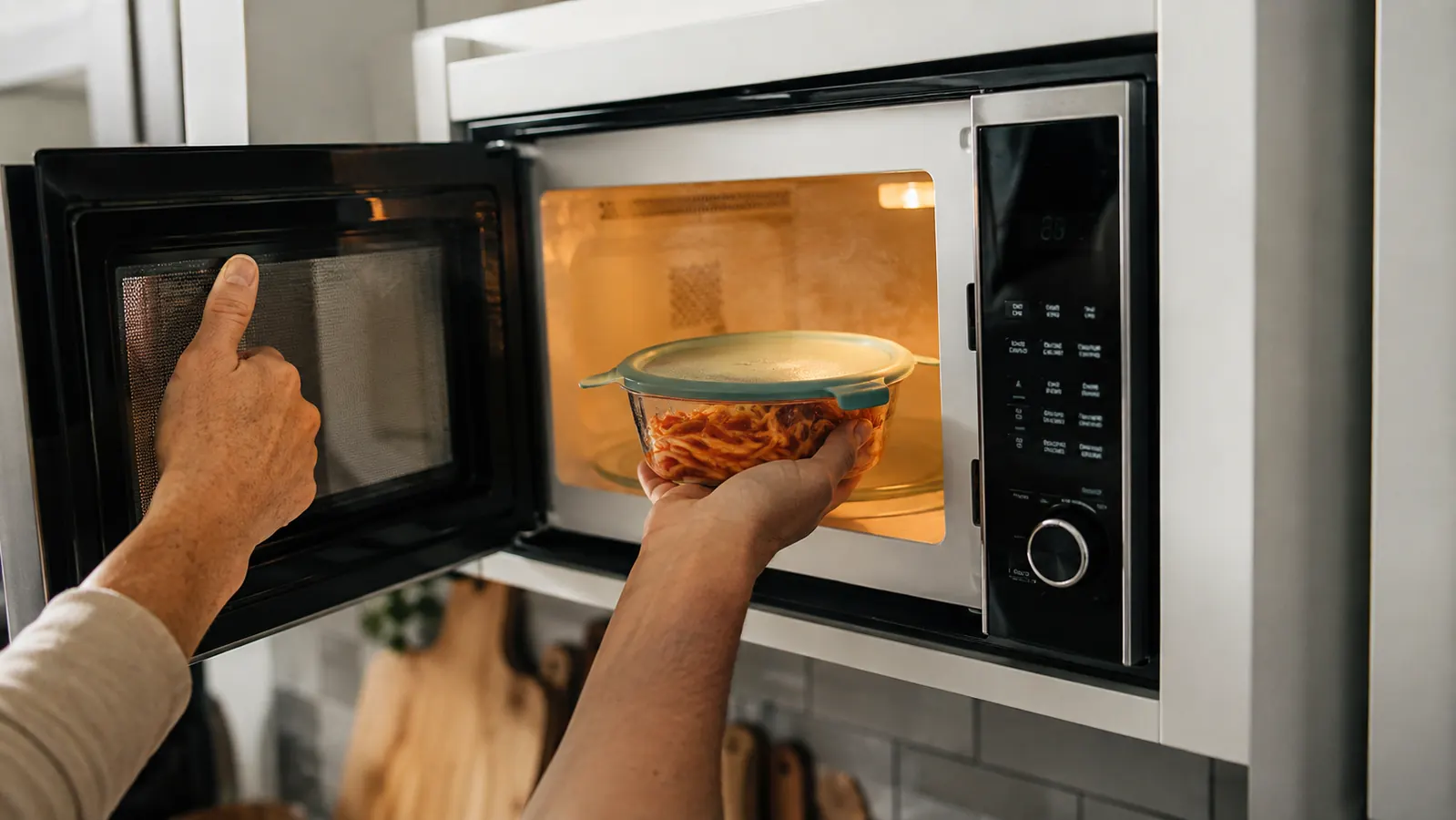
The last habit is less about preventing waste and more about keeping the whole system easy enough to stick with. If a covered bowl of leftovers has to be dumped into a separate microwave-safe dish before reheating, that's one more thing to wash and one more excuse to just order takeout instead. A lid that's microwave safe lets you go straight from fridge to microwave to table using the same bowl the whole way through.
The lid also does real work here. Stretched loosely back over the top, it traps enough heat to reheat evenly while venting a little steam at the edges, which keeps things from drying out the way an uncovered bowl in the microwave does. I've reheated a bowl of leftover pasta this way more nights than I'd like to admit, and the sauce doesn't come out with that dried, splattered rim you get from skipping a cover entirely.
One caution worth repeating here: don't reheat anything fully sealed and airtight with no venting at all. A silicone lid draped loosely, not pressed into a full vacuum seal, lets pressure escape naturally. That's normal and expected, and it's part of why these work fine in a microwave where a truly airtight container sometimes doesn't.
What Else Helps
Beyond the five steps above, a couple of smaller habits stack on top well. First, do a quick fridge check once a week, usually the night before grocery shopping, and pull anything that's been sitting more than four or five days regardless of how it looks. Second, if you know something won't get eaten in that window, move it to the freezer on day two or three instead of waiting until it's already borderline. A silicone lid holds up fine in the freezer short-term, though the silicone does stiffen at freezer temperatures and gets harder to peel off cold, so for anything you're freezing for more than a few weeks, a dedicated freezer-safe container is still the better call.
And third, keep the lids themselves visible and easy to grab. Mine live in a shallow drawer right next to the bowls, sorted loosely by size so I'm not digging through a tangle to find the one I need. A good habit that requires hunting through a cluttered cabinet for the right tool is a habit that quietly stops happening after a week or two. The whole point of this routine is that none of it should feel like extra work, it should feel like the fastest way to put a bowl away, which is the only reason it's lasted this long in my kitchen.
The food I still throw away is never the food I covered properly. It's always the bowl I meant to get back to and never saw again.
The Simplest Change That Actually Cuts Down on Waste
A set of reusable silicone lids in a range of sizes makes every step in this routine faster and more likely to actually happen. Check today's price and current availability.
Amazon Check Today's Price on Amazon →