
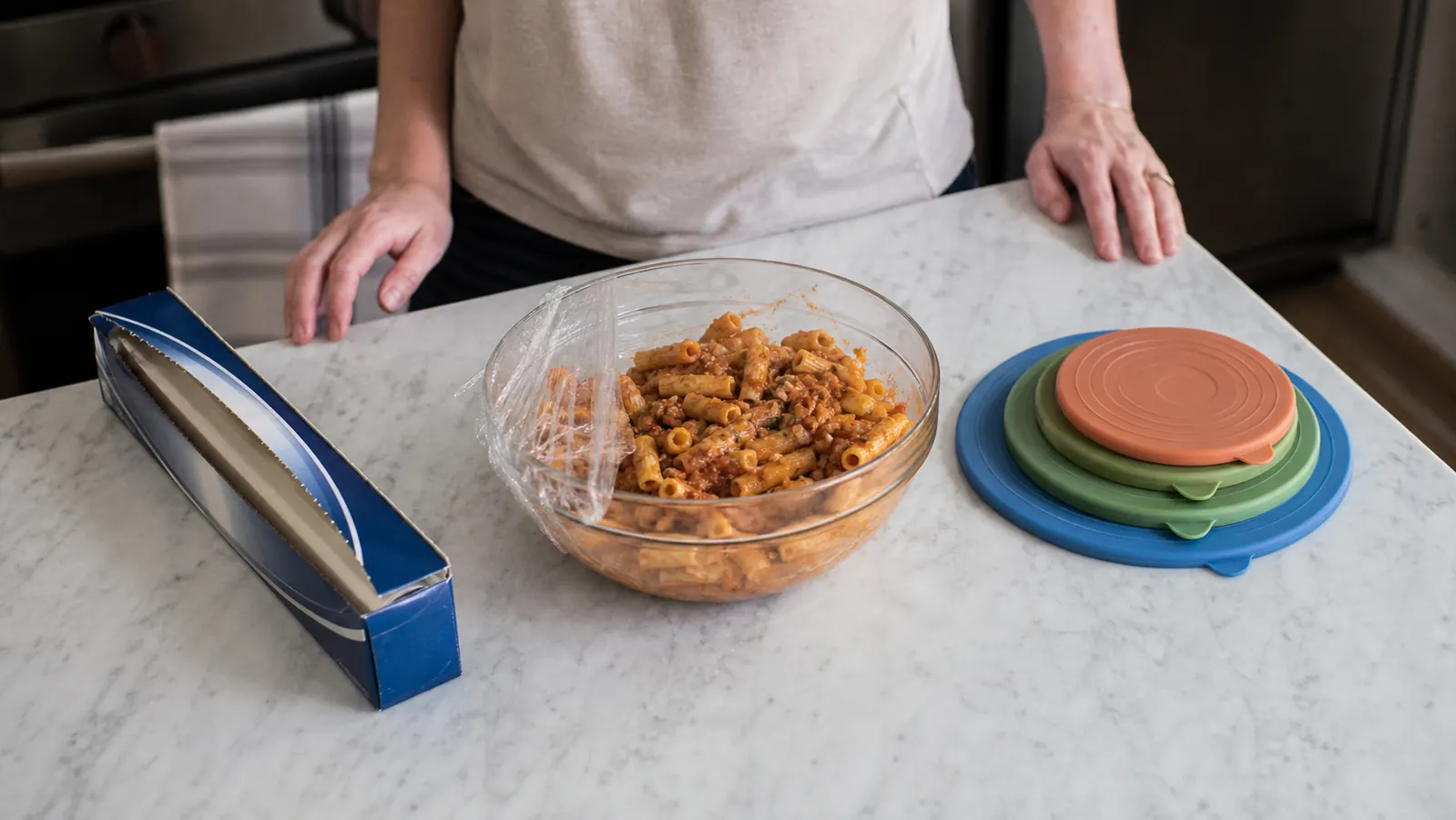
Short answer, if you're standing in your kitchen right now trying to decide what to buy: for round and oval containers you already own, the GUANCI silicone lids replace plastic wrap almost entirely and pay for themselves within a couple months. For odd-shaped dishes, the freezer, and covering raw meat you don't want touching silicone, plastic wrap still earns a spot in the drawer.
I didn't switch overnight, and I want to be upfront about that because a lot of comparison posts read like the writer bought both products yesterday and wrote the review that same afternoon. I bought the 8-pack after getting tired of tearing off a sheet of wrap for a single cup of leftover rice, using it once, and throwing it away twenty minutes later. That felt wasteful in a way I couldn't ignore once I noticed it, so I set up an actual test.
For two months I kept both a roll of plastic wrap and the silicone lid set on the counter and let myself reach for whichever one made sense for the container in front of me, without forcing it either way. I kept a rough tally of what I used and when I fell back on wrap out of habit versus necessity. That's the comparison below, not a sales pitch dressed up as a review.
| What Matters | GUANCI Silicone Stretch Lids | Plastic Cling Wrap |
|---|---|---|
| Cost per use after 3 months | Low cost per use, lids paid for themselves by week 6 | Very low cost per sheet, but you buy a new roll every 4-5 weeks |
| Reusability | Same lid, washed and reused 40+ times so far | Single use, into the trash after one cover |
| Seal on round containers | Tight, stays put in the fridge and on the counter | Snug at first, loosens within a day |
| Seal on square or rectangular dishes | Bunches at the corners, gaps at the edges | Molds to any shape, no gaps |
| Microwave safe | Yes, vents steam without splatter | Not directly on food, most brands warn against contact |
| Covering raw meat or fish | Works, but I don't love scrubbing raw juices out of silicone | Toss it and it's gone, no cross-contamination worry |
| Freezer use | Fine short-term, but the seal can loosen as food shrinks | Wraps tight against the food, less freezer burn on odd shapes |
| Monthly plastic waste | Roughly 15 square feet, mostly for the shapes lids can't cover | Roughly 200 square feet, a full roll |
| Storage footprint | Nests flat in a drawer, takes up a few inches | One box on the shelf, but you keep buying more |
Where the Silicone Lids Win
The obvious one is money and trash, but let's put real numbers on it instead of hand-waving. Before I switched, I was going through a 200-square-foot roll of plastic wrap almost every month between covering bowls, wrapping half an onion, and sealing up casserole leftovers. After switching, I still use wrap, just for the shapes the GUANCI lids can't handle, and that's dropped to around 15 square feet a month. That's less trash going out every week and less money spent replacing something I was throwing away after one use.
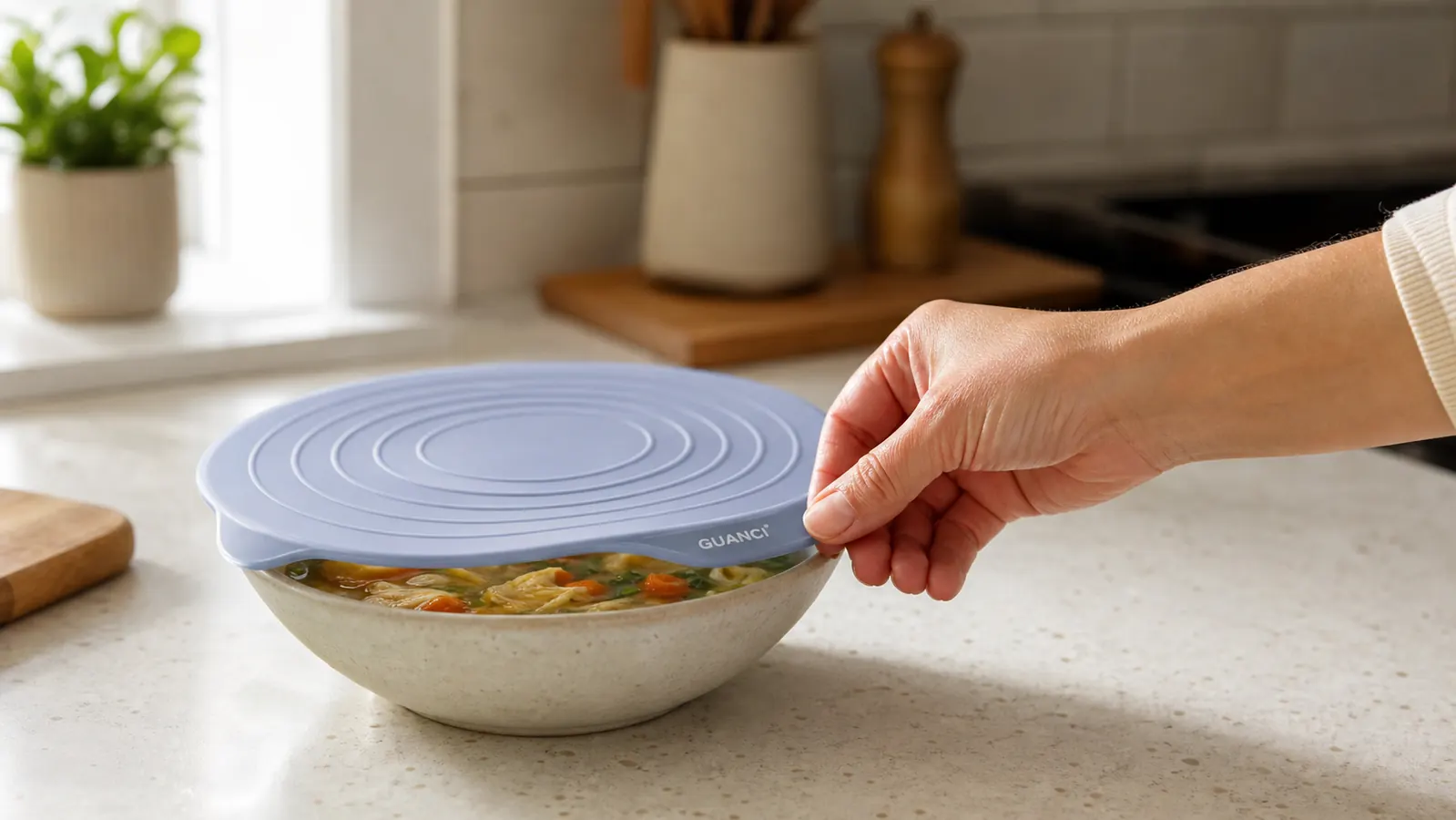
The bigger win for me is the actual seal on anything round. My go-to lunch bowl is a straight-sided ceramic bowl about 5.5 inches across, and the matching lid in the 8-pack grips the rim and stays put through a trip to the fridge, a reheat in the microwave, and a wash in the dishwasher. Plastic wrap on that same bowl looks fine when you first stretch it on, but by the next morning the corners have lifted and the fridge air has gotten in. I noticed my leftover soup developing that slightly dried-out skin on top within a day of using wrap, and I don't get that with the lids.
Microwaving is the other place the difference is noticeable. I reheat leftovers most weeknights, and plastic wrap directly touching food in the microwave has always made me a little uneasy, warnings on the box aside. The silicone lids sit over the bowl, vent a bit of steam so nothing explodes, and don't touch the food at all. No splatter on the microwave walls, no wrap melting onto the rim of the bowl, which happened to me exactly once with a too-hot bowl of chili and was enough to make me stop trying.
There's also a small convenience win I didn't expect going in. With wrap, I have to find the box, tear off a piece without it sticking to itself, and smooth it down without a bubble letting air in. That's maybe fifteen seconds, but it's fifteen seconds of mild frustration multiple times a day. Grabbing the right silicone lid off the stack and stretching it over the bowl takes about the same time but doesn't involve fighting a static-charged sheet of plastic that wants to fold onto itself the second it leaves the box.
Where Plastic Wrap Still Wins
I'm not going to pretend wrap is obsolete in my kitchen, because it isn't. The single biggest gap in the lids is anything that isn't round or oval. I have a rectangular glass baking dish I use for lasagna and roasted vegetables at least once a week, and none of the six lid sizes in the set seal it properly. The silicone bunches at the corners and leaves gaps along the long edges, which defeats the whole point. Plastic wrap, by contrast, doesn't care about shape at all. It stretches over square, rectangular, or weirdly-shaped bowls equally well, because it has no seal geometry to fail in the first place.
Raw meat and fish is the other place I still reach for wrap. I can wash silicone lids in the dishwasher and they come out fine, but there's something about scrubbing raw chicken juice residue out of the underside of a lid that I'd rather not deal with on a Tuesday night. A sheet of wrap goes over the plate, does its job, and gets thrown away with the mess still on it. Same story with strongly scented things like sliced onion or garlic. Silicone can hold onto smell after repeated use even with a good wash, and wrap just leaves with the smell attached.
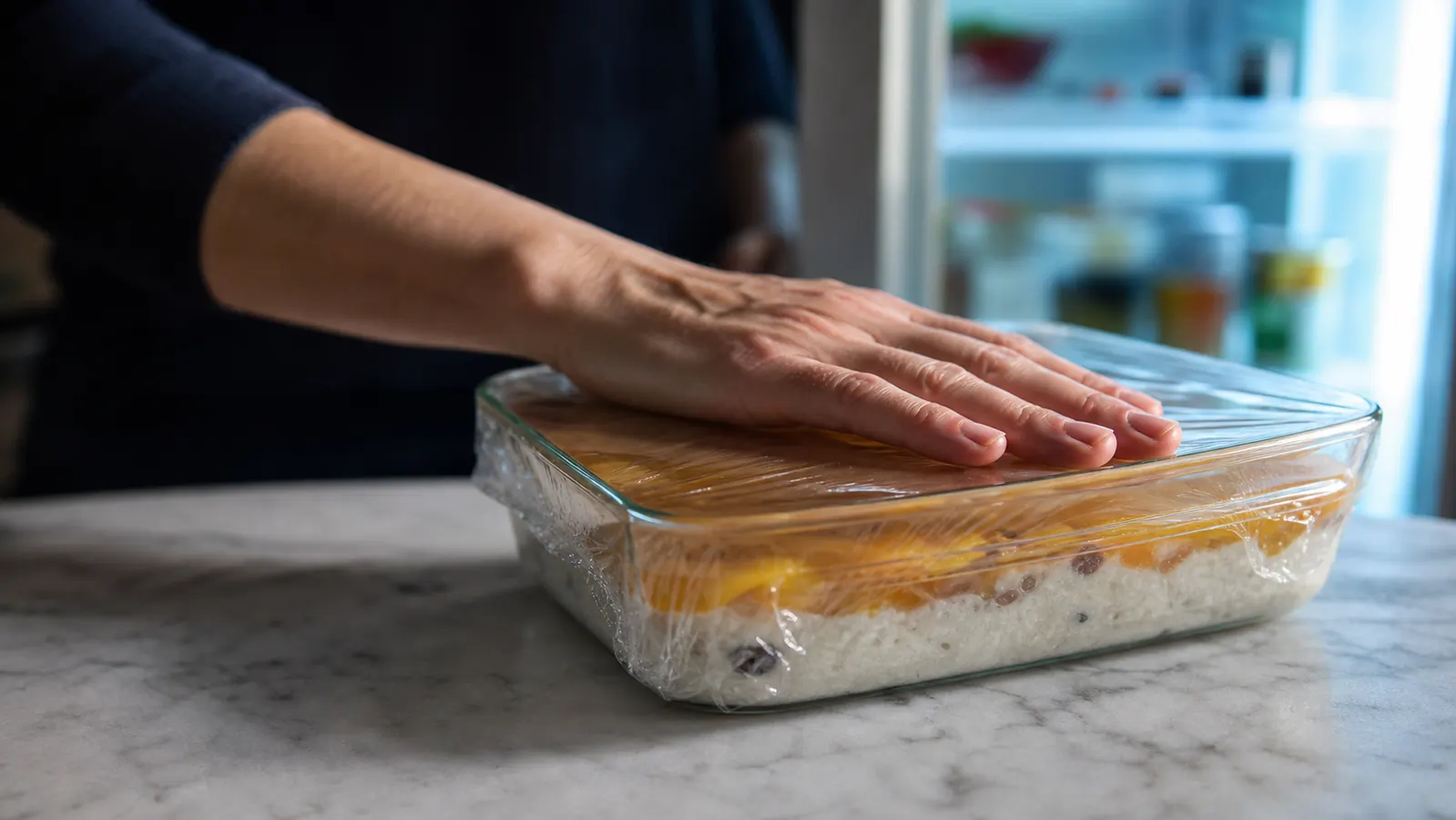
Wrap also wins on anything I need to seal tight against the surface of the food itself, not just over the rim of a container. Covering a bowl of dough while it proofs, pressing plastic directly onto the surface of a pudding so a skin doesn't form, or wrapping a cut avocado tight against the flesh to slow browning. Silicone lids sit over the top of a container with air still inside, so if the goal is contact with the food and not just covering the opening, wrap does that job and the lids don't.
The lids didn't replace wrap. They replaced the ninety percent of wrap use that was really just about covering a round bowl for a day or two.
The Real Math on Cost
I want to be specific here because vague waste-reduction claims aren't that useful. A standard 200-square-foot roll of plastic wrap runs in the typical range depending on the brand, and I was buying a new one roughly every month. Over a year that's a meaningful amount just on wrap, and that's before factoring in the trash bags it fills. The 8-pack of GUANCI lids is a one-time purchase, and eight months in, mine show no sign of tearing, splitting, or losing their grip.
The break-even point in my kitchen landed somewhere around six weeks, once I stopped buying wrap as often as I used to. After that it's straight savings, minus the occasional new roll of wrap for the shapes and jobs the lids can't cover. That's a smaller ongoing cost than what I was spending before, and it comes with noticeably less plastic going into the trash can every week, which mattered to me more than I expected it would.
See the sizes that fit your actual bowls
If most of what you cover is round bowls, mugs, and pots, the 8-pack covers six different sizes and will replace the bulk of your plastic wrap use within a few weeks.
Amazon Check Today's Price on Amazon →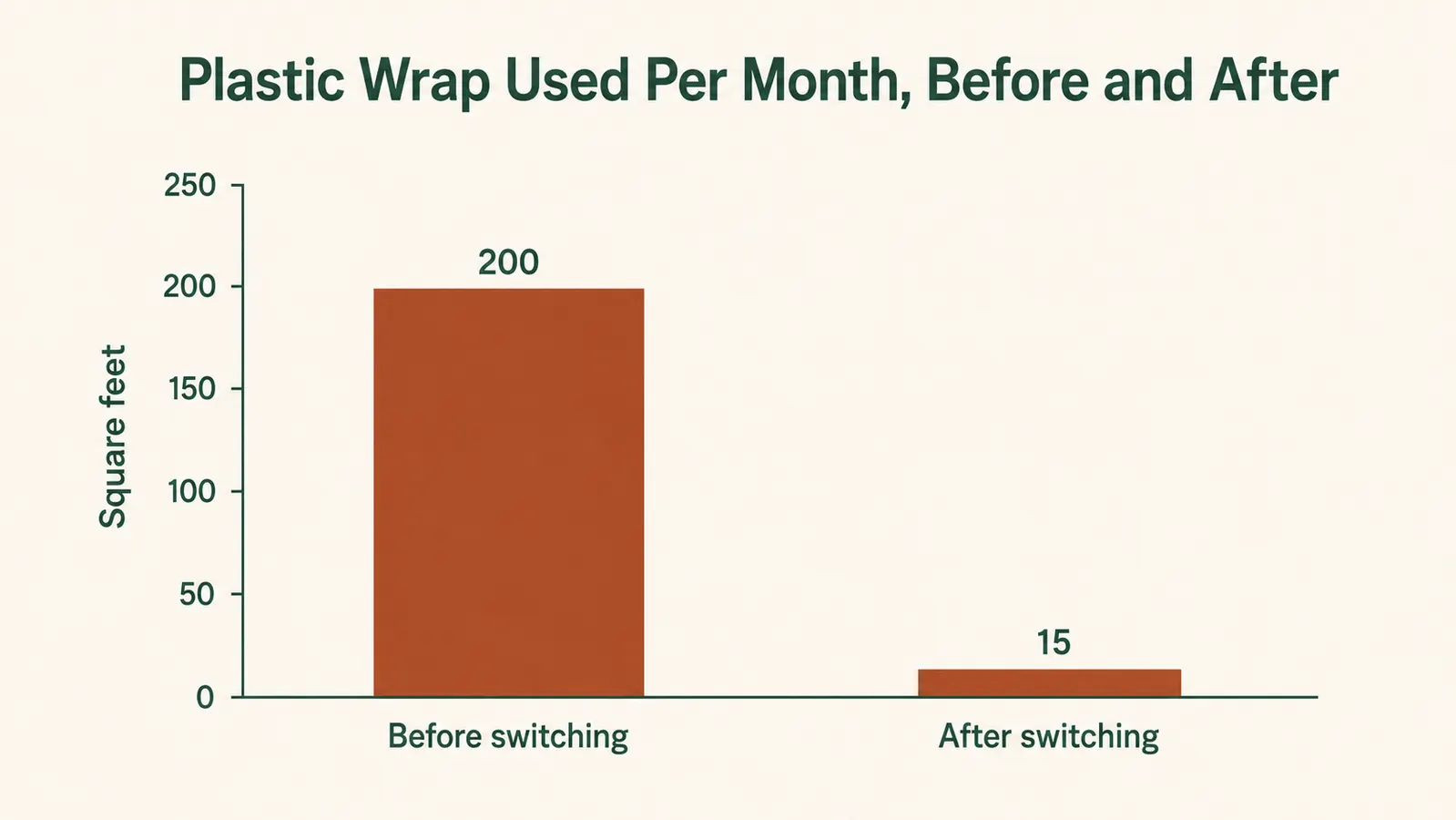
How the Freshness Actually Held Up
Numbers on a spec sheet are one thing, but what I actually cared about was whether food tasted the same on day three as it did on day one. I ran the same test three separate times: half a container of cut cantaloupe under a silicone lid, the other half under plastic wrap, both in the same fridge shelf. By day three, the wrap side had a faint dried edge where the plastic had pulled away slightly, and the melon closest to that gap had gone a little rubbery. The lid side stayed evenly moist all the way through, no dried rim.
I ran the same comparison with a bowl of cooked rice, which is one of those foods that dries out fast once it's exposed to fridge air. Rice under the silicone lid reheated soft with a quick splash of water. Rice under wrap had a noticeably harder top layer by day two, the part where the wrap had loosened just enough to let air creep in. Neither method is going to save food that's already on its way out, but for a three to four day window, the tighter seal on round containers made a real, tasteable difference.
What About Odor and Staining
This is the part that surprised me most, because I went in assuming silicone would pick up smells and never let go. It's not that dramatic in practice. A lid used for something mild like rice or vegetables washes clean with regular dish soap and shows no lingering smell days later. Where it does hang on is anything heavily spiced or tomato-based. A lid I used over a bowl of leftover curry held a faint smell for about a week even after two dishwasher cycles, and a lid that covered marinara sauce picked up a light orange tint that hasn't fully washed out.
Plastic wrap has neither problem, obviously, since it's gone after one use. If you're someone who cooks a lot of curry, chili, or tomato-heavy sauces and you're particular about your storage lids staying neutral, keep that in mind. I've started setting aside two of the eight lids specifically for strong-smelling leftovers so the rest of the set stays smell-free for everyday use, which has worked well enough that it's not a dealbreaker for me, just something I wish I'd known going in.
Who Should Buy the Silicone Lids
If your fridge is full of round bowls, mugs, mason jars, and standard pots and pans, these GUANCI lids will handle most of what you currently reach for wrap to do, and they'll do it better once you learn which of the six sizes matches which container. Anyone who cooks in batches and stores leftovers in the same handful of bowls over and over is the ideal buyer here. You use the same three or four sizes constantly, the seal holds, and the lids pay for themselves fast because you're not buying anything to replace them.
Who Should Stick With Plastic Wrap
If most of your storage happens in rectangular Tupperware, casserole dishes, or oddly shaped containers, don't expect the lids to solve that problem. You'll end up using wrap for those anyway, and buying the lids on top of it just adds a drawer of silicone you reach for less than you expected. Same goes if you cook a lot of raw meat and fish and want a strictly single-use, toss-it-and-forget-it option for food safety peace of mind, or if you regularly need plastic pressed directly against food rather than stretched over a container's opening.
For most kitchens, the honest answer isn't picking one over the other completely. It's using the lids for the round containers that make up most of your daily storage, and keeping a roll of wrap around for the shapes and the raw-food jobs that silicone doesn't handle well. That's the setup I landed on after two months, and it's cut my wrap use by roughly ninety percent without me having to think about it much anymore. If you want to see how the seal held up on more sizes over a longer stretch of daily use, that's covered in the honest review.
Cut your wrap use without changing how you cook
Six sizes, dishwasher safe, and they nest flat in a drawer. Check today's price and see if the sizing matches the bowls you already have.
Amazon Check Today's Price on Amazon →