
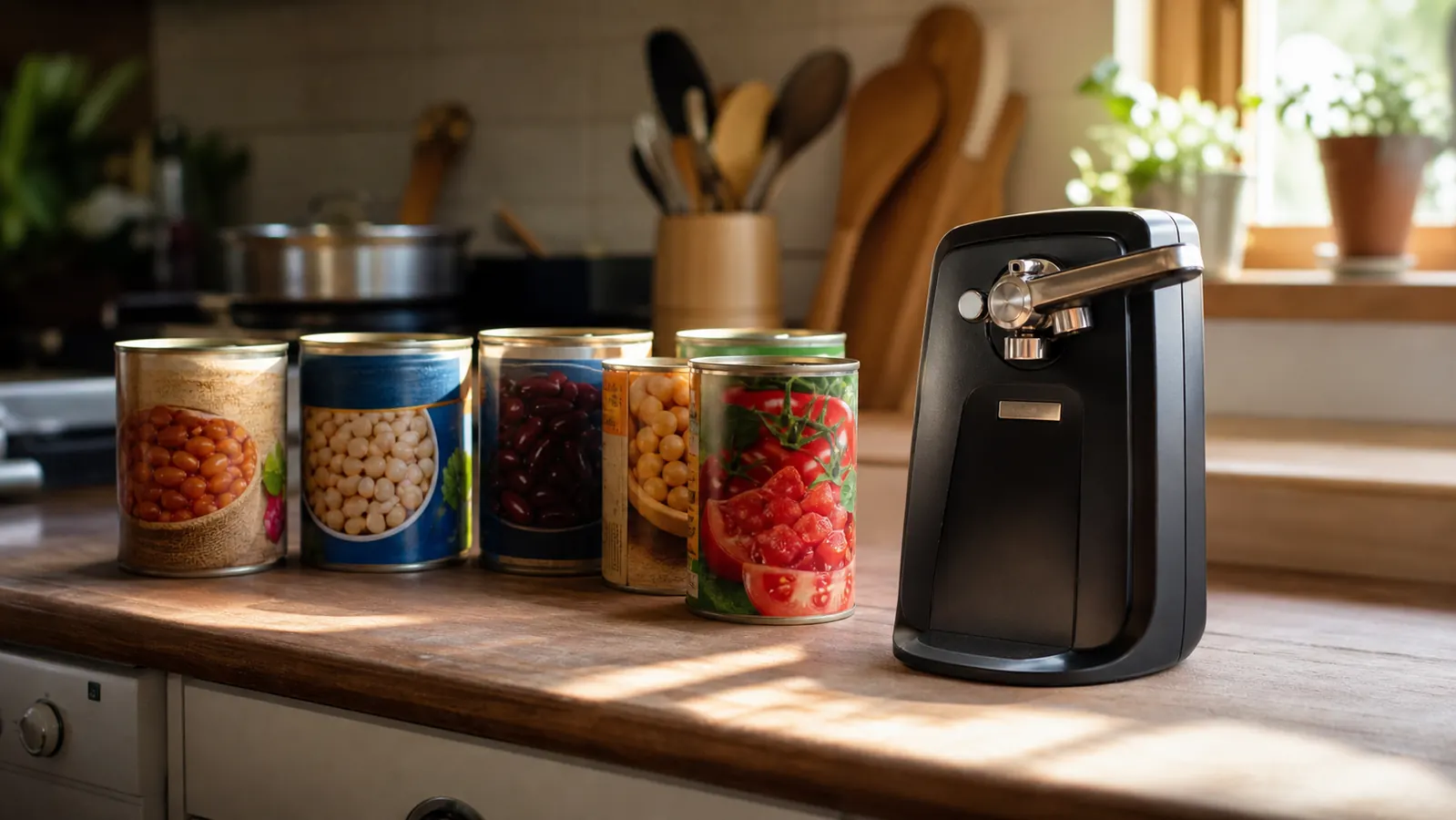
I held out against an electric can opener longer than I probably should have. It felt like the kind of gadget that shows up on a wedding registry and then sits in a drawer for a decade. Then my mother-in-law Carol, who is 74 and has mild arthritis in both hands, came to stay with us for a week and I watched her white-knuckle a manual opener through a can of black beans for almost a full minute before she got frustrated and handed it to me. That was the week I finally bought the Kitchen Mama automatic can opener, and it has not left the counter since.
This isn't a gushing review. It's a rundown of the specific reasons this thing earns the space it takes up, based on real weeknights, not a spec sheet. I still keep a manual opener in the drawer as a backup for camping trips, but it hasn't touched a can at home since Carol's visit. If you cook with canned tomatoes, beans, or broth more than once a week, most of these will sound familiar.
Still fighting a manual opener every chili night?
The Kitchen Mama automatic opener clamps on, spins, and lifts the lid off clean. No grip strength, no wrestling with a stuck gear.
Amazon Check Today's Price on Amazon →It doesn't need a strong grip
This is the reason Carol converted me. A manual opener asks your hand to squeeze and crank at the same time, which is exactly the combination that arthritis and weak wrists hate most. The Kitchen Mama clamps onto the rim with a light push and does the rest on its own. You're not fighting a spring-loaded handle for forty-five seconds. If anyone in your house has joint pain, this alone is worth the counter space.
The edge it leaves is actually smooth
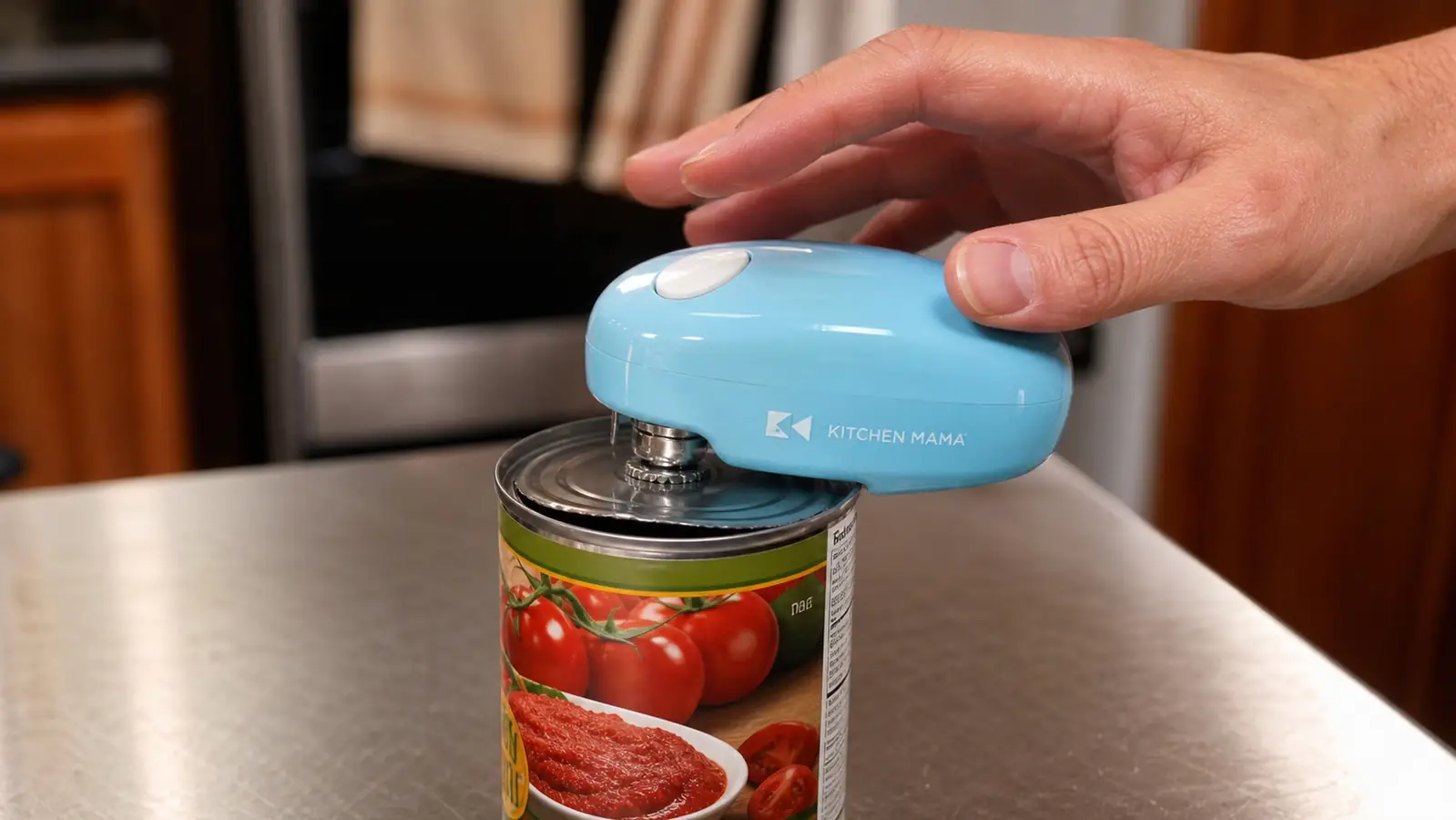
Manual openers leave a lid with a sharp, sometimes jagged edge that has cut me more than once fishing tomato paste out of a small can. This one cuts along the side wall rather than the top seam, so the lid lifts off with a rounded edge and no burrs. My eight-year-old opens his own can of mandarin oranges now, which is not something I'd have let happen with the old opener still in the drawer.
No more wrist ache on soup-and-chili nights
One can is nothing. Five cans for a pot of chili, which is what a Tuesday night in my house looks like every couple weeks, is a different story. Cranking a manual opener five times in a row leaves my wrist sore the next morning. With the electric one, I clamp it on and go stir something else while it works. By the time I'm back, the lid is loose and waiting.
It frees up your other hand
A manual opener is a two-hand job, full stop. The Kitchen Mama is genuinely one-handed once it's clamped on, which matters more than I expected. I've opened a can of diced tomatoes while stirring a roux with the other hand, and while holding the phone against my shoulder taking a work call. It sounds small until you're the one juggling dinner and something else at the same time, which is most weeknights.
It handles the cans manual openers struggle with
Slightly dented cans, tall narrow cans of tomato paste, and the flat little tuna tins have always been the worst case for a manual opener, the blade slips or catches the dent and you end up sawing at it. The magnetic clamp on this one seats itself around the rim regardless of the can's shape and spins evenly. I haven't had it slip on a dented can yet, and I've thrown some rough ones at it on purpose to test that.
It runs on batteries, not a cord
I didn't want another cord fighting for outlet space next to the coffee maker. This one runs on four AA batteries and has no cord at all, so it lives on a shelf or in a drawer and comes out only when needed. It also means it still works if the power's out and you're eating out of cans anyway, which happened once during a storm and I was genuinely glad I had it.
It's small enough to actually store
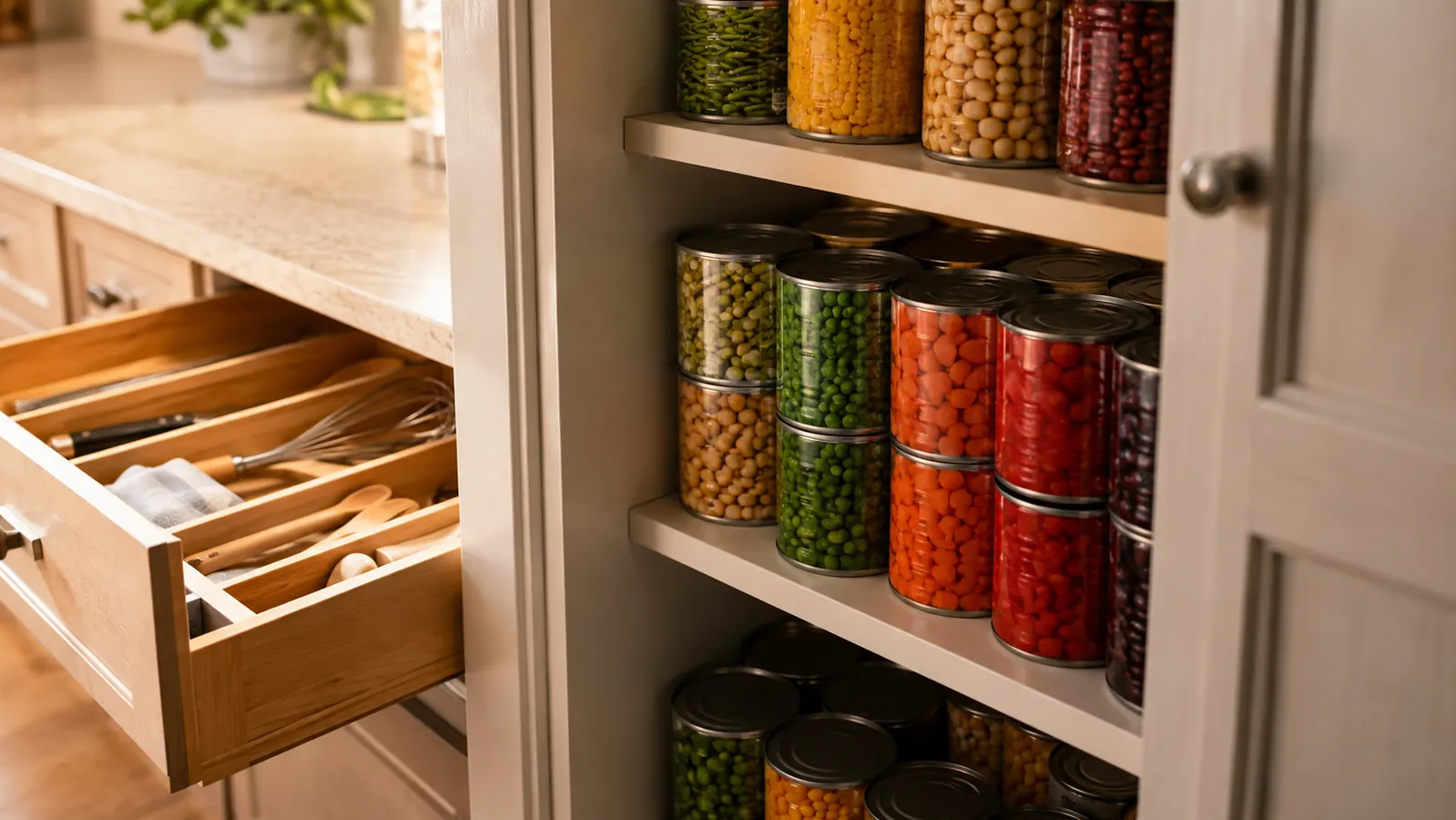
I was ready for this to be one of those bulky countertop appliances that ends up on top of the fridge forever. It's not. It's about the size of a large coffee mug and stores flat in the utensil drawer or on a narrow shelf. If you've read our guide to opening cans faster, you know storage is half the reason people go back to the manual one, and this doesn't have that problem.
Cleanup is faster because there's less to trap food
Manual openers have a gear and a cutting wheel that build up gunk from tomato sauce and bean juice over time, and scrubbing that crevice with a toothbrush is nobody's favorite chore. This one has a smoother, more open cutting mechanism that wipes down with a damp cloth in about ten seconds. I still give it a deeper clean every couple of weeks, but the daily wipe-down is genuinely quick.
It shaves real time off multi-can meals
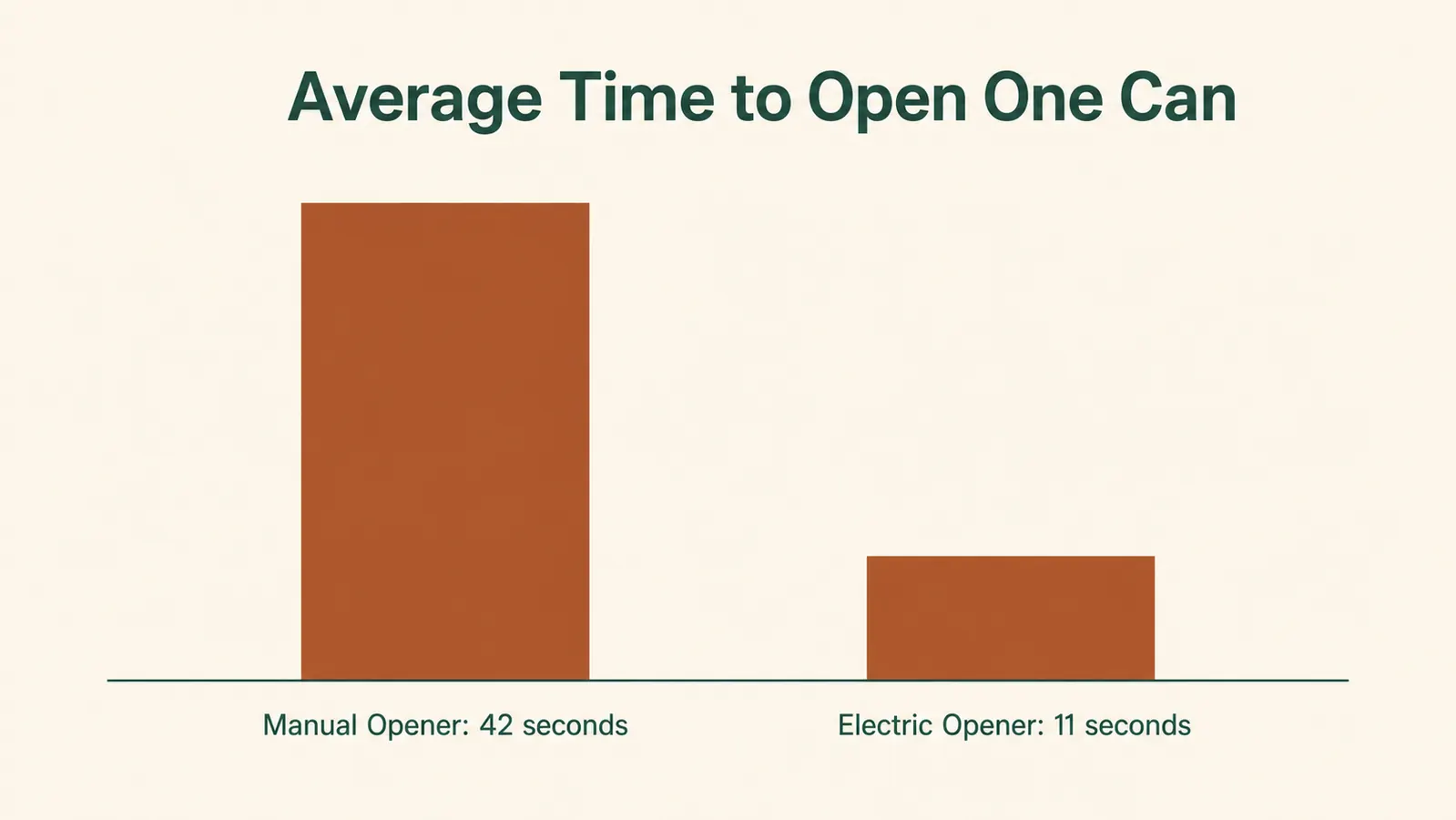
I timed it out of curiosity one night making chili with five cans. The manual opener averaged around 42 seconds per can once you count getting a grip and finishing the cut. The electric one averaged 11 seconds, mostly the time it takes to clamp it on and let it spin. Over five cans that's less than a minute versus almost three and a half. On a weeknight where dinner is already running late, that adds up.
It's the kind of gift that actually gets used
I ended up buying a second one for Carol to keep at her own place, and it's the rare gift I've given an older parent that didn't end up in a closet. It solves a specific, recurring frustration instead of being a nice-to-have. If you're shopping for a parent or grandparent who still cooks for themselves but has started avoiding canned goods because opening them is a fight, this is a better gift than it sounds like on paper.
What I'd Skip
I wouldn't buy the smallest travel-size version if you're cooking full meals at home. It's meant for RVs and dorm rooms, and the clamp is a little fussier on standard-size cans. And if you only open a can once every couple of months, save the drawer space, a decent manual opener is fine for that. This earns its keep specifically for people who cook with cans regularly or who have a grip issue to work around. For the full picture of how it's held up over time, our long-term can opener review covers a full year of daily use. Battery life is worth mentioning too, ours has run through most of a year on the original four AA batteries with regular weeknight use, so budget for a fresh set roughly once a year rather than every month.
It's not exciting. It just quietly removes one small fight from dinner, every single time.
If your wrist dreads chili night, this is the fix
Clamp it on, let it spin, lift the lid off clean. No cranking, no sharp edges, no drama.
Amazon Check Today's Price on Amazon →