
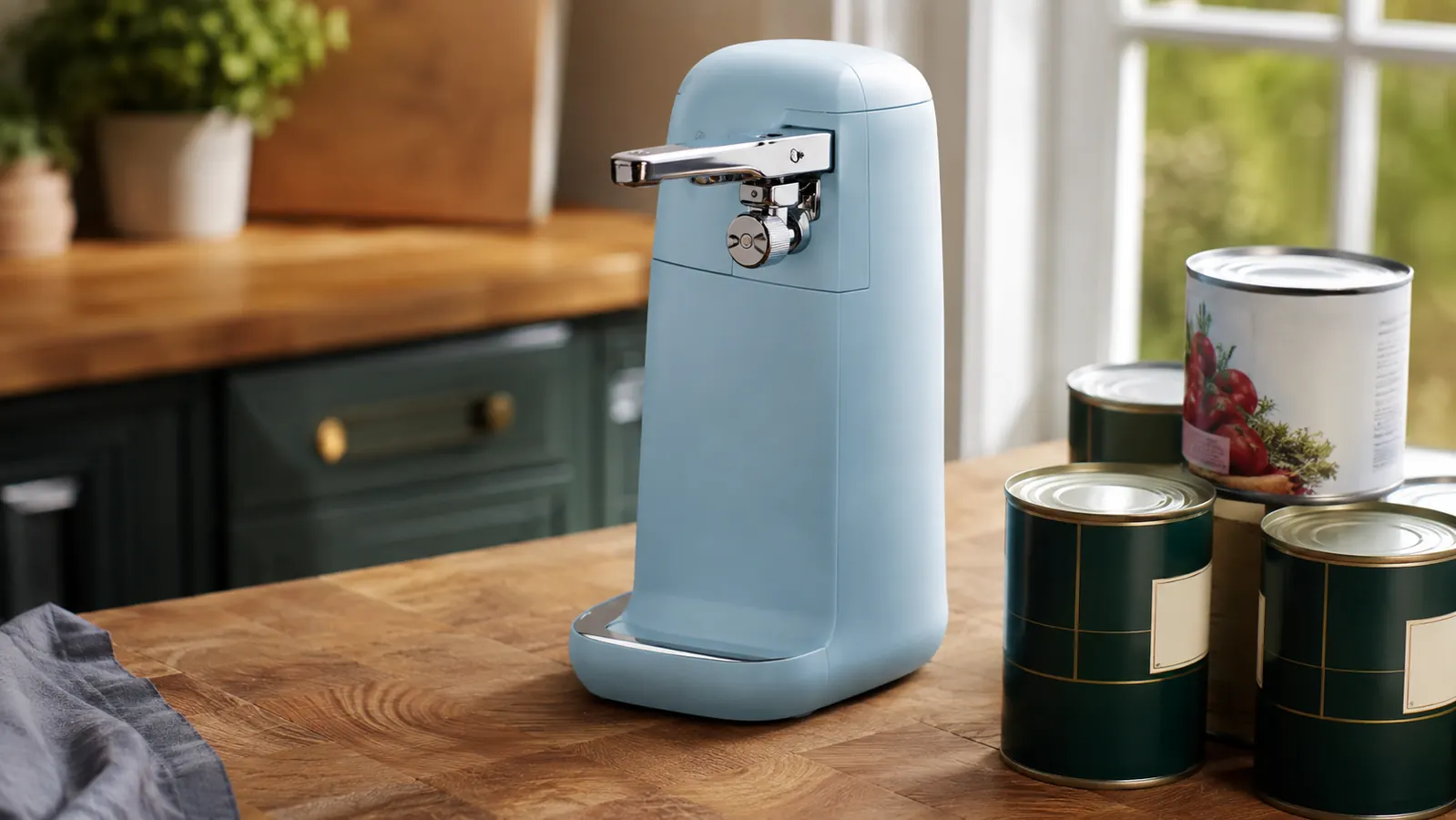
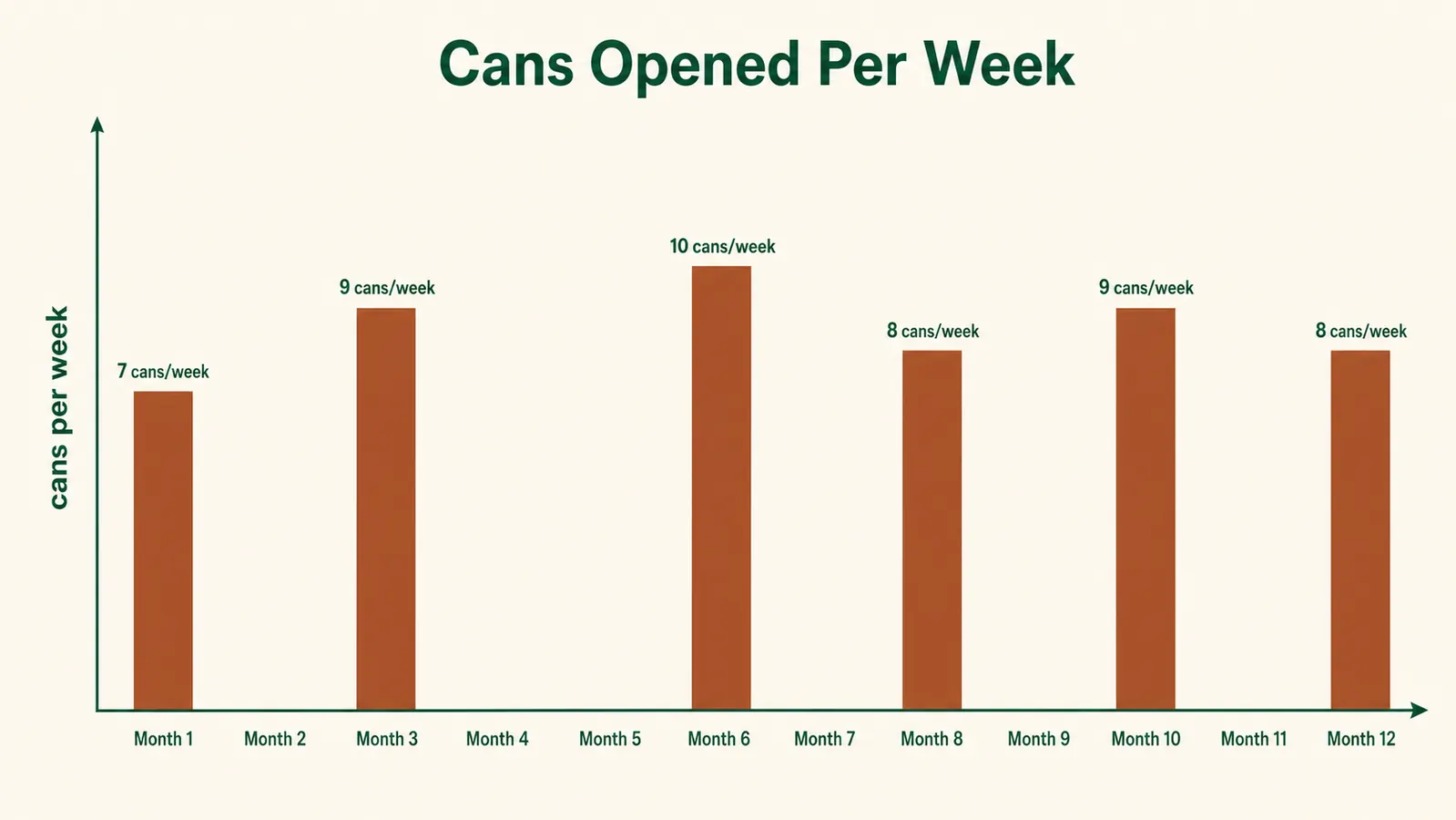
The can opener I fought with for six years lived in the drawer next to the stove, a cheap manual crank model that got the job done but chewed up my knuckles almost every time the wheel slipped off a dented lid. My mother, Diane, is 74 and has mild arthritis in her right hand, and watching her struggle with a can of green beans at a Sunday dinner was what finally pushed me to buy something different. I ordered the Kitchen Mama automatic electric can opener in August 2025, and I've used it on somewhere around 300 cans since then, mostly black beans, diced tomatoes, and chicken broth for weeknight cooking.
This isn't a first-week impression. It's what happened after a year of near-daily use in a kitchen that goes through canned goods fast, four school lunches a week, weeknight chili, Sunday soup for my mother. I wanted to know if the Sky Blue model actually holds up, whether the batteries turn into a recurring chore, and whether it's still sitting out on the counter or buried in a drawer twelve months later. Short answer: it's still out, and I still reach for it most nights.
The Quick Verdict
A genuinely useful hands-free opener that's earned its spot on my counter for a year straight, though the battery door is flimsier than I'd like and it struggles on cans with dented rims.
Amazon Check Today's Price →Tired of fighting a manual crank every time dinner needs a can of beans open?
This is the exact model I've used weekly for a year. Check today's price and current availability before you decide.
Amazon Check Today's Price on Amazon →How I've Used It
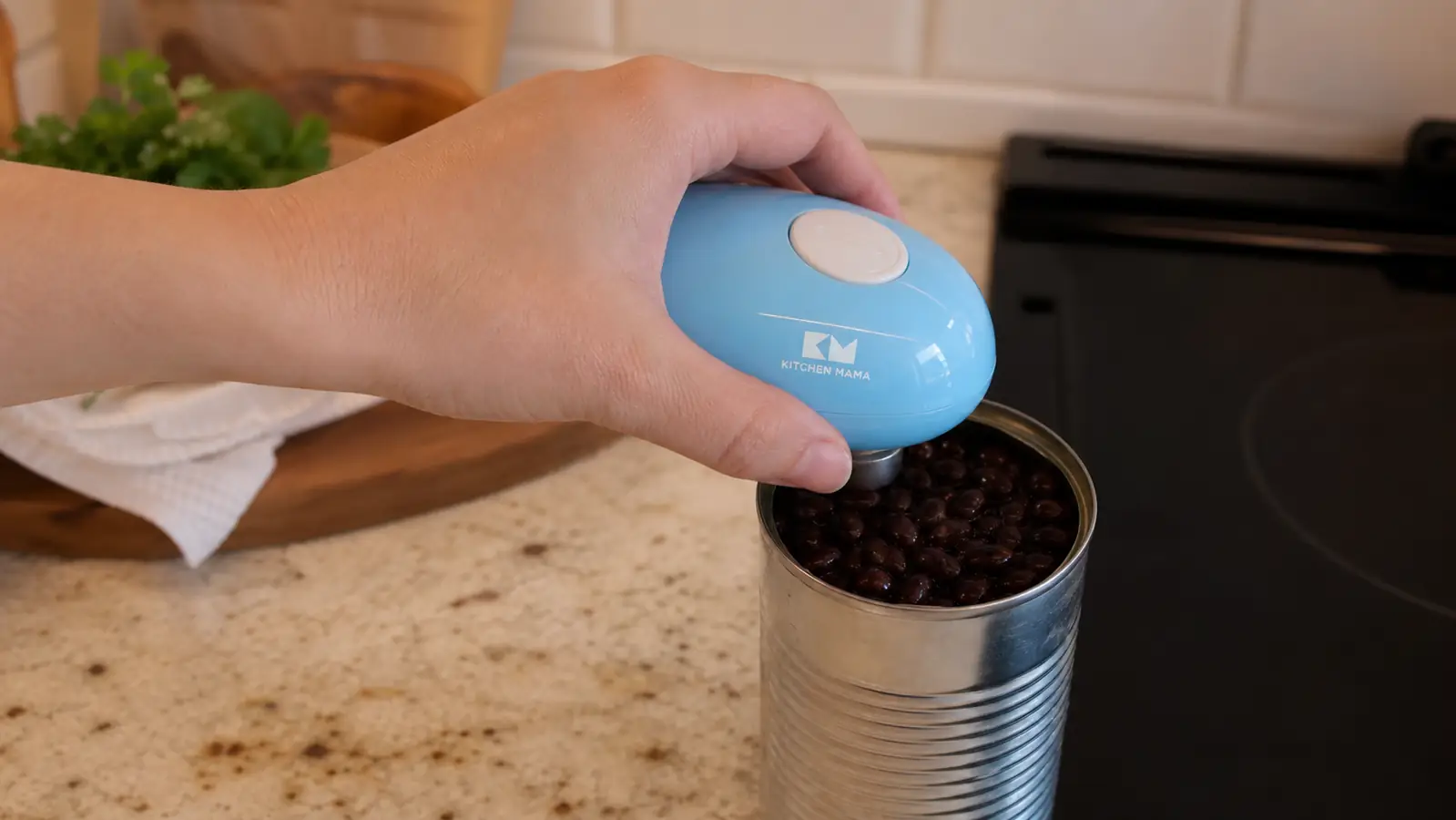
The opener came with the four AAA batteries already loaded, so I clamped it onto a can of pinto beans within about five minutes of unboxing it, no charging, no setup beyond snapping the lid off the battery compartment to confirm it was seated right. You place the opener on top of the can, press the button, and it grips the rim, rotates around it, and lifts the lid, then a magnet holds the cut lid to the opener body so you're not fishing a sharp disc out of the sink. That magnet detail sounds small until you've sliced a finger on a floating lid in dishwater, which I had done more than once with the old crank opener.
For the first few months I used it almost every day. My weeknight routine leans on canned tomatoes for sauce, canned broth for soup, and black beans for at least two dinners a week, so this Kitchen Mama was doing real work, not sitting on a shelf for special occasions. By month three it had opened somewhere close to 150 cans, and the motor still sounded and moved the same as it had on day one, no grinding, no slowdown.
Cleanup is where it earns points I didn't expect going in. The cutting mechanism doesn't touch the food side of the lid the way a manual opener's wheel does, so there's less gunk to wipe off between uses. I run a damp cloth over the gear area maybe once a week when I'm cleaning up canned tomato residue, and that's been enough to keep it from getting sticky or smelling like old broth.
It lives in a fixed spot on the counter next to the coffee maker now, not tucked in a drawer, mostly because I use it enough that pulling it out every time felt like friction I didn't need. It doesn't need to be plugged into anything, so there's no cord to manage or outlet to fight for, which matters in my kitchen since the two outlets near the stove are already claimed by the kettle and the toaster most mornings. That no-cord detail is a small thing, but it's the reason it actually stayed on the counter instead of migrating to a cabinet after the first month.
Battery Life and Edge Safety, Six Months In
The four AAA batteries that came in the box lasted just over six weeks of near-daily use in my kitchen, which works out to roughly 45 to 50 cans per battery set based on my own count. That's shorter than I expected going in, and it means I keep a spare four-pack in the drawer next to it now, because there's nothing worse than reaching for it mid-recipe and hearing the motor whine instead of turn.
The edge it leaves behind is genuinely smooth. This was the main reason I bought it in the first place, since Diane's arthritis makes her cautious around sharp lids, and I wanted something safer than the jagged edge our old manual opener left. A year in, I still haven't nicked a finger on a cut lid, and my mother has commented more than once that she trusts it more than the crank version she has at her own place.
The one part that's held up worse than the rest is the battery door. It's a small plastic clip that you slide to open, and after about eight months of regular battery swaps, mine developed a slight looseness, it still closes and holds the batteries in place, but it doesn't snap shut with the same confidence it did at first. It hasn't failed, but I baby it a little now when I'm changing batteries.
Speed-wise, a full rotation on a standard can takes about eight to ten seconds from the button press to the beep, which is slower than an experienced hand with a sharp manual opener but faster than it feels, because you're not gripping or twisting anything while it works. I can start it, turn to stir a pot, and it's finished by the time I turn back, which is the actual value here more than raw speed on a stopwatch.
How It Handles Odd-Shaped Cans and Dents
Standard cans, the smooth-sided cylinders you get from beans, tomatoes, and broth, are where this opener is at its best. It clamps evenly and finishes the full rotation in about eight to ten seconds without any hand involvement beyond pressing the start button and lifting it off when it beeps. That hands-free part matters more than it sounds like it should when you're juggling a pot of rice on one burner and sauce on another.
Dented cans are a different story. I keep a shelf of discount cans I buy when the grocery store marks down dinged inventory, and this opener struggles on anything with a rim dent deep enough to throw off the seal. Two or three times over the year it's gotten partway around a dented can and stalled, leaving me to finish the last inch with a manual opener anyway. It's not a dealbreaker, but it's not the universal fix I assumed it would be when I first read the listing.
Taller cans, like the big 28-ounce tomato cans I buy for Sunday sauce, work fine as long as the can is stable on the counter. Short, squat cans like tuna and cat food cans have less rim to grip, and I've had a couple of slips there where I had to reposition it once before it caught. I go into the full breakdown of timing and edge cases like this in this side-by-side comparison against a manual opener, if you want the numbers on exactly how much faster it is on a normal weeknight can of beans.
Weight and grip feel matter more than I expected too. The body is light enough that one-handed placement is easy, which is the whole point for anyone with wrist pain, but it also means it can shift slightly on a can with a slick label if you don't seat it flat first. I've learned to press down gently for the first second before letting go, and that small habit has cut my stalled attempts down to almost nothing over the second half of the year.
Where It Falls Short
It's bulkier than a manual opener, no way around that. It takes up more counter or drawer space than the flat crank version it replaced, and if your kitchen is tight on storage, that's a real tradeoff to weigh before buying. I keep mine out on the counter permanently because I use it enough to justify the space, but if this were an occasional-use item for me, I'd probably resent how much room it takes in a drawer.
The other honest gripe is the beep. It's loud, and it goes off the second it finishes the rotation, which is useful for knowing it's done but startling if you're not expecting it, especially the first few weeks before you get used to it. It's not something that ruined the experience, just something nobody mentions in the five-star reviews.
It also isn't something you can just dunk in the sink or run through the dishwasher. The base with the motor and gears has to stay dry, so cleaning it is a wipe-down job with a damp cloth rather than a rinse-and-done job like a manual opener gets. For me that's a minor extra step, but if you're used to tossing everything in the dishwasher after dinner without a second thought, this one needs to be handled separately every time.
What I Considered Instead
Before landing on the Kitchen Mama, I looked at a couple of the cordless, rechargeable electric openers that skip batteries entirely in favor of a charging base. They looked appealing on paper, no battery drawer to manage, but the reviews on those models kept mentioning charging ports failing after a year, and I didn't want to trade a battery-swap hassle for a dead-unit hassle. I'd rather buy a four-pack of AAAs every six weeks than replace the whole opener because a charging port stopped working.
I also seriously considered just sticking with a better manual opener, one of the ergonomic soft-grip versions marketed for arthritis. For my mother specifically, the hands-free version won out because it removes the twisting motion entirely rather than just making the twisting easier. If you're weighing that exact decision, I've laid out more of the specific reasons this style wins for people with grip or wrist limitations in this list of what actually changed for me.
I looked briefly at a couple of other automatic openers in the same style before buying, mostly ones with a similar clamp-and-rotate design under different brand names. The reviews on those were mixed enough on long-term reliability, motors burning out around the six-month mark, that I stuck with the brand that had the deepest review history and the most consistent feedback on the motor holding up past year one. A year in, that bet has paid off.
What I Liked
- Genuinely hands-free, no twisting or gripping motion required
- Leaves a smooth edge with no sharp lip on the cut lid
- Magnetic lid lift keeps you from fishing a sharp disc out of the sink
- Handled roughly 300 cans over a year without the motor slowing down
- Cleanup is faster than a manual opener since less residue touches the gears
- No cord or outlet needed, so it can live anywhere on the counter
Where It Falls Short
- Batteries only last about 45 to 50 cans before needing a swap
- Struggles or stalls on cans with dented rims
- Battery door has loosened slightly after eight months of regular use
- Takes up more counter or drawer space than a manual opener
- The completion beep is loud and startling at first
- Can't be rinsed or run through the dishwasher, wipe-down cleaning only
It's not a miracle fix for every can in the pantry, but for the smooth-sided beans and tomatoes I open four or five times a week, it's the one gadget from this whole kitchen overhaul that never went back in the drawer.

Who This Is For
If anyone in your household has arthritis, a weak grip, or wrist pain from an old injury, this is worth the counter space on that reason alone. It's also a good fit for anyone who cooks with canned goods often enough that the daily wear and tear on your hand actually adds up, weeknight cooks who go through beans, tomatoes, and broth the way I do will get real, repeated use out of it rather than pulling it out twice a year for holiday cranberry sauce.
Who Should Skip It
If your kitchen is genuinely short on storage and you open a can maybe once a month, a compact manual opener will serve you fine and take up a fraction of the space. Anyone who regularly deals with dented discount cans should also know going in that this isn't a perfect solution there, you'll still want a manual backup in the drawer for the rare can that won't cooperate.
If a shaky grip or a bad wrist has made can day harder than it should be, this is the fix that actually stuck around on my counter.
See today's price and current reviews before you decide if it's right for your kitchen.
Amazon Check Today's Price on Amazon →