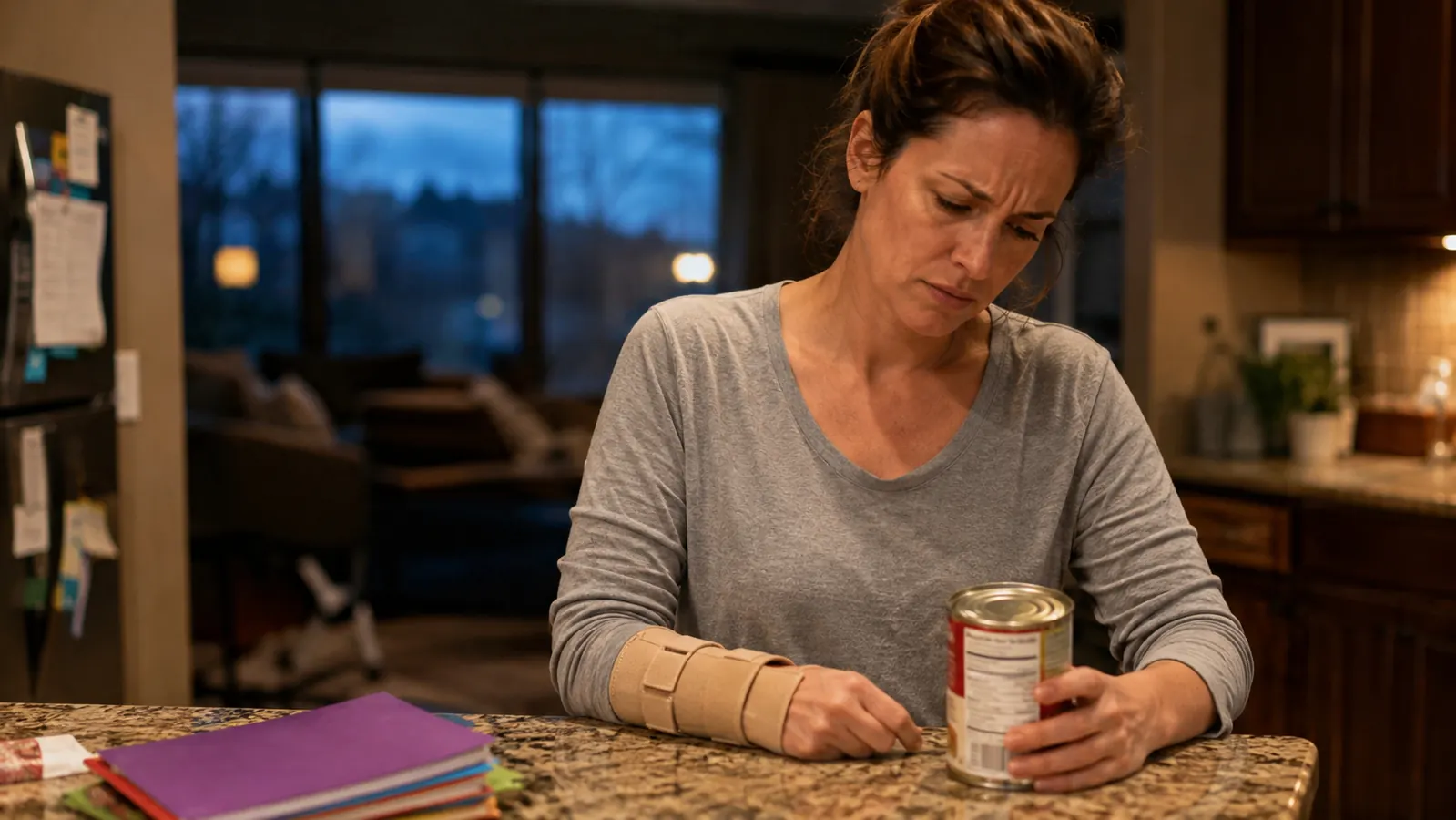
I went down on a wet sidewalk in March, the kind of fall where your brain registers it as funny for about half a second before it registers as a mistake. I put my right hand out to catch myself, which is apparently the worst thing you can do, and I spent the next six weeks in a soft wrist brace with a sprain that the urgent care doctor described as "annoying but not broken," which is not nearly as reassuring as it sounds when you're the one trying to open a jar of pasta sauce that night.
Most of the six weeks were manageable. I typed slower, I asked my husband to open the jars, I skipped my usual weight sessions at the gym and complained about it constantly. Cooking dinner mostly still worked because I lean left-handed for a lot of prep anyway. The manual can opener, the same one I'd trade in for a Kitchen Mama automatic before the month was out, was the one thing that quietly wrecked me every single time, because it doesn't care which hand is dominant. It needs a squeeze and a crank happening at the same time, from the same hand, and a sprained wrist cannot do both of those things without protesting loudly.
It came to a head on a Tuesday about two weeks in. My son had a low fever and wanted the only thing that ever sounds good to him when he's sick, chicken noodle soup out of a can, nothing fancy, nothing homemade, just the can. I stood at the counter and tried to work the manual opener with my left hand while bracing the can with my braced right wrist, and the crank slipped twice before it even caught the rim. By the third try my wrist was throbbing and the lid was maybe a third of the way around, jagged and half attached, and I was standing in my kitchen at 6:40 on a school night nearly in tears over a can of soup.
That sounds dramatic written down. It didn't feel dramatic in the moment, it felt like the last straw on top of five weeks of small frustrations, the kind where you're not upset about the can, you're upset about everything the can represents. I finally got it open with a butter knife wedged under the lip, which is exactly as unsafe as it sounds, and I sat down at the table while my son ate his soup and I texted my sister a rant about how a cheap crank opener from 1985 had just beaten me.
I wasn't crying about a can of soup. I was crying about how many small, ordinary things I couldn't do that week, and the can was just the one that finally got through.
Sound familiar? A weak grip shouldn't decide whether dinner happens.
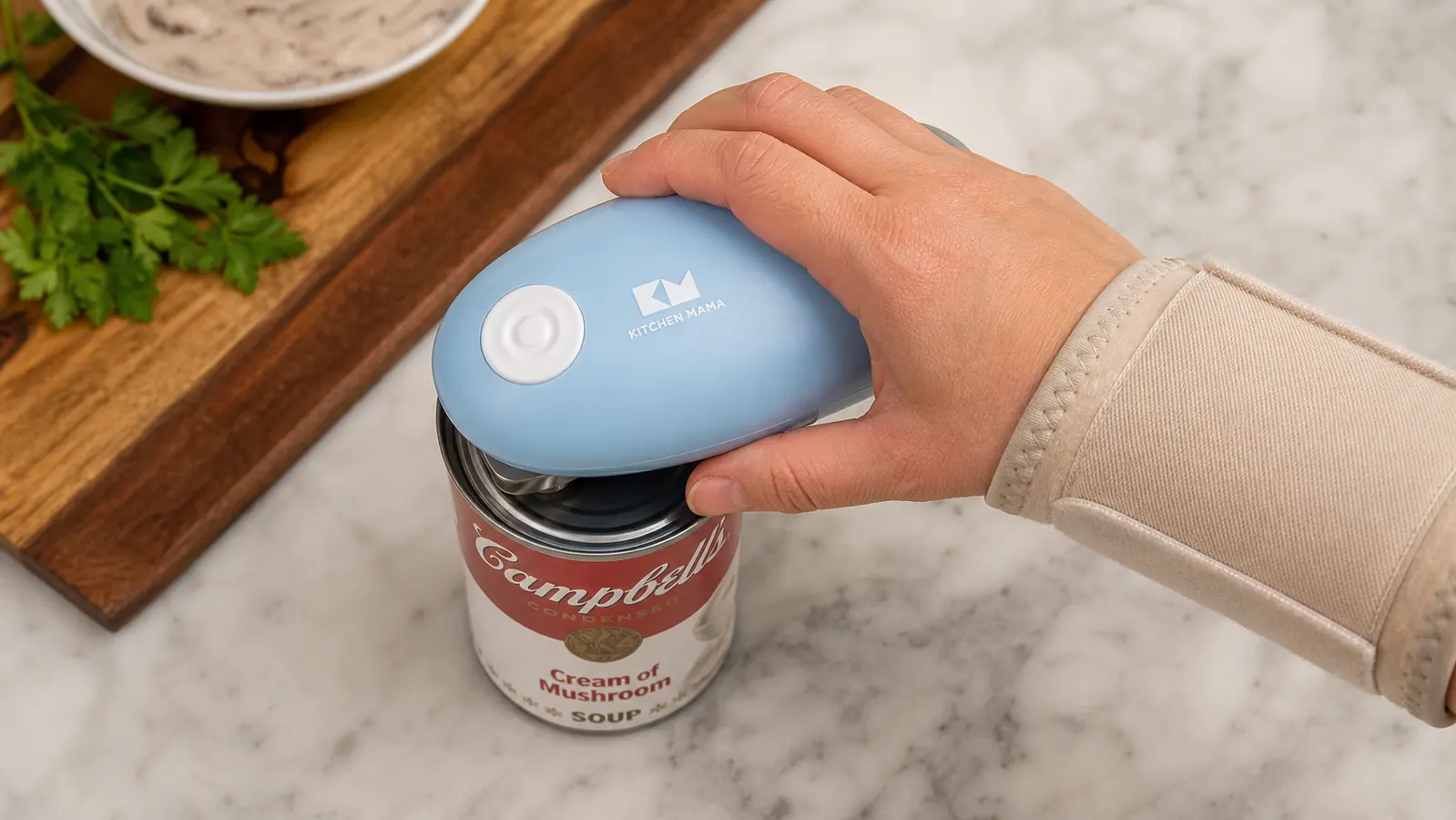
This is the exact automatic can opener I ordered that night. It clamps onto the rim and does the twisting for you, no squeeze, no crank, no wedging a knife under a lid.
Amazon Check Today's Price on Amazon →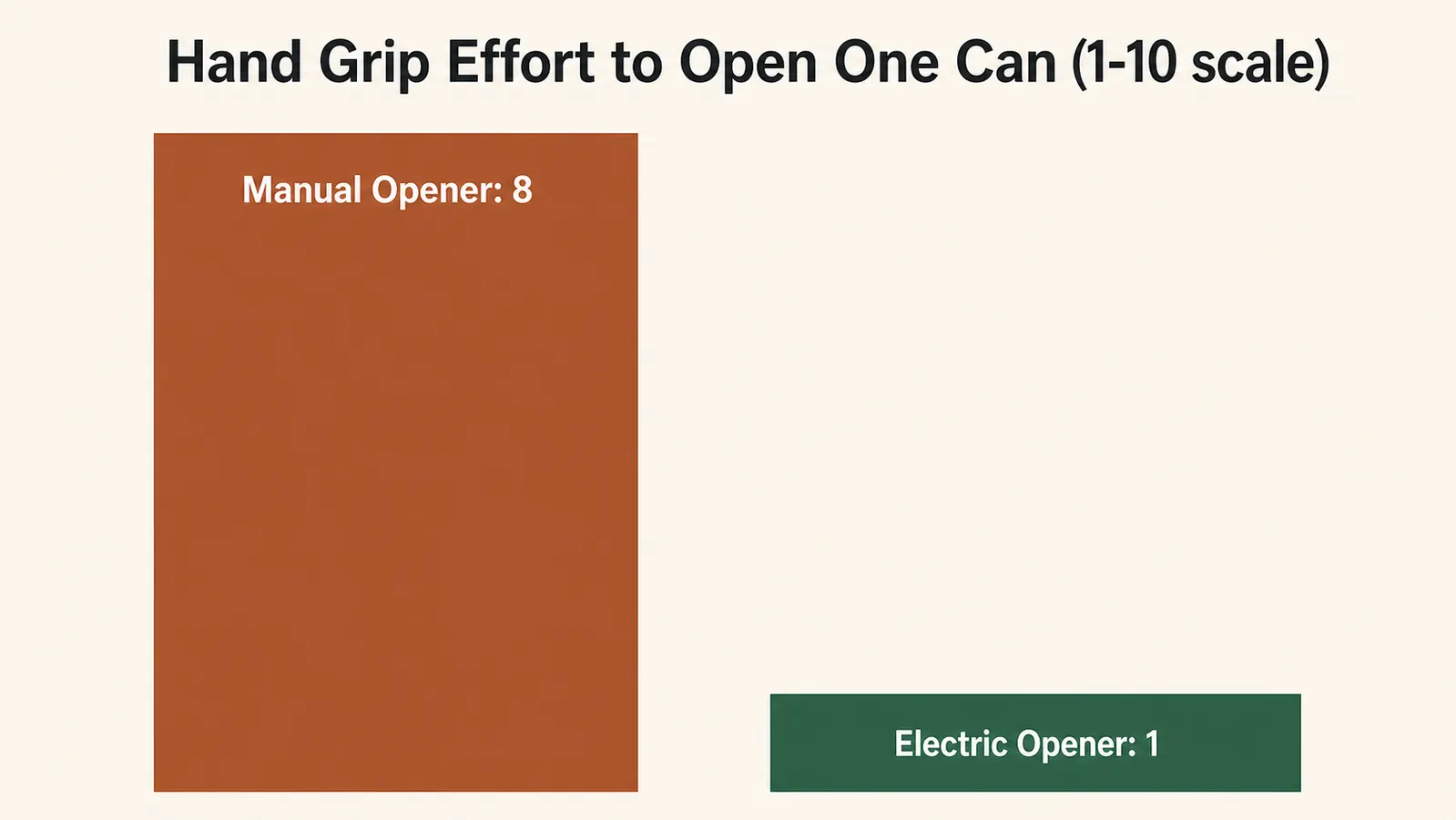
My sister was the one who actually suggested it. She'd bought an automatic electric can opener for our dad a couple years back after his hip surgery limited what he could stand and twist through, and she said it was the one gadget he genuinely used every day instead of leaving in a drawer. I ordered the Kitchen Mama automatic can opener that night, mostly out of frustration, and it showed up a couple days later with batteries already in the box.
The first time I used it, on a can of black beans for a Thursday night burrito bowl dinner, I genuinely laughed out loud. You set it on top of the can, press one button with basically no pressure required, and it clamps on and spins around the rim by itself while you do something else. No squeeze, no crank, no fight. I stood there with my braced wrist just resting on the counter, not doing anything, while the can opened itself, and it felt a little absurd how much stress that removed from something that used to be a two-second afterthought before my wrist got hurt.

My wrist healed up over the following month, and honestly I could have gone back to the manual opener once the brace came off. I didn't. Once I'd felt what it was like to open a can without gripping anything, I couldn't unfeel it, even with two good hands again. It just lives on the counter near the coffee maker now, and my son has started asking for it by name, he calls it "the button can thing," which is close enough. I went back later and read a full year-long review of the same Kitchen Mama opener just to see if the battery and the motor held up the way mine has, and it matched what I've seen so far.
It also changed how I think about the drawer full of gadgets I don't use. I've bought plenty of kitchen tools that sounded useful in the store and then sat there for a year, but this one earned its spot the same week it arrived, because it solved a real problem I'd had on a real Tuesday, not a hypothetical one from a product description. If you want the fuller case for why it's worth the counter space beyond just my one bad week, I laid out ten specific reasons it's earned a permanent spot in my kitchen.
What I'd Tell You If We Were Sitting at My Kitchen Table
If you asked me over coffee whether it's worth having one, I'd tell you the honest version, not the sales version. It won't change your life. It's a can opener. But if you've ever had a bad wrist, a bad shoulder, arthritis, or just a night where your hands weren't cooperating and dinner still needed to happen anyway, it removes one small, specific fight from your evening, every time, without you having to think about it. That's the whole pitch. I didn't buy it because I needed a gadget. I bought it because I needed dinner to stop depending on whether my wrist was having a good day, and it's done exactly that since the day it showed up.
If a bad wrist or a weak grip has ever made dinner harder than it should be, this is the fix that actually stuck.
See today's price and current availability before your next Tuesday night with a stuck can.
Amazon Check Today's Price on Amazon →