
Short answer: if your drawer is anything other than a stock size, the bamboo organizer wins, and it isn't close. I ran a plastic tray in my kitchen for almost two years before switching to the Pipishell Bamboo Expandable Drawer Organizer, and the difference showed up faster than I expected. Not in how it looked. In how much less I had to fight with a drawer that never fully closed. Plastic trays still earn a place in plenty of kitchens though, and if you skip straight to the buy button, you'll miss the one situation where the cheap plastic option actually beats this one.
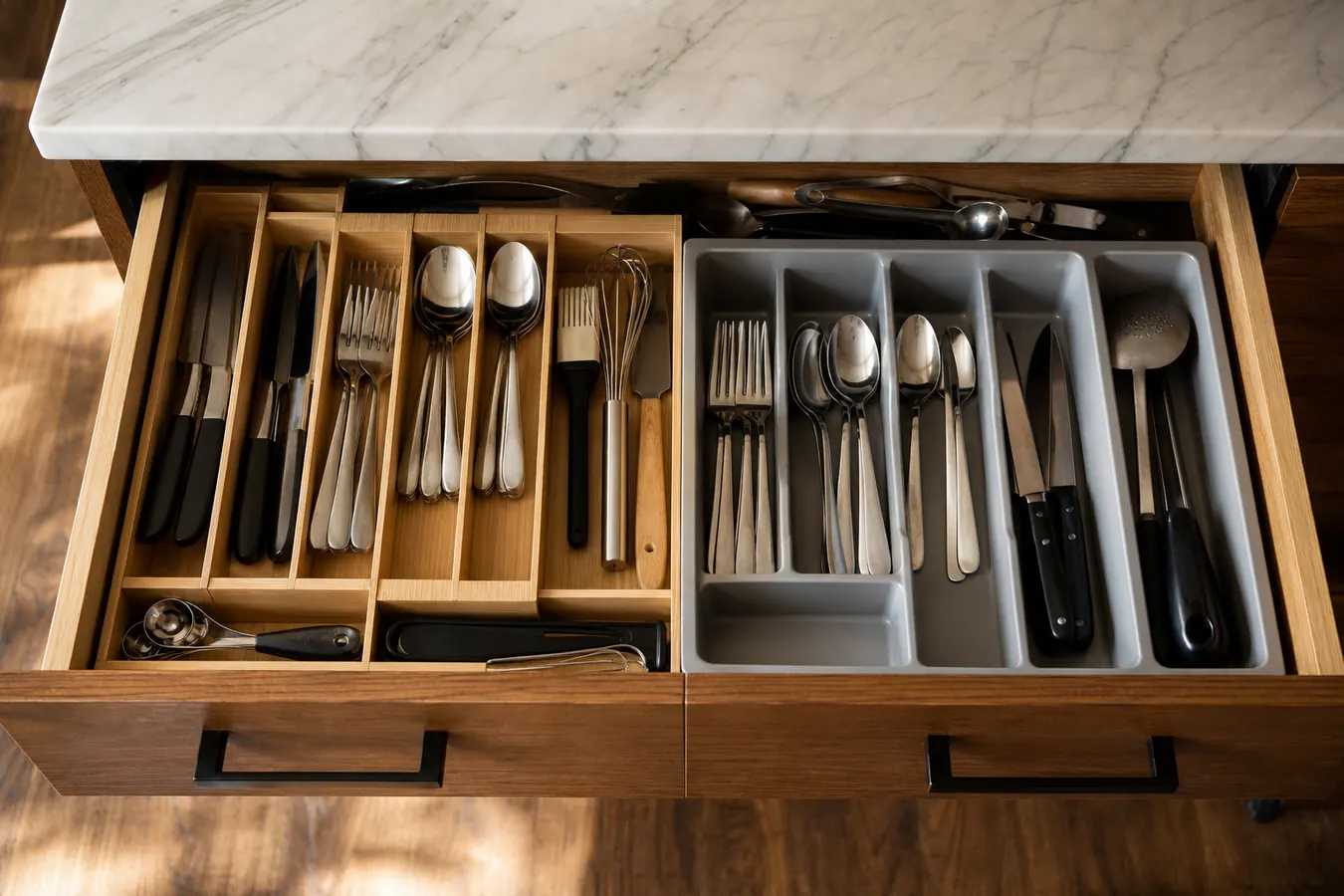
For two years I used a molded plastic utensil tray, the kind you find in the housewares aisle already shaped with slots for forks, spoons, and a couple of catch-all sections. It worked fine until I finally measured my drawer and realized the tray only covered about eighteen of the drawer's twenty-one inches, leaving a gap of loose, sliding utensils behind it every single time I opened it. That gap is basically the whole reason this comparison exists. I switched to the expandable bamboo version and used it in the same drawer for six months, and I want to walk through exactly where each one earns its spot and where it falls apart, because neither is the right answer for every kitchen.
| What Matters | Pipishell Bamboo Expandable Organizer | Plastic Drawer Trays |
|---|---|---|
| Material | Sustainably sourced bamboo slats | Injection-molded plastic, usually ABS or polypropylene |
| Fit to drawer | Expandable, adjusts to roughly 13 to 22 inches wide | Fixed mold, one size, no adjustment possible |
| Weight capacity | Handles cast iron ladles and heavy utensils without sagging | Can crack under a heavy ladle or a full ice cream scoop |
| Washing | Hand wash only, needs full air-dry time before reuse | Dishwasher safe, dries in minutes on the rack |
| Odor and staining | Resists odor well, occasional water ring if put away damp | Can hold onto onion or garlic smell after months of use |
| Setup time | 20 to 30 minutes to measure, slide, and lock the slats | Under 2 minutes, drop it in the drawer and done |
| Typical lifespan | 3 or more years with occasional care | 12 to 18 months before cracking, warping, or yellowing |
| Current price range | Mid-range for a kitchen organizer, check today's price on Amazon | Budget-priced, widely available at big-box and discount stores |
Where the Bamboo Organizer Wins
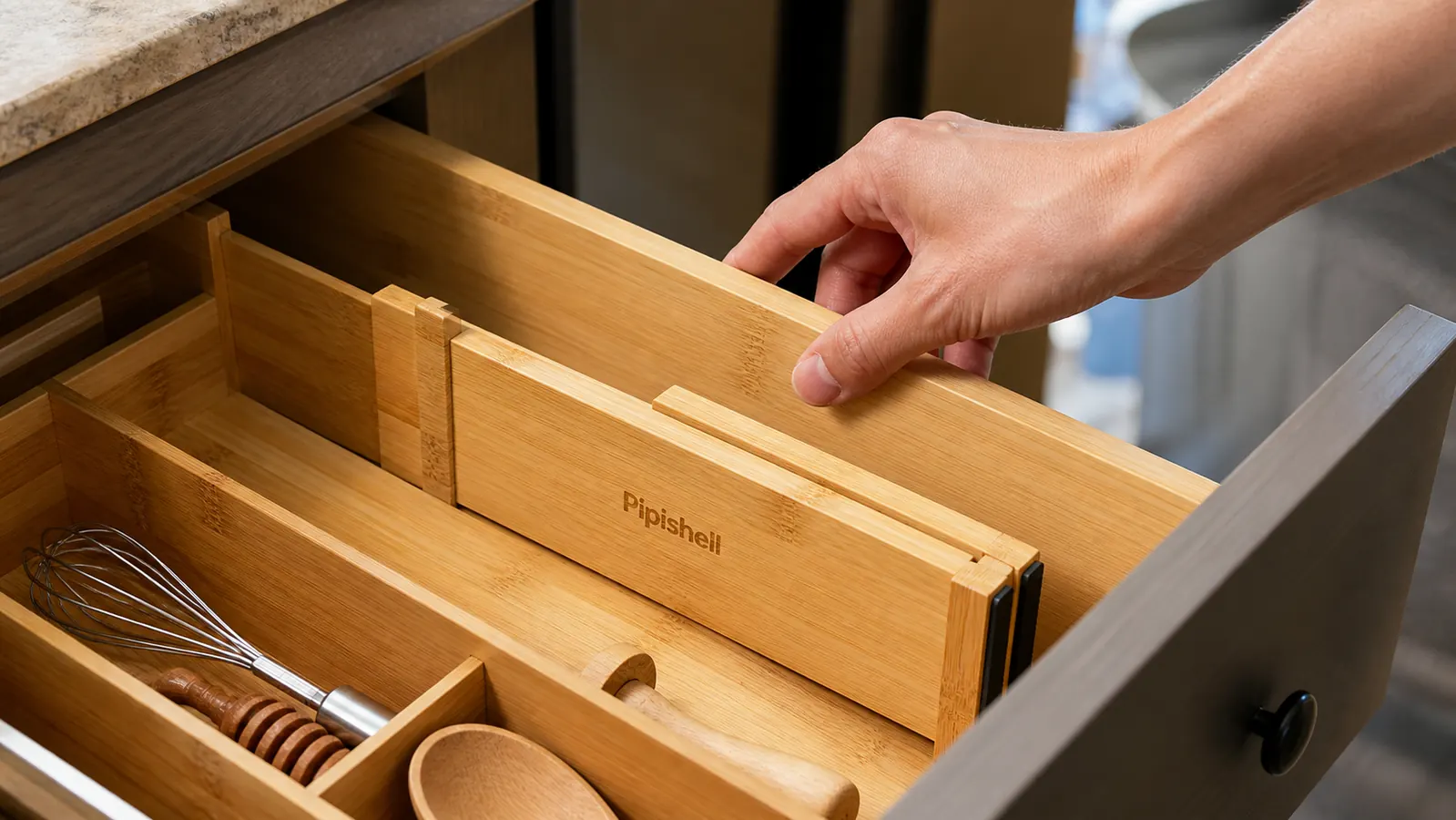
The biggest reason I switched was fit, not features. My drawer runs a little over 21 inches wide, and my old plastic tray never came close, no matter how I nudged it against one side or the other. The bamboo organizer's slats telescope on a track, so instead of buying a fixed size and hoping, I slid the panels out until they matched my exact drawer, locked them with the built-in pegs, and never had to deal with a dead gap collecting crumbs and loose rubber bands again. If your drawer is even slightly off from a standard size, and in older homes it usually is, this is the difference that matters more than anything else on this list.
Weight is the second place it pulls ahead. My old plastic tray developed a hairline crack in one of the fork slots after I dropped a cast iron ladle into it one too many times, and once plastic cracks, it doesn't come back. The Pipishell has taken heavier tools the same way, tongs, a metal fish spatula, a full-size ladle, and hasn't shown a single stress mark. Wood flexes slightly under weight instead of snapping the way brittle molded plastic can, and after six months of tossing heavy utensils back in without thinking about it, that difference has held up exactly like I hoped it would.
Noise was a smaller thing I didn't expect to care about, but it turned out to matter every single day. The plastic tray had a hollow rattle whenever I opened or closed the drawer fast, especially once that hairline crack widened and a corner started flapping loose. The bamboo organizer sits snug against the drawer sides once it's locked in, so there's almost no rattle left, just a quiet slide. If you've got a kitchen where the drawers get opened fifteen times during a single dinner prep, that quiet actually adds up to a calmer room, not just a tidier one.
It also looks like it belongs in a kitchen instead of a plastic bin. That's not a durability point, but it's a real one if your drawers get opened in front of guests, or if you just like your kitchen to feel a little less like a dorm room. The warm wood tone sits better next to wooden spoons and cutting boards than a stark white plastic mold ever did in mine, and that small aesthetic upgrade was a nice surprise I wasn't expecting when I bought it mostly for the fit.
Where Plastic Trays Win
I'm not going to pretend the plastic tray has no upside, because it genuinely does. Dishwasher safety is the biggest one. My old tray went straight into the dishwasher every couple of weeks, no thinking required. The bamboo organizer can't do that. It needs a hand wash, a damp cloth, and real air-drying time before it goes back in the drawer, and skipping that last step is exactly how I ended up with a faint water ring on one of my slats after a rushed cleanup one weekend. If you want zero-maintenance cleaning, plastic is still the easier daily habit.
Setup time is the other clear win for plastic. My old tray went from box to drawer in under two minutes, no measuring, no adjusting, no trial and error. The bamboo organizer took closer to twenty-five minutes the first time, mostly because I kept second-guessing where to put the dividers and had to pull the drawer out three separate times to test the width. If you want to open a box and be done before your coffee gets cold, a plastic tray is going to win that race every time.
Plastic also wins if you move a lot or don't own the place you're cooking in. A fixed tray is light enough to toss in a moving box without a second thought, and if it doesn't fit the next kitchen's drawers, you're only out a few dollars. I know a few people who've moved apartments three times in five years and specifically avoid investing in anything sized to one specific drawer, and for that lifestyle, a cheap plastic tray genuinely makes more sense than a piece built to be adjusted once and left alone.
Price is worth naming plainly too. A basic plastic tray typically runs less than the bamboo organizer, and if your drawer already happens to match a standard size, you genuinely don't need the expandable feature at all. Paying more for adjustability you'll never use isn't a smart upgrade, it's just spending more money to arrive at the same result. Check today's price on both before deciding, since the gap between them isn't always as wide as people assume.
The plastic tray wins on convenience. The bamboo organizer wins on fit and how long it actually lasts. For a nonstandard drawer, that trade isn't close.
Tired of a drawer that never quite closes right?
If your utensil drawer has a gap a standard plastic tray can't cover, the expandable bamboo slats are built for exactly that problem. This is the one I use every day now.
Amazon Check Today's Price on Amazon →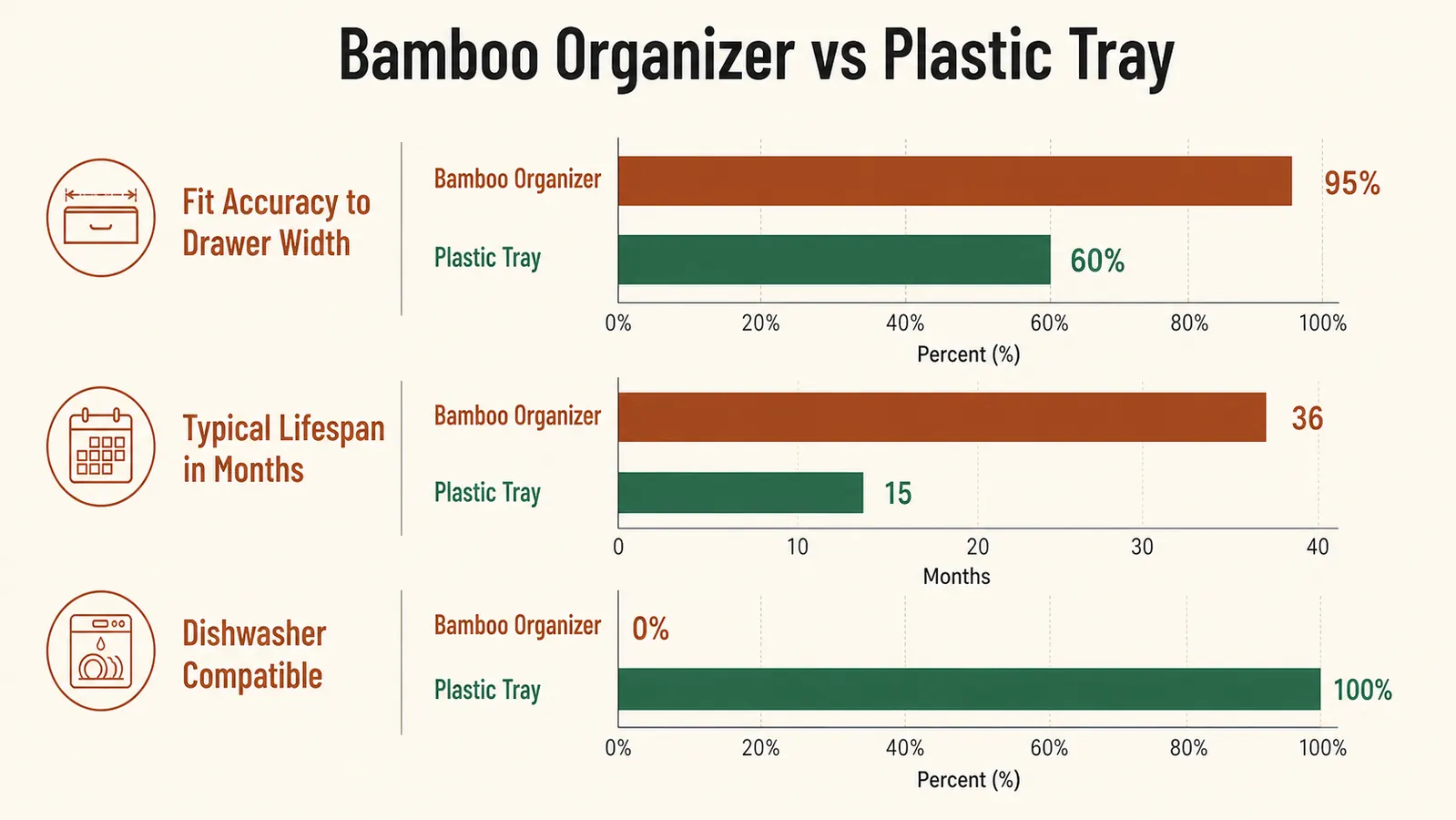
The Fit Test: Why Sizing Decides This for Most Kitchens
I measured five drawers across two houses before writing this comparison, my own kitchen, my parents' kitchen, and a friend's rental unit. Only one of the five matched a standard plastic tray's dimensions closely enough to sit flush without a gap. The other four all had at least an inch of dead space somewhere, front, back, or one side, and that dead space is where loose utensils, junk drawer clutter, and crumbs tend to collect no matter how organized the rest of the drawer looks. If you haven't actually measured your own drawer with a tape measure, that's the first thing to do before buying either option, because the plastic tray's fixed size is either going to work perfectly or not at all.
The bamboo organizer sidesteps that gamble entirely by adjusting to whatever width you're working with, within its range. That's the whole appeal, and it's why I keep coming back to fit as the deciding factor rather than material or price. I go into more detail on the exact adjustment process and how it held up after a full year of daily use in this long-term review, including the one leak that gave it a real stress test.
There's a flip side worth naming honestly. The expandable range does have limits, and if your drawer runs unusually narrow or unusually deep, the panels may not lock in as snugly as you'd want. I covered the specific sizing quirks that tripped me up during setup, including one measurement I got wrong the first time, in this honest review. It's worth a read before you buy if your drawer falls outside the typical range most kitchens use.
Cost and Durability Over Time
The upfront price difference between these two options isn't huge, but the real cost shows up over a year or two, not on day one. My old plastic tray cracked at the eighteen-month mark and started showing a yellowish discoloration near the front edge even before that, likely from years of dish soap and sunlight through the kitchen window. I replaced it once already before switching to bamboo, which means the true lifetime cost of the plastic option was actually two purchases, not one.
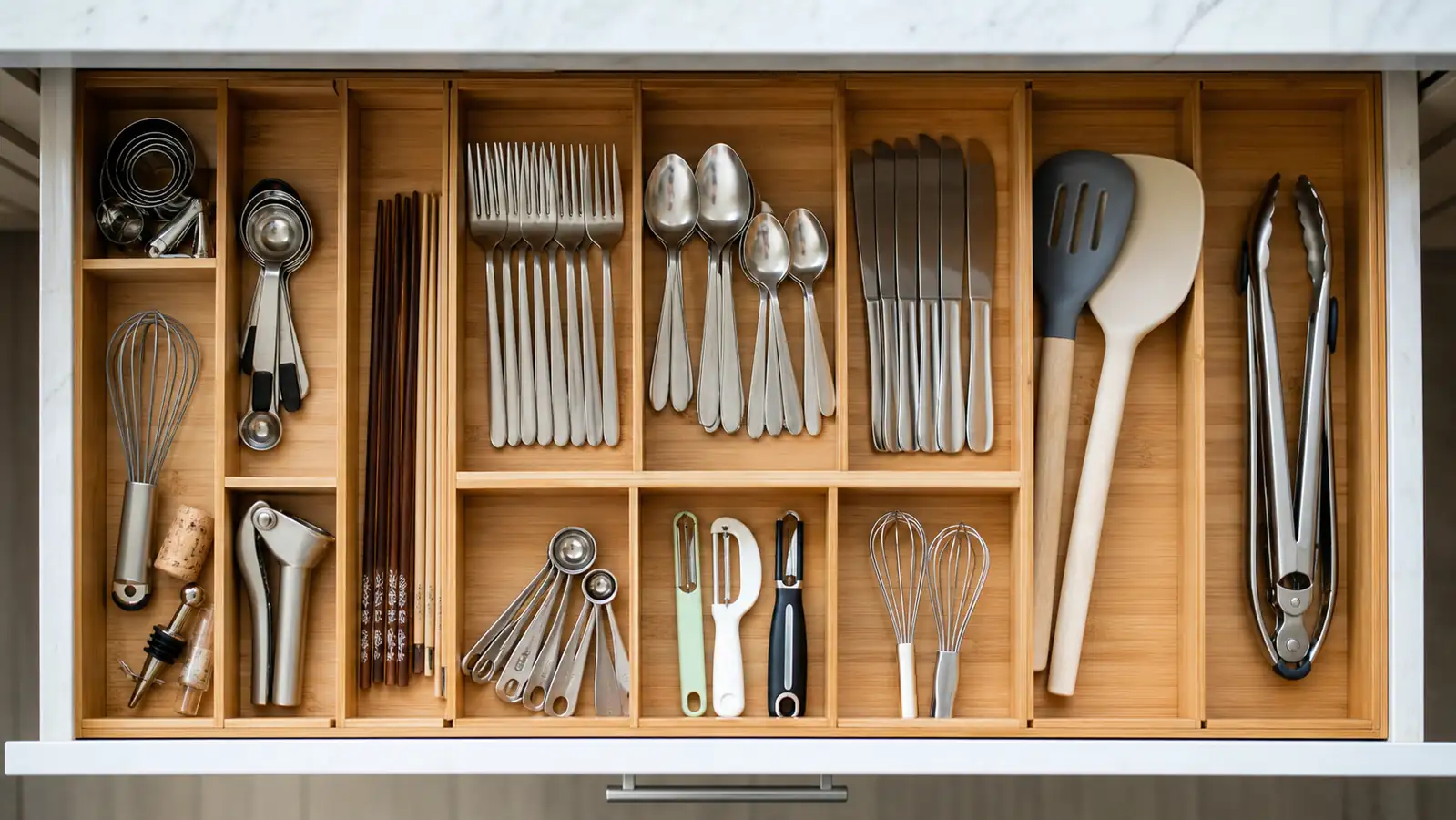
The Pipishell organizer costs more to buy once, but six months in it shows no cracking, no warping, and no loose joints, and the sibling review linked above tracked a full year with the same result. If it holds up the way wood organizers typically do with basic care, replacing it once every three or more years instead of every twelve to eighteen months makes the higher upfront price a better long-term value, not a worse one. That math only works if you're willing to hand wash it, though, so factor your own habits in honestly before assuming the bamboo option is automatically cheaper over time.
Who Should Buy Which
Buy the plastic tray if your drawer genuinely matches a standard size, you want dishwasher-safe cleaning with zero extra thought, or you're setting up a rental kitchen you don't plan to be in long term. It's a reasonable, inexpensive fix for a straightforward drawer, and there's no need to spend more just to get a feature you won't use. Buy the bamboo organizer if your drawer is an odd width, if you've already been burned by a tray that left a gap, or if you cook often enough that a sturdier build and a better fit are worth a slightly longer setup and a little extra care when cleaning.
If you're not sure which camp you're in, measure your drawer before you buy anything. That single step would have saved me two years of a rattling drawer and one cracked plastic tray. For most kitchens I've actually measured, the fit alone tips this toward the bamboo option, and the extra durability over time is what's kept me from looking back.
Measured your drawer and it's not a standard size?
That's exactly the problem this organizer was built to solve. It adjusts to your drawer instead of the other way around, and after six months of daily use in mine, it hasn't loosened a single joint.
Amazon Check Today's Price on Amazon →