
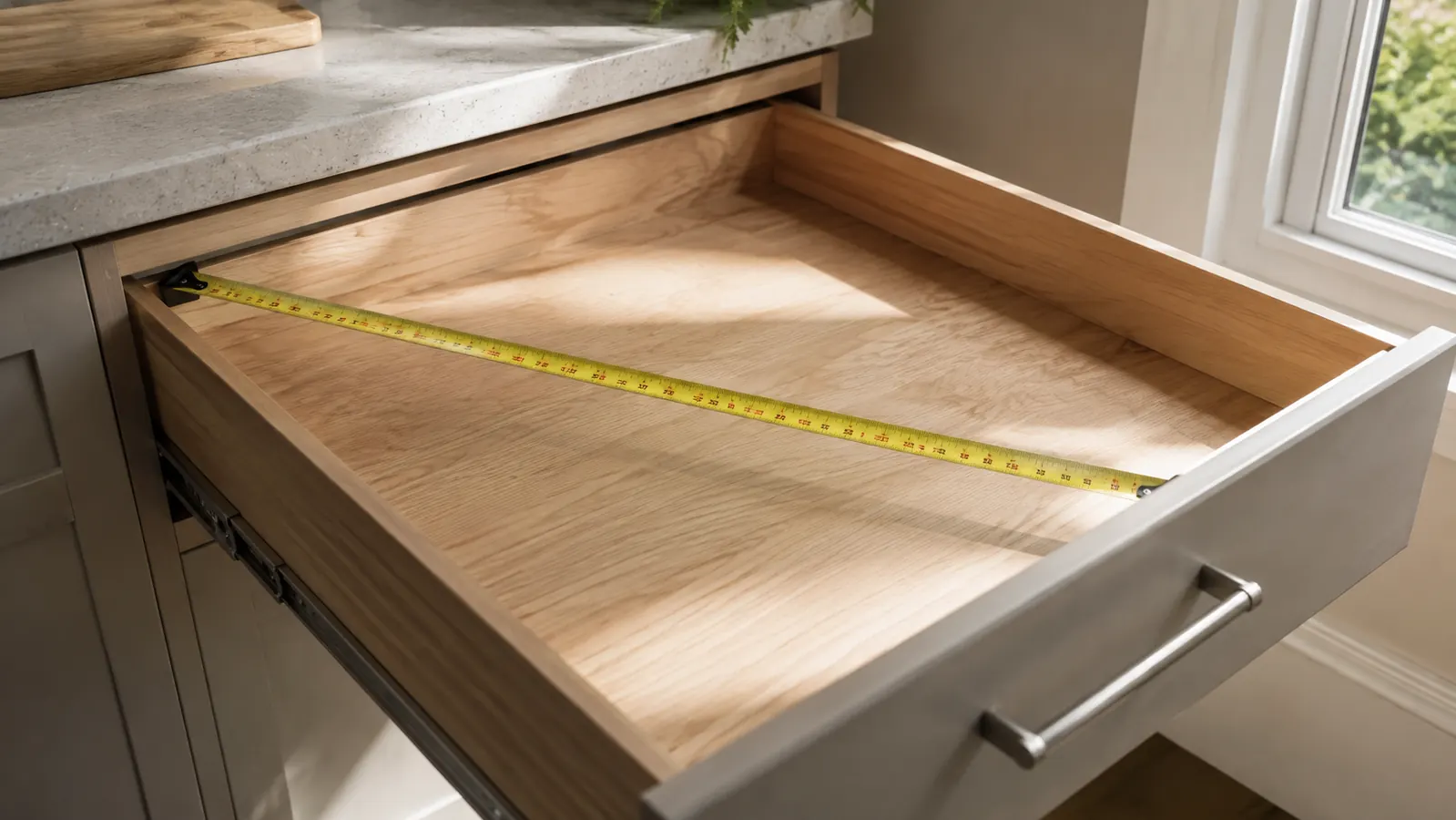
The Amazon photos for the Pipishell Bamboo Expandable Drawer Organizer make the locking pegs look like they click into place every time, no fuss, no second-guessing. What the photos don't show is a drawer with a center-mounted metal rail that eats an extra half inch of usable width, or the fact that the box arrives with no printed instructions and one panel that showed up slightly bowed from sitting flat-packed in a warehouse. I bought this one for the narrow silverware drawer in a rental duplex kitchen I was living in for a few months, a drawer that measured 19 and a half inches wide up front and barely two and a quarter inches tall on the inside. That's the kind of drawer the listing copy glosses over, and it's the drawer I want to talk about here, because it's the kind of drawer a lot of people actually have, not the wide, perfectly square drawer in the stock photography.
I already wrote a separate review covering a full year of using this same organizer in a different kitchen, in a wider utensil drawer that fit it without much drama. That one is about how it holds up over time, day after day of opening and closing it. This one is about the parts that gave me trouble before it ever saw daily use, the sizing quirks, the rough edges, and a couple of things I wish someone had told me before I clicked buy. None of it changed my mind about keeping the organizer. It did change how I'd tell a friend to shop for one.
The Quick Verdict
A well-built bamboo organizer once it's seated correctly, but the advertised expandable range is measured loosely, and drawers with a taper or a center rail need more patience than the listing lets on.
Amazon Check Today's Price →Before you order one, know your drawer's real clearance
The width printed on the listing isn't the width that locks rigid. Measure the back of your drawer, not just the front, and check what's mounted underneath before you buy. Here's the exact one I'm reviewing.
Amazon Check Today's Price on Amazon →How I Tested for the Sizing Issues
I measured the drawer three separate times with two different tape measures before ordering anything, mostly out of habit after being burned by a mismatched plastic tray in a previous kitchen. What I hadn't done before was check the width at the back of the drawer, not just the front opening. Older cabinet boxes, and this rental's kitchen was easily thirty years old, are rarely a perfect rectangle. The front opening measured 19 and 5/8 inches. The back wall, where the drawer actually narrows slightly as it meets the cabinet frame, measured 19 and 1/4 inches.
That quarter inch of taper doesn't sound like much until you're trying to lock an expandable organizer into a drawer that isn't the same width front to back. I set the panels to the narrower measurement first, which left a visible gap near the front on both sides. Widening it to split the difference meant the back edge pressed slightly against the drawer wall and never fully seated its peg. I ended up going with the narrower setting and living with the small front gap, since a loose peg felt like the bigger long-term problem.
The other thing I checked, because I'd read a complaint about it in someone else's review before I bought, was clearance underneath the drawer above. This particular cabinet box used a center-mounted metal rail instead of side rollers, which is common in older builds. That rail sits low enough that it didn't interfere with the organizer's height, but it does eat into the drawer's true depth measurement if you're not accounting for it. If your kitchen has this kind of rail, measure around it, not just the drawer's stated interior depth.
I also checked the drawer bottom itself, since I've had drawers with a raised center seam where two panels of thin plywood meet, and that seam can throw off how flat an organizer actually sits. Mine was flat enough not to matter, but it's a five-second check with a level or even just eyeballing it from the side, and it's the kind of thing that's easy to miss when you're focused on width and depth and forget the Pipishell also needs a flat surface underneath it to sit evenly.
Once it was seated, I loaded it deliberately heavy for the first week, more serving spoons and a small ladle than I'd normally keep in that drawer, just to see whether any of the divider slats would bow under real weight instead of the light load of everyday flatware. Nothing bowed and nothing shifted out of its track, which told me the joinery itself was solid even if the overall width fit was the part I'd had to work around.
What the Advertised Expandable Range Actually Means
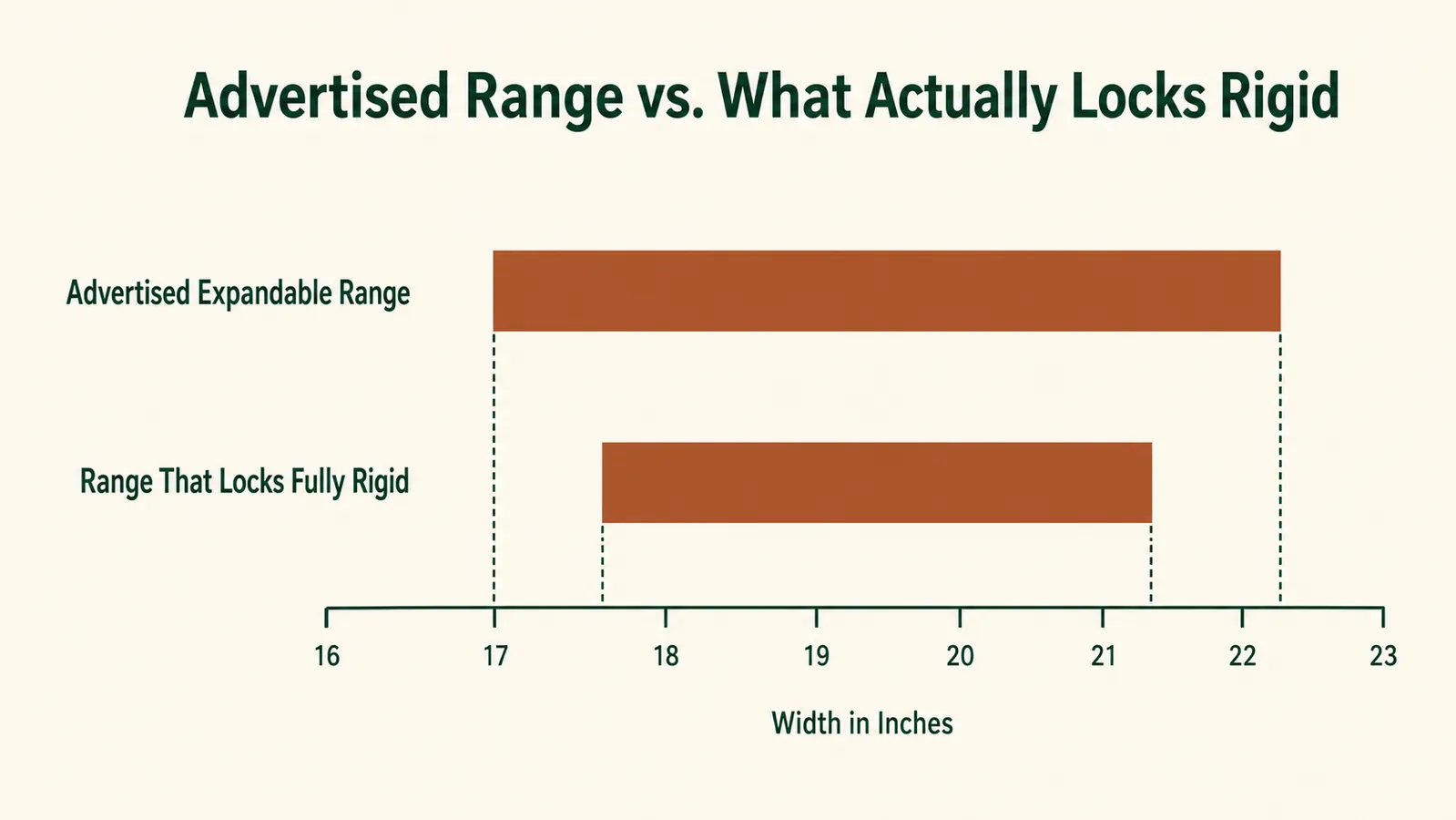
The listing states an expandable range and it's technically accurate, but only in the sense that the panels can physically slide that far apart. What it doesn't clarify is that the range shown is measured before the locking pegs are seated. Once you push the panels together enough for the pegs to click and hold under real weight, you lose roughly three quarters of an inch of adjustment on each side. In practice, the range that actually locks rigid is noticeably narrower than the range printed on the page.
That gap matters most if your drawer sits near either end of the stated range. Mine was close to the narrow end, which is exactly where I ran into the taper problem above. If your drawer measures anywhere within an inch of the organizer's minimum or maximum listed width, plan on the pegs not fully seating, and decide ahead of time whether you're okay with a slightly loose fit or would rather size down to something with more margin.
I also want to be fair here: once I settled on the narrower setting and accepted the small front gap, the organizer itself didn't wobble or shift during normal use. The looseness was cosmetic, not structural. But cosmetic looseness in a drawer you open multiple times a day still bothers you every single time you notice it, and I noticed it for at least the first week, right up until I stopped looking for it.
The Rough Edges Nobody Photographs
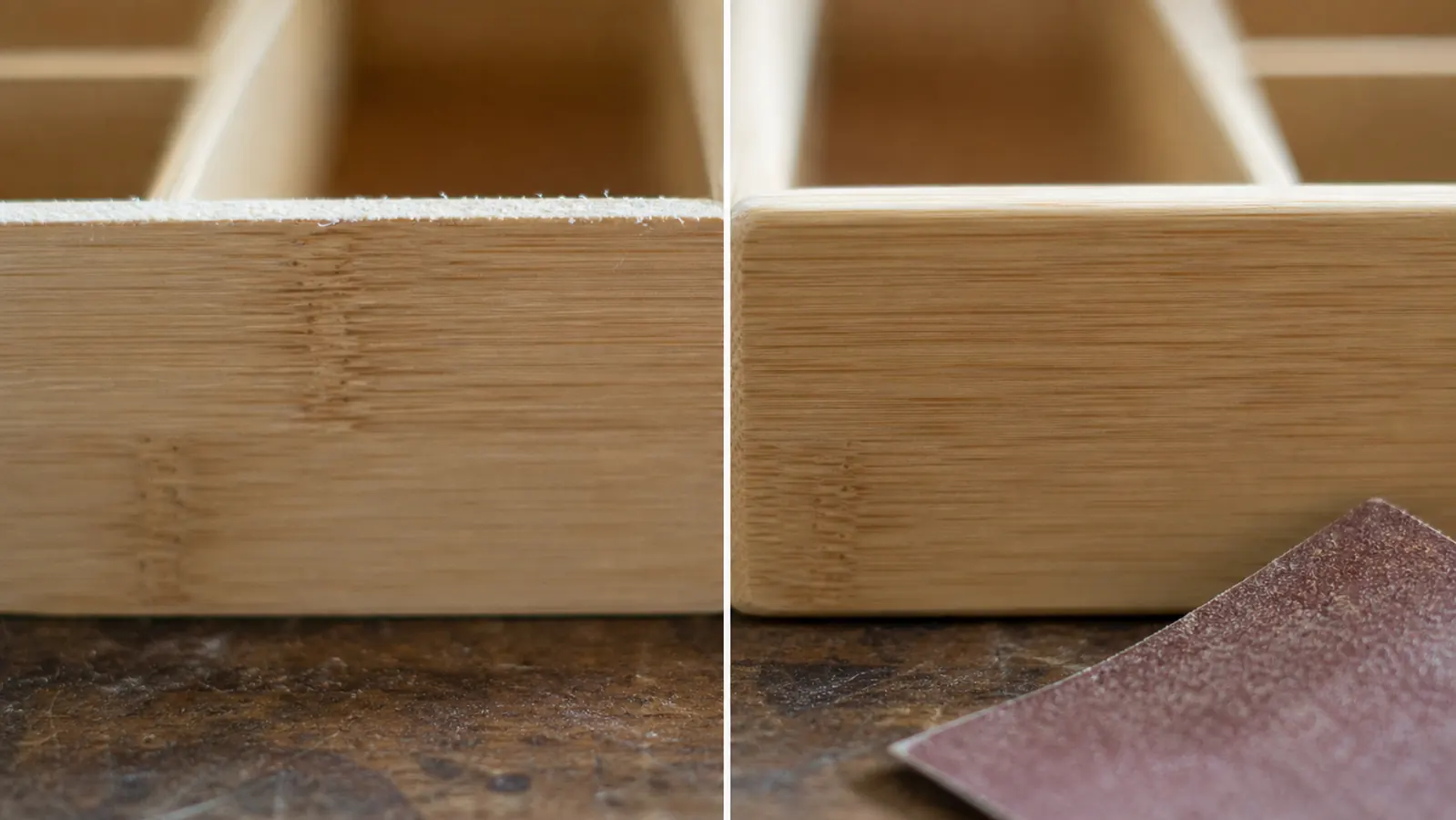
Two of the divider slats had a slightly rough, almost sawtoothed edge on the underside, the kind you'd only notice by running a fingertip along it. It wasn't sharp enough to be dangerous, but it snagged a dish towel the first time I wiped the organizer down, and I decided it was worth ten minutes with a piece of 220 grit sandpaper to smooth it out before it caught on anything else. This isn't something the product photos show, and it's not mentioned anywhere in the listing description.
There was also a noticeable bamboo smell for the first two days, stronger than I remembered from the organizer in my other kitchen. I left the drawer cracked open near a window for an afternoon and it faded on its own. It wasn't unpleasant exactly, just present enough that I'd mention it to anyone sensitive to strong wood or resin smells, and I'd air it out somewhere other than a closed kitchen if you're planning to store food-adjacent items in the same drawer right away.
One more small thing worth flagging: there's no felt or rubber lining anywhere on the underside of the panels, just bare bamboo against the drawer bottom. That hasn't caused any scratching in my case, since the drawer bottom is a laminated panel, not bare wood, but if your drawer bottom is unfinished or painted, it's worth setting a thin non-slip liner underneath before you seat the organizer, rather than finding out after the fact.
What the Listing Doesn't Tell You About Assembly
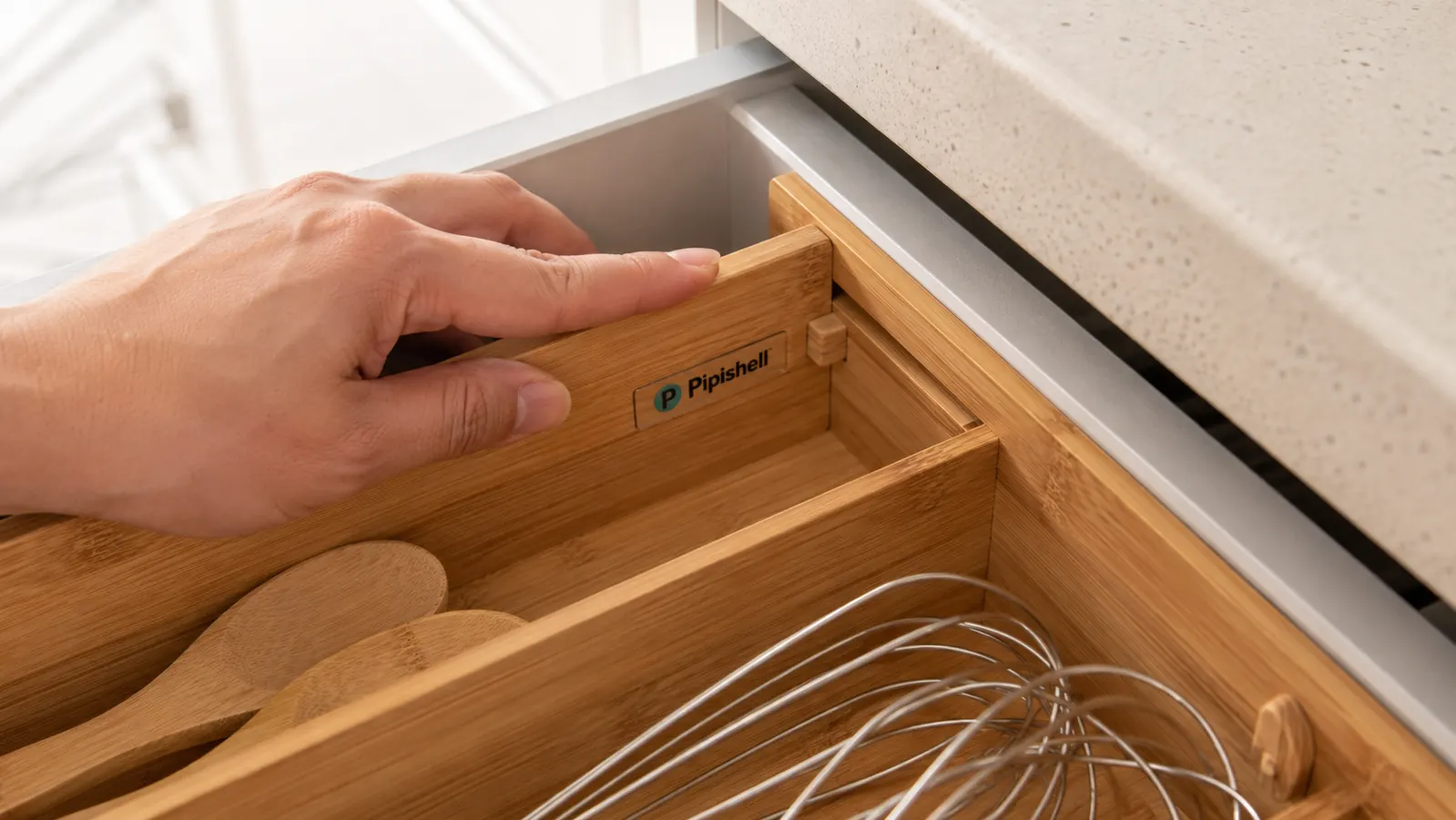
There were no printed instructions in the box, just the organizer itself and a small bag of extra pegs. I ended up searching for a short setup video to confirm I was seating the panels correctly, which added about fifteen minutes to a job I'd assumed would take five. It's not complicated once you see it done, but the lack of any printed guide felt like an odd corner to cut on a product where getting the sizing right the first time actually matters.
One of the panels also arrived with a slight bow to it, likely from being flat-packed for a while before shipping. It wasn't dramatic, maybe an eighth of an inch of curve across the length, but it kept one peg from seating flush the first two times I tried. I stacked a couple of cookbooks on it overnight and it flattened out enough to lock properly the next morning. If yours arrives slightly warped, that's a fix worth trying before you assume the piece is defective and start a return.
I also wasn't sure at first how many of the extra pegs I was supposed to use versus keep as spares, since nothing in the box explained it. After some trial and error, it turned out each expansion joint only needs one peg to lock, and the rest really are just backups in case one gets lost down the line. Small detail, but it's exactly the kind of thing a single printed card in the box would have cleared up in ten seconds instead of ten minutes of guessing.
So Is It Still Worth Buying
Once I got past the measuring, the sanding, and the overnight flattening trick, the Pipishell has done exactly what I wanted it to do. Silverware stays sorted, the drawer opens quietly instead of rattling, and I haven't had to readjust anything since that first week. None of the issues above were dealbreakers on their own. Stacked together, though, they added up to closer to an hour of extra effort before the thing was actually doing its job, and that's the part the five-star average on the listing doesn't capture.
I checked back in on it about six weeks after setup, mostly to see whether the front gap I'd accepted had gotten any worse from repeated opening and closing. It hadn't. The narrower setting has held its lock the entire time, and the only maintenance has been wiping crumbs out from the corners once a week, which takes about a minute. Whatever settling was going to happen seems to have happened in that first week, not gradually afterward.
If you're deciding between this and a fixed plastic tray, the plastic tray comparison covers that tradeoff directly. The short version is that a plastic tray skips all of the sizing and assembly friction described here, but only if your drawer happens to match a standard size. Mine didn't, which is exactly why I was willing to put up with the extra setup time in the first place, and why I'd still make the same choice again.
What I Liked
- Once seated correctly, the lock holds firm with no wobble during normal use
- Adjusts to non-standard and slightly tapered drawers a fixed tray can't handle
- A quick sand on any rough edges takes care of the only sharp-feeling spot
- A warped panel can usually be flattened overnight rather than returned
- Held a deliberately heavy first-week load without any divider slat bowing
Where It Falls Short
- Advertised expandable range shrinks by about three quarters of an inch per side once pegs are locked
- No printed setup instructions in the box, and no explanation of how many pegs to actually use
- Drawers with a taper front to back or a center-mounted rail need extra measuring
- Noticeable bamboo smell for the first couple of days out of the box
The organizer itself held up fine. It was the thirty minutes before it ever touched a drawer that nobody warns you about.
Who This Is For
This is a good fit if you're willing to measure your drawer carefully, front and back, before you order, and you don't mind spending a little extra time on setup in exchange for an organizer that adjusts to a drawer a standard tray wouldn't fit. It's especially worth the effort in an older kitchen, a rental, or any space where the cabinets weren't built with modern standard drawer sizes in mind. If you already know your drawer isn't a perfect rectangle, or has a center-mounted rail underneath, this is one of the few options built to handle that instead of fighting it, and it's the kind of purchase that pays off more the pickier your drawer is.
Who Should Skip It
If your drawer measures close to either end of the advertised range, or you're not up for a bit of trial and error with the fit, this probably isn't the low-effort purchase the listing photos suggest. It's also not the right call if you want to open the box and be done in five minutes flat. Between the missing instructions and the occasional warped panel, budget more like thirty to sixty minutes for a first-time setup that goes smoothly, and longer if your drawer needs the kind of adjusting mine did, or if you'd rather return an item than spend an evening fine-tuning it.
Measure twice, then decide if this is the one
It's a genuinely solid organizer once it's seated right, but the fit takes patience with anything other than a standard drawer. If yours checks out, here's the listing to compare against your own measurements.
Amazon Check Today's Price on Amazon →