
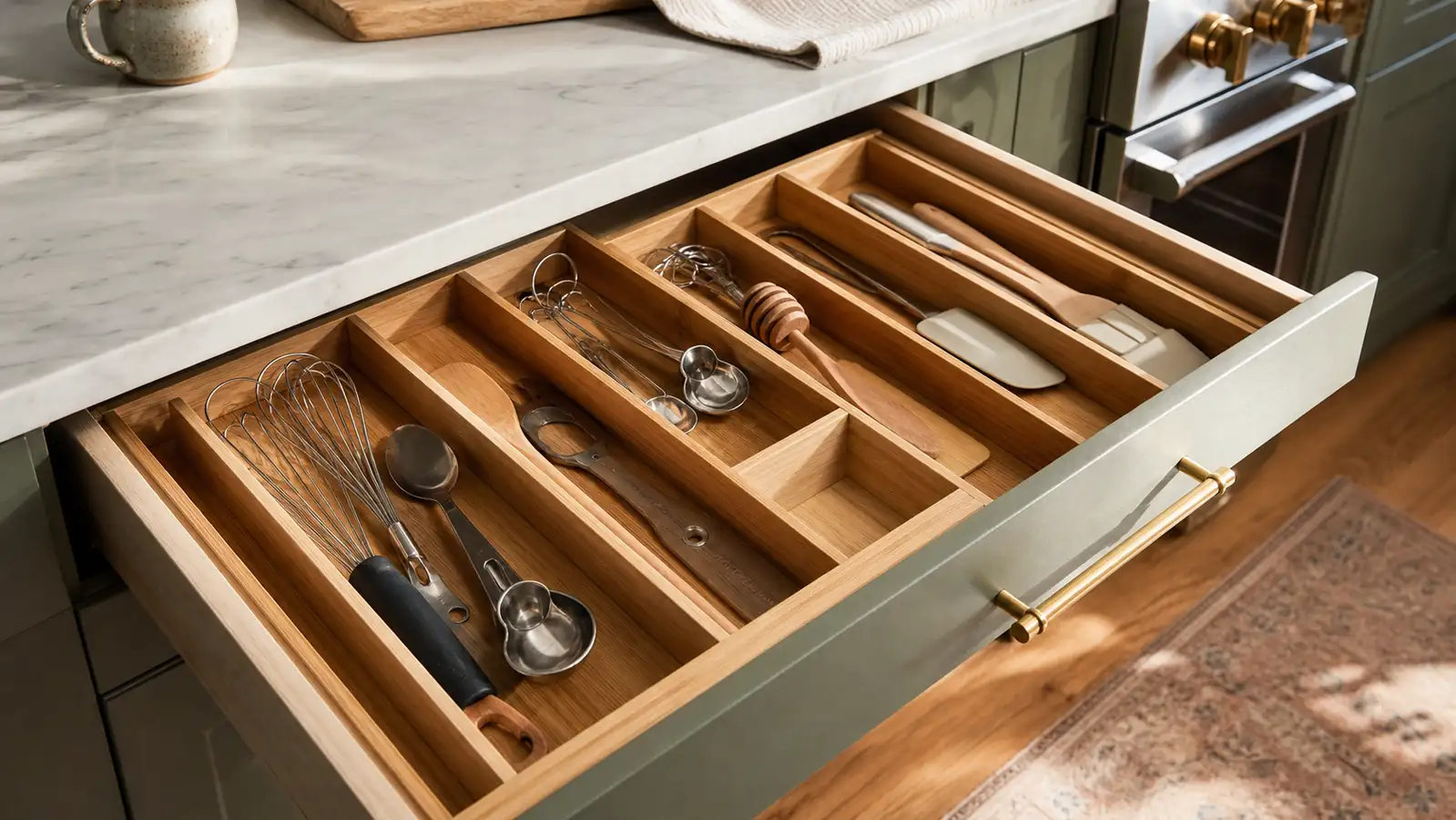
For close to three years, the drawer under my stovetop wouldn't close all the way. Not because it was broken. Because it was losing a daily fight against a tangle of measuring spoons, a garlic press I barely used, two mismatched sets of tongs, and a rubber spatula that had melted slightly on one edge from a too-hot pan. Every time I yanked it open looking for a whisk, three other things rattled loose and slid to the front. I finally bought the Pipishell Bamboo Expandable Drawer Organizer in January of last year, mostly because I was tired of the noise, and I've used it every day since. This is what a full year of real cooking, real cleaning, and one accidental flood from a leaking ice tray did to it.
I'm not a professional cook. I make dinner most nights, I bake on weekends when I have the energy, and I have exactly one drawer for the tools I reach for constantly. That drawer had to work, or I was going to keep buying random plastic trays from the discount aisle forever. The tipping point was a Tuesday when I was rushing to get pasta on the table and couldn't find the strainer spoon under everything else, ended up burning garlic while I dug around, and just stood there annoyed at my own kitchen.
The Quick Verdict
A genuinely solid bamboo organizer that fixed my drawer problem in one afternoon. The adjustable slats took some trial and error to lock in, and it costs more than a plastic tray, but a year of daily use hasn't loosened a single joint.
Amazon Check Today's Price →Still fighting a drawer that won't shut all the way?
If your utensil drawer sounds like a junk drawer every time you open it, the fix usually isn't a bigger drawer. It's dividers that actually fit the one you have. This is the one I've used every day for a year.
Amazon Check Today's Price on Amazon →How I've Used It
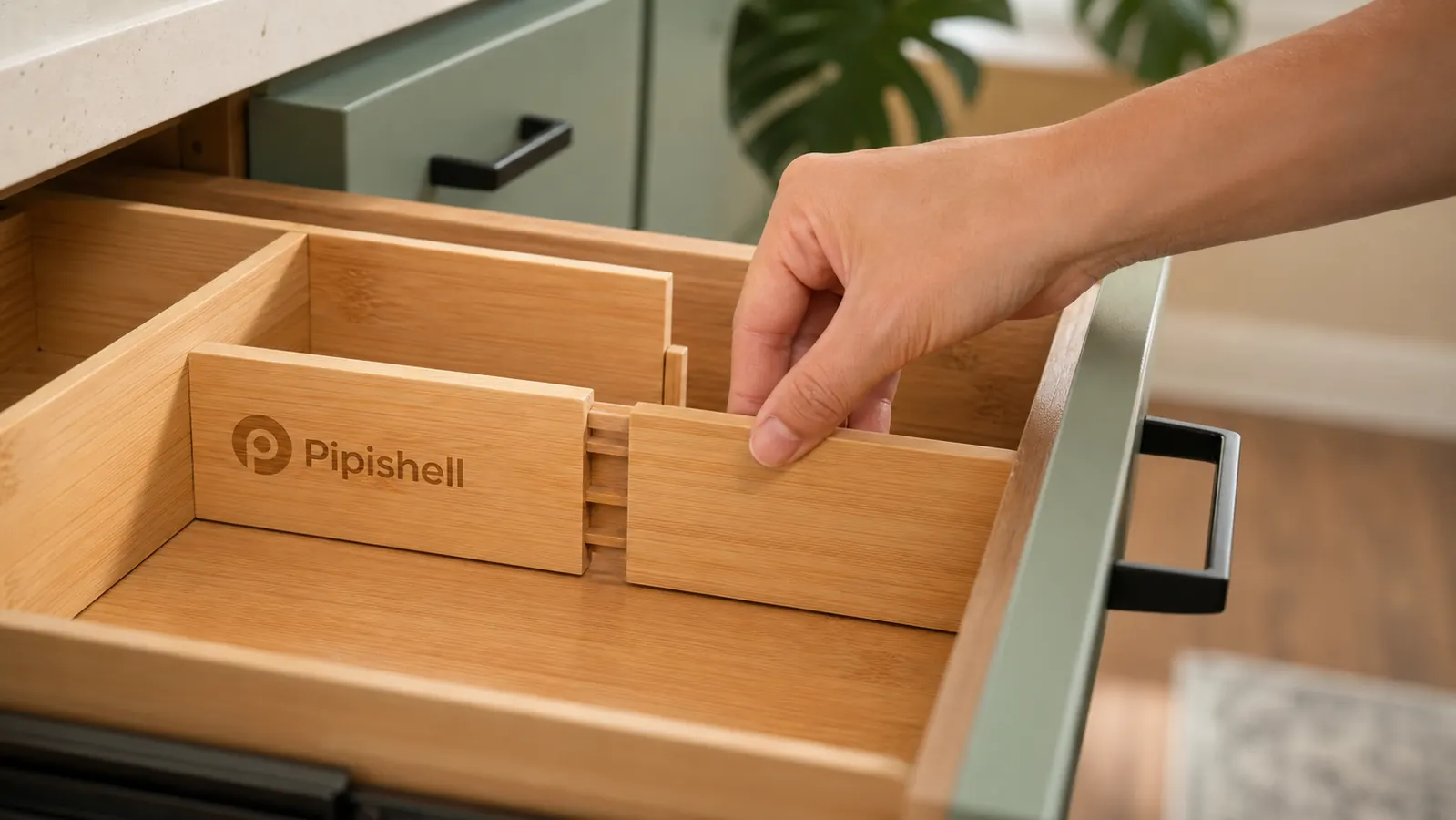
Before I bought anything, I measured the drawer twice, because I'd already been burned once by a plastic tray that was a half inch too long and had to be forced in at an angle. The interior of my drawer runs a little over 21 inches wide and just under 16 inches deep, which put it comfortably inside the organizer's expandable range. The bamboo sections telescope, so instead of buying a fixed-size tray and hoping, I slid the panels out until they matched the drawer, then locked them with the built-in pegs.
The first setup took about twenty-five minutes, mostly because I kept second-guessing where to put the dividers. I settled on a layout with wider slots up front for the tools I use daily, tongs, a fish spatula, a wooden spoon, and narrower slots toward the back for measuring spoons and the garlic press I mentioned earlier. I've rearranged that layout twice since, once when I added a second set of tongs and once when I gave up on keeping the can opener in there at all.
Over the year I pulled it out for a full wash three times, once after the ice tray leaked and left a puddle under it for most of a weekend I was traveling for work. That's the closest thing to a stress test this Pipishell organizer got, and it's the section I paid the most attention to when checking for warping. Nothing about that leak left a lasting mark once it dried out, which was the first real sign this thing could take a real kitchen mishap and not just gentle daily wiping.
I also moved it once, from the stovetop drawer to a slightly wider drawer near the sink when I rearranged the kitchen last summer. Sliding the panels back out to re-expand the width took maybe five minutes, which told me the adjustment mechanism wasn't a one-time-use gimmick. It's meant to be reset if your setup changes, and the second drawer it lives in now is almost two inches wider than the first.
The Fit: Getting It to Actually Match My Drawer
The expandable design is the main reason I bought this one over a fixed plastic tray, and it's also the part that requires the most patience. The bamboo sections slide along a track and lock into place with small pegs on the underside. Getting a snug fit meant pulling the drawer out, testing the width, sliding drawer, testing again, three separate times before it sat right. It's not difficult, it's just fiddly the first time.
Once locked, the fit has held. I haven't had to readjust the overall width since that first week, even after removing it for washing. The individual divider slats are a different story, those do shift slightly if you're not careful lifting heavy items out, but they snap back into their grooves in a couple of seconds.
If you've read the comparison against cheap plastic trays, this is the piece that plastic can't really match. A molded plastic tray is one fixed size. This one adjusts to the drawer instead of the other way around, which mattered more to me than I expected going in, especially in an older house where none of the drawers are quite the size you'd think.
A Year of Daily Use: Does the Bamboo Hold Up
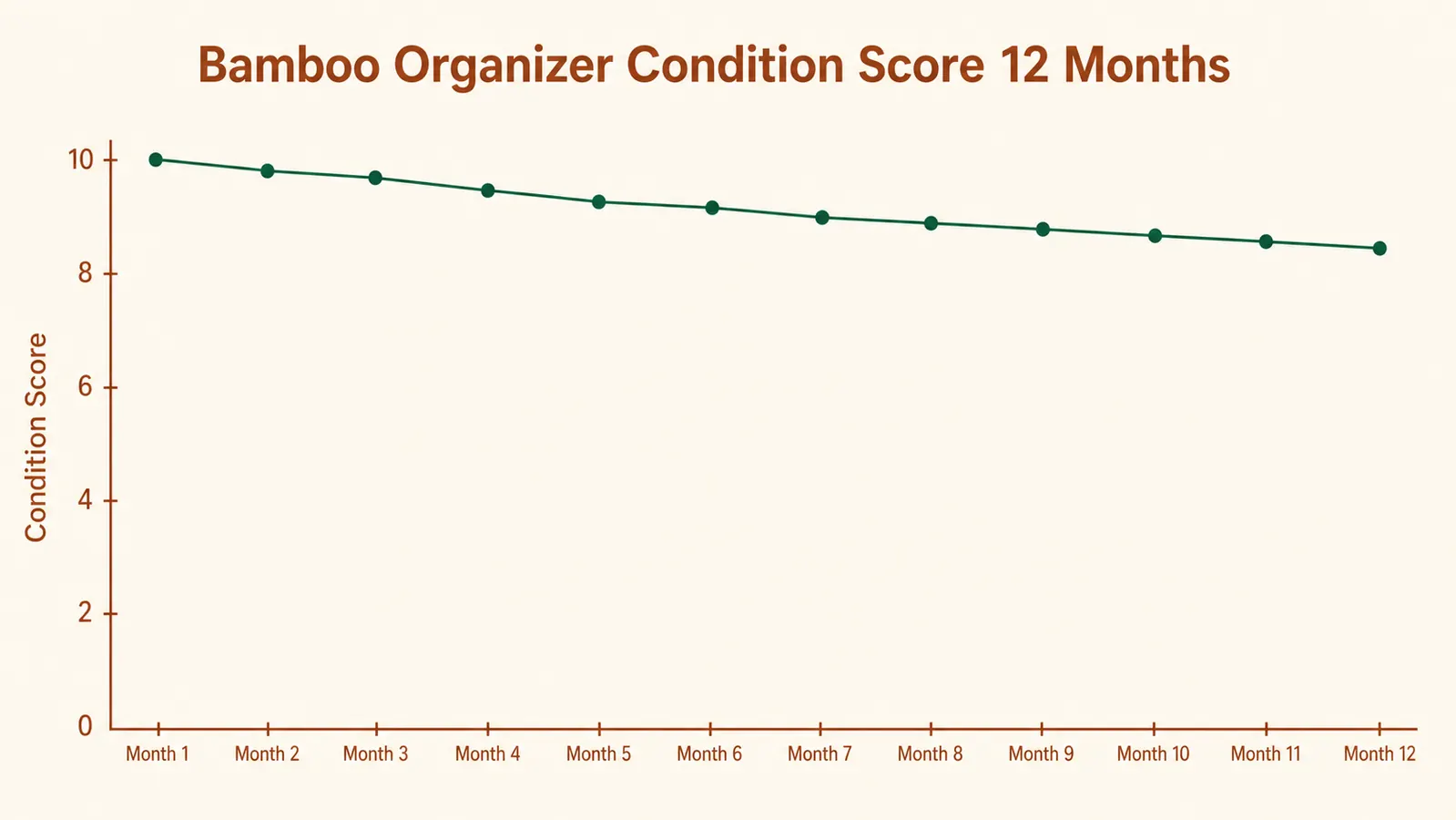
Bamboo sounded like a risk to me at first. I've owned bamboo cutting boards that cracked within a year from being left wet too long, and I half expected the same fate here. It hasn't happened. The wood has a slightly different look now than the day it arrived, a shade darker in the corners where my hands rest most often, but there's no cracking, no splintering, and no warping I can detect with a straightedge.
The one spot that shows real wear is the divider I use for the garlic press, which tends to sit slightly damp after I rinse it and set it back before it's fully dry. That section has a faint water ring now. It's cosmetic, not structural, the wood underneath is still solid when I press on it.
The joints and pegs are the part I worried would fail first, since that's usually where cheaper wood organizers give out. A year of sliding the drawer open and shut multiple times a day hasn't loosened them. I can still feel a firm click when I test the width adjustment, the same click it had the day I set it up.
What It Actually Organized (and What It Didn't)
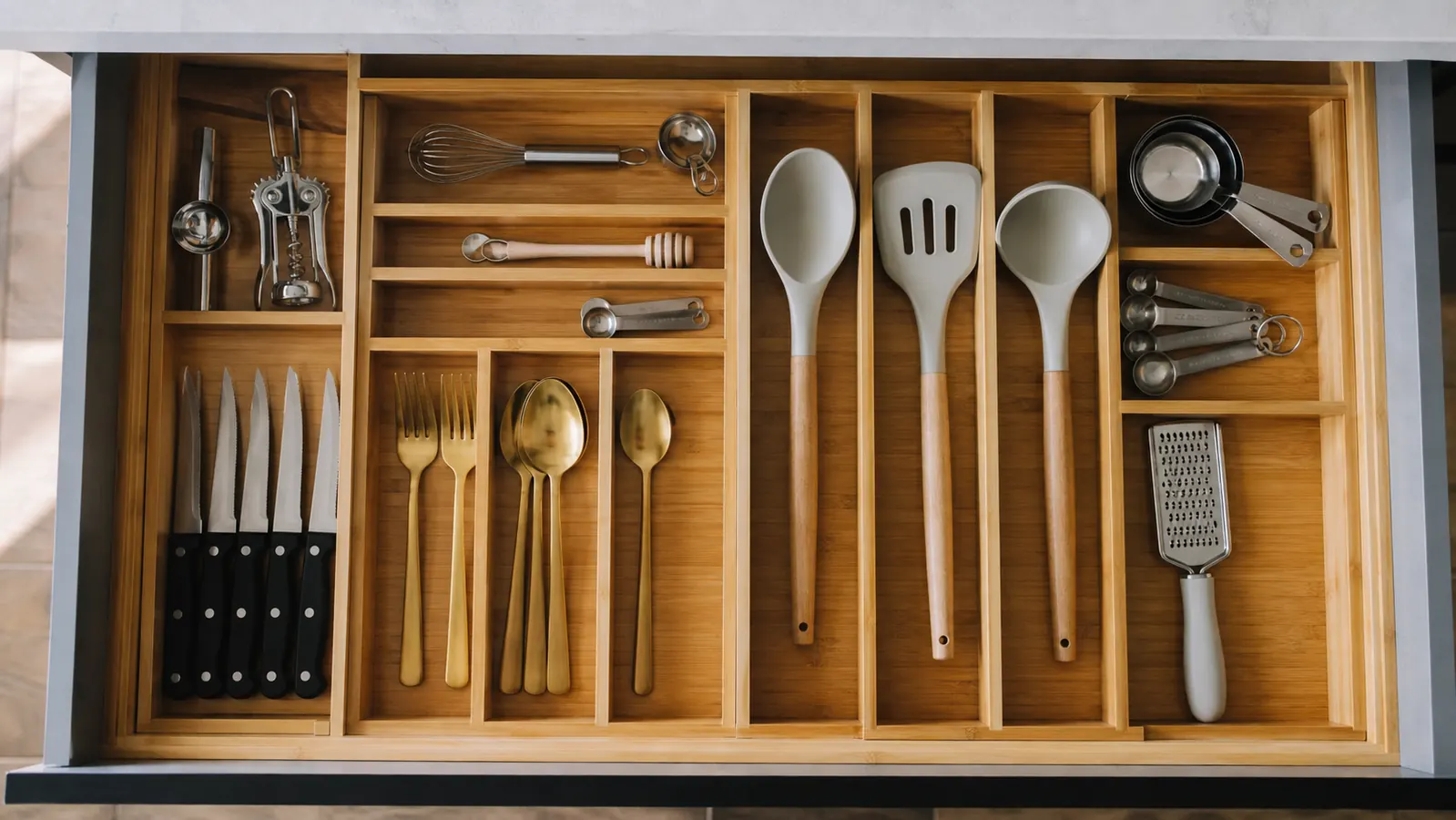
This Pipishell organizer is built for the tools you'd expect: spatulas, ladles, whisks, tongs, measuring spoons, peelers, that whole category of stuff that used to slide around loose. It handled all of that without complaint, and honestly made me realize how much of the old noise was just things bumping into each other with nothing to separate them. Even smaller items like a citrus zester and a bottle opener found a home instead of sliding to whichever corner of the drawer gravity picked.
Where it struggled was the odd-shaped stuff. My kitchen shears never sat well in any slot, they're wider at the handle than the blade, so they'd rock instead of sit flat. The electric can opener I keep nearby simply doesn't fit in a drawer organizer at all and lives in the cabinet below now. If you have a lot of oversized or oddly shaped gadgets, expect to keep a second home for those, this isn't a catch-all solution for every kitchen tool you own.
I also tried squeezing in a small cutting board once, just to see, and it sat awkwardly across two compartments instead of resting flat. That's not really a fair test since it's not what the organizer is meant for, but it's the kind of thing worth knowing before you assume it'll swallow anything you throw in the drawer.
Six months in, the real change I noticed wasn't the organizer itself, it was how much faster dinner prep went. I stopped digging. I could grab the fish spatula without touching three other things first, and closing the drawer stopped being a two-handed job where I had to push down on a corner to get it to latch.
Cleaning and Maintenance
Bamboo isn't dishwasher safe, and I didn't try to push that rule. Cleaning has meant pulling it out, wiping it down with a damp cloth and mild soap, and letting it air dry fully before sliding it back in. That last step matters more than I expected. The one time I put it back while still slightly damp is the same section that now has that faint water ring.
Full washes, meaning actually rinsing it in the sink, happened three times over the year. Each time it needed a solid few hours to dry completely before I trusted it back in the drawer. If you're someone who wants to toss everything in the dishwasher and be done, that's a real limitation worth knowing before you buy.
Alternatives I Considered First
Before landing on this one, I tried a plastic cutlery tray from a big box store, the kind with molded compartments already shaped for forks and spoons. It cost less, but it didn't fit my drawer's exact dimensions, so I had roughly two inches of dead space at the back that collected crumbs and loose rubber bands. I also looked at metal wire dividers, but reviews I read kept mentioning rust after a few months near a sink, and my drawer sits directly under the faucet, so I ruled those out before buying anything.
The expandable bamboo option cost more upfront than the plastic tray, but it's the only one of the three that actually matched my drawer's real measurements instead of a standard size someone else picked. I also liked that if I ever move, it can be readjusted to fit a completely different drawer instead of getting tossed out.
What I Liked
- Expandable slats fit drawers that don't match a standard tray size
- No warping, cracking, or loose joints after a full year of daily use
- Cleans up easily with a damp cloth between full washes
- Feels genuinely sturdy, not like thin decorative bamboo
Where It Falls Short
- Not dishwasher safe, needs full air-drying time after a wash
- Individual divider slats can shift slightly under heavy items
- Oddly shaped tools like kitchen shears don't sit well in any slot
- Initial setup and width adjustment takes real trial and error
The joints and pegs are the part I worried would fail first. A year of sliding this drawer open and shut multiple times a day hasn't loosened a single one.
Who This Is For
This makes the most sense for anyone whose drawer doesn't match a standard tray size, or who's already tried a cheap plastic insert and ended up with the same rattling mess a few inches off. If you cook regularly and reach into the same drawer multiple times a day, the adjustable fit and the sturdier build are worth the extra step of hand-washing it. It's also a solid pick if you'd rather buy one solution and adjust it than keep guessing at sizes off a store shelf, or if you're setting up a kitchen and don't yet know exactly which drawer things will land in.
Who Should Skip It
If your drawer already fits a standard-size plastic tray, or you genuinely need everything dishwasher safe with zero extra care, this probably isn't the upgrade you're looking for. It's also not the right fit if most of what you're storing is oversized gadgets rather than everyday utensils, you'll end up working around the slots more than using them. For a full list of what this style of organizer solves, the reasons it earns a spot in the drawer covers the specific situations where it makes the biggest difference.
One drawer, one afternoon, done for a year
I didn't expect a wood organizer to outlast a leaking ice tray and a year of daily use without a single loose joint. If your utensil drawer needs the same fix mine did, this is the one I'd buy again.
Amazon Check Today's Price on Amazon →