
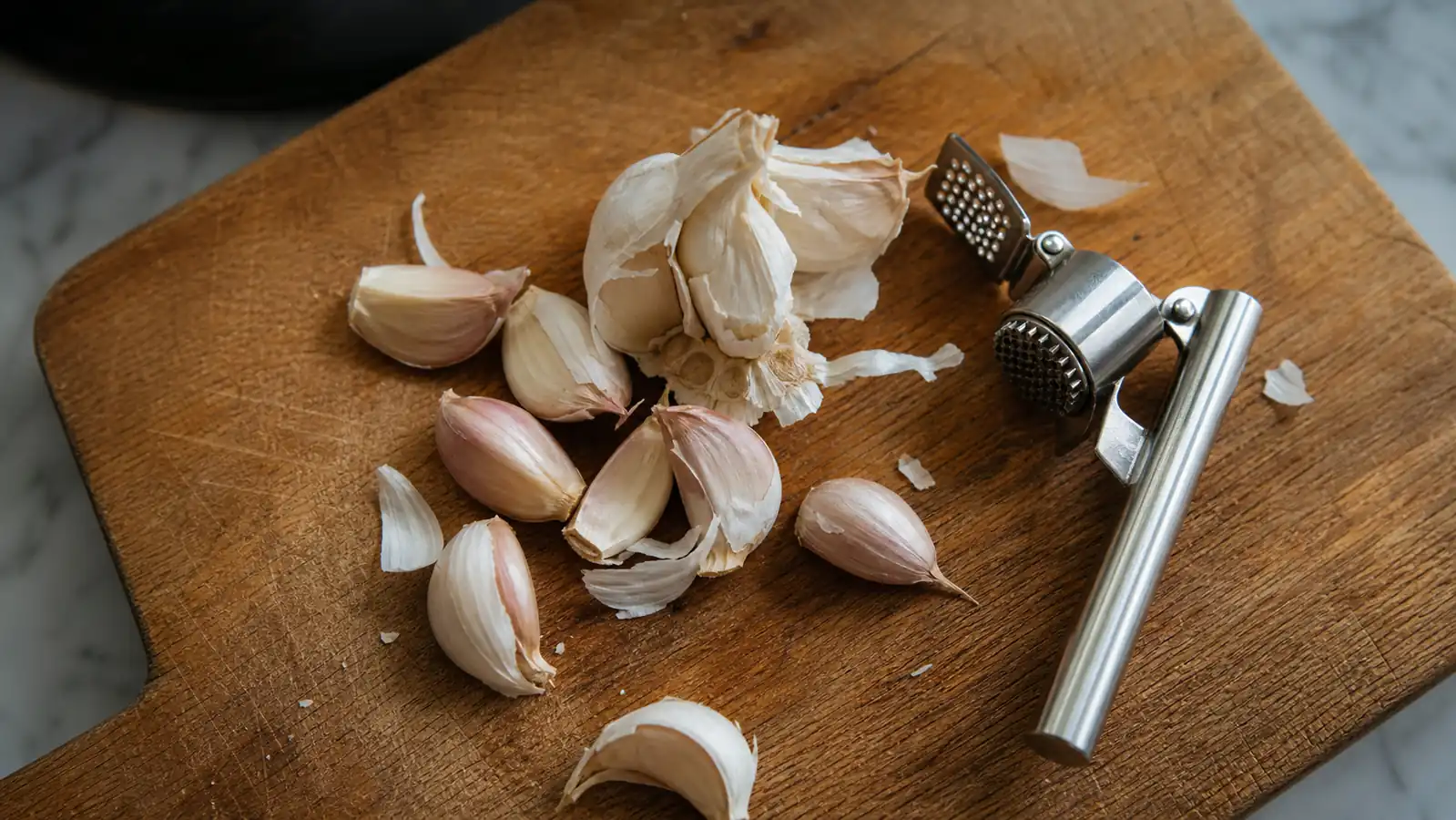
I used to avoid recipes that called for more than two cloves of garlic. Not because I don't like garlic, I put it in almost everything, but because peeling it always felt like the tax I had to pay before I could actually start cooking. Smash a clove with the flat of a knife, pick papery skin off my fingers, repeat four more times, wash my hands because they smelled like garlic for the rest of the night anyway. It added up to real minutes on a weeknight when I had maybe forty-five before I needed food on the table.
A garlic and white bean soup recipe finally forced the issue. It called for a full head of garlic, not a few cloves, and I remember standing at the counter thinking there was no way I was doing this the usual way for twelve cloves on a Tuesday. That was the night I timed myself peeling by hand out of frustration, and the number was worse than expected, close to eight minutes before I'd even started chopping an onion.
What changed it for me wasn't a trick I found online, it was switching to a Vantic rocker-style garlic press that came with its own rubber peeler sleeve built into the handle. The method below is what I actually do now, three or four nights a week, to get from a whole head of garlic to minced garlic in under a minute. None of it requires special skill. It just requires skipping the steps that were never necessary in the first place.
Skip the fingernail peel entirely
The rocker below comes with a rubber peeler sleeve built for exactly the first three steps in this guide. If you're going to buy one tool to fix this, it's the one that does the peeling and the mincing.
Amazon Check Today's Price on Amazon →Step 1: Break the head apart with your palm, not your fingers
Set the whole head of garlic on the counter, root side down, and press straight down on it with the heel of your hand. One firm push is usually enough to separate most of the cloves. You're not trying to peel anything yet, just breaking the head into individual cloves so you can work through them one at a time. This takes about five seconds and it's the step most people skip, going straight at a stubborn intact head with a knife instead.
If a few cloves stay stuck together in a pair, pull them apart with your fingers. Don't worry about loose papery bits falling off, that's the skin starting to loosen already, which is exactly what you want for the next step. If the head feels unusually hard and the cloves won't budge under one push, it's usually a sign the garlic is older than it should be, and I've noticed those heads tend to peel worse no matter what method you use, so don't blame the technique if you're working with a stale bulb.
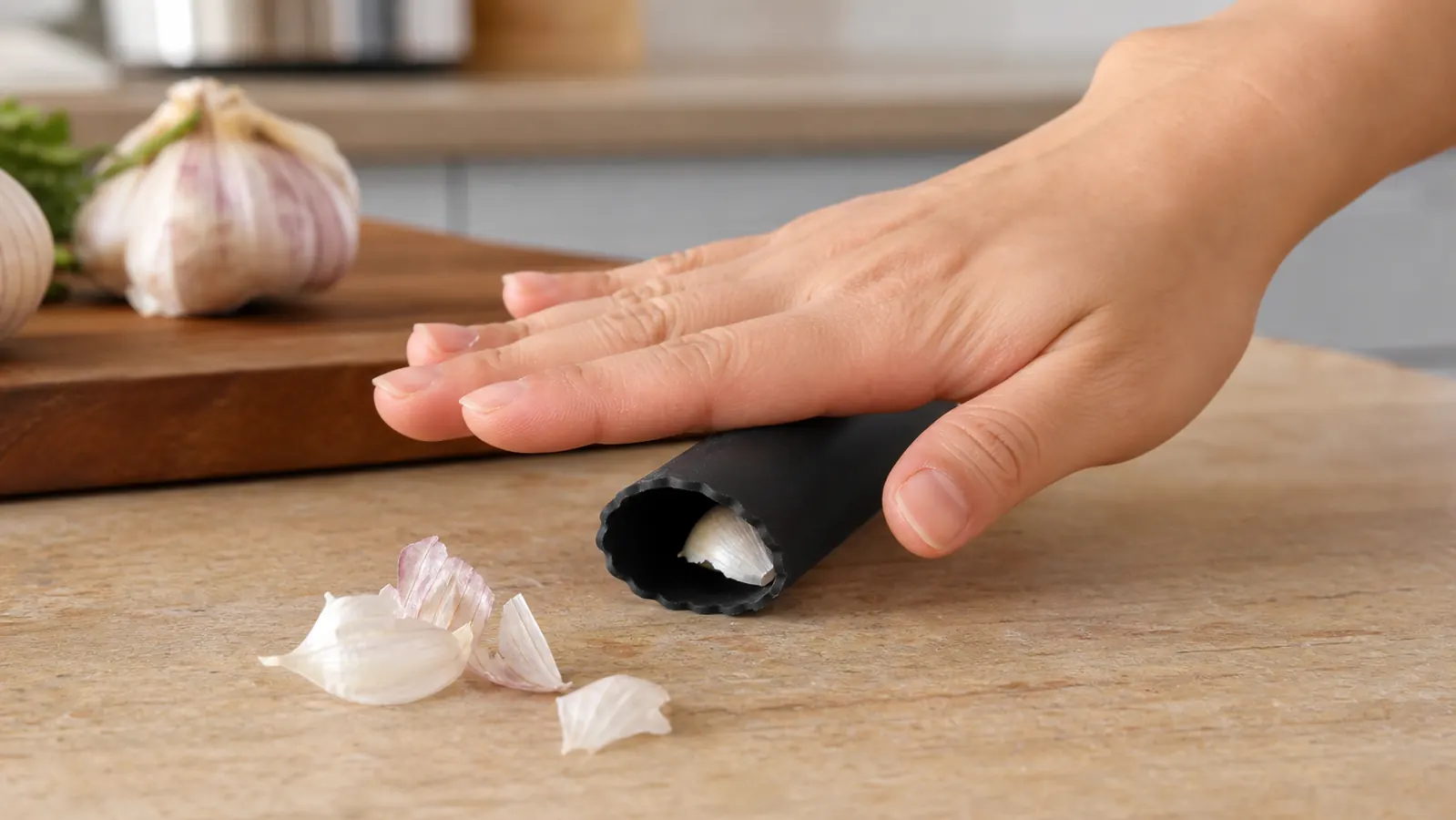
Step 2: Loosen the skin with one controlled smash
Lay a clove flat on the cutting board and press down on it once with the flat side of a chef's knife, or with your palm if you don't want a knife out yet. You're aiming for a light crack, not a full smash. The goal is to loosen the skin from the clove underneath, not pulverize the garlic into paste before you've even peeled it. One firm, short press per clove is enough.
This is the step that makes everything after it fast. A clove with cracked, loosened skin peels in about two seconds. A clove you attack straight from whole can take fifteen or twenty seconds of picking at tight skin with your fingernail, and that's where most of the wasted time in garlic prep actually comes from. I made the mistake early on of pressing too hard here, which turned the clove itself into mush and made it harder to roll cleanly in the next step. Light and firm works better than hard.
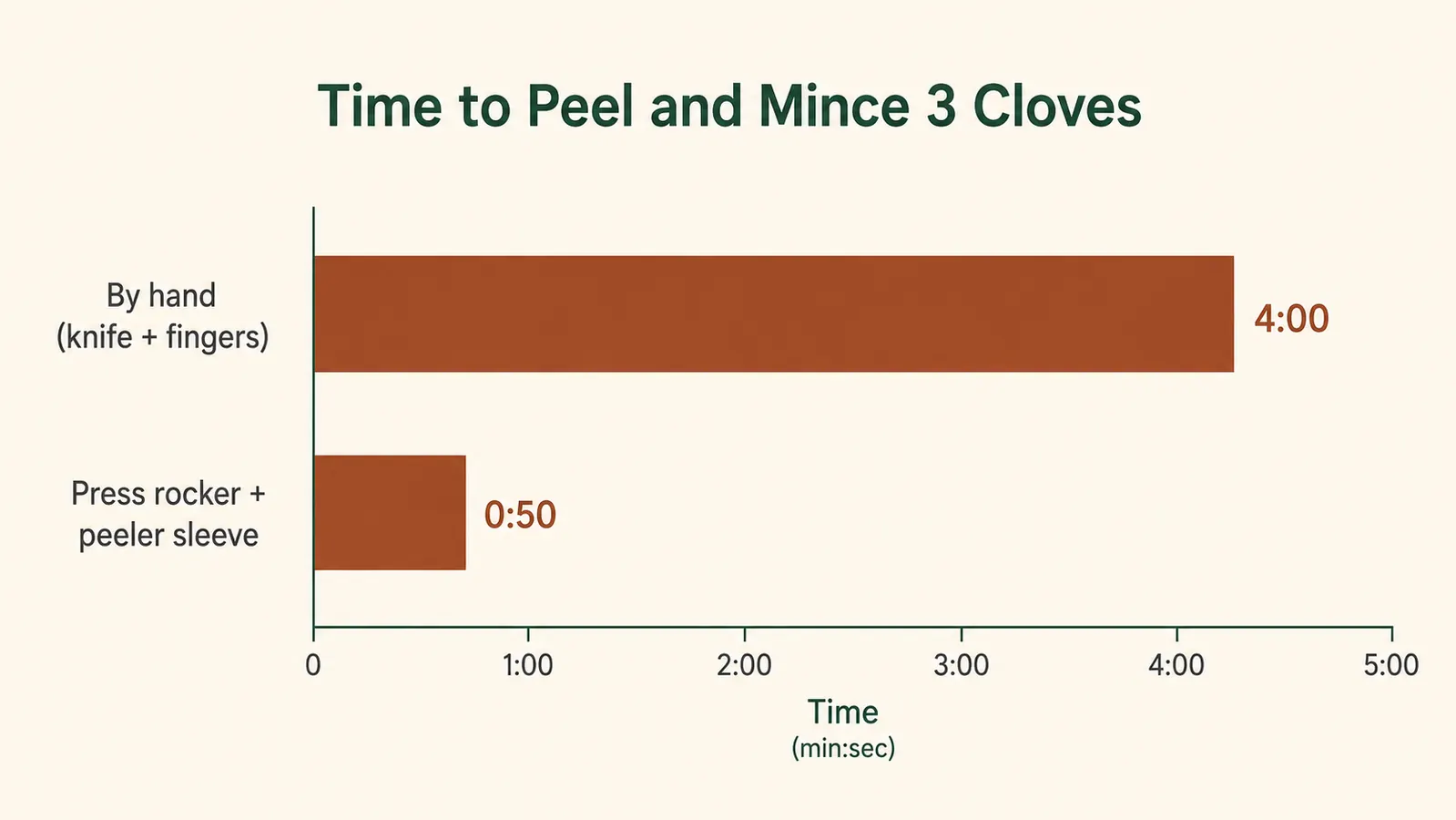
Step 3: Roll the clove through the peeler sleeve
Drop the cracked clove into the rubber peeler sleeve that comes with the Vantic press, cup your hand over it, and roll it against the counter a few times the way you'd roll a rolling pin over dough. The ridged rubber grips the loosened skin and strips it off the clove in three or four rolls. Tip the sleeve over the trash or compost and the skin falls right out, leaving a clean peeled clove behind.
I timed myself doing this for a batch of six cloves recently, cracking and rolling each one, and it took under a minute start to finish. Peeling the same six cloves with just my fingers used to run closer to four minutes, and my fingertips would smell like garlic for the rest of the evening no matter how much I washed them.
You can roll two or three cracked cloves in the sleeve at once once you get the motion down, which speeds things up further for a big batch, but I'd stick to one at a time until it's second nature. Doubling up too early usually means one clove peels clean and the other barely moves, and you end up fishing it back out to finish by hand anyway.
Step 4: Trim the root end only if it resists
Most peeled cloves are ready to go straight into the press at this point. Every so often a clove has a tough little nub at the root end that didn't come off with the skin. If that happens, a quick slice with a paring knife takes care of it in a second. I'd guess this comes up on maybe one clove out of every eight or ten, not often enough to plan around, just something to expect occasionally.
Don't bother trimming every clove as a habit. It's an extra motion that most cloves don't need, and doing it out of habit is exactly the kind of small step that adds unnecessary time back into a process you just sped up. The root nub is small enough that the press handles it fine most of the time anyway, it just takes slightly more squeeze to push through.
Step 5: Load the press and mince right into the pan
Drop the peeled clove into the hopper of the press, close the handles, and squeeze once. A rocker-style press pushes the clove through a perforated plate in a single motion, so you get minced garlic without a cutting board, a knife, or a second dish to wash. I mince straight over the pan most nights, so the garlic goes right into hot oil with nothing else to clean before dinner is moving.
One thing I'd add here, the garlic that comes out of a press is finer and more paste-like than what you'd get from hand-mincing with a knife, which means it cooks faster and burns faster too. I've scorched garlic in hot oil more than once by treating press-minced garlic like the coarser hand-chopped kind and leaving it in the pan a beat too long. Lower the heat slightly or add it a little later in the cooking sequence than you're used to.
If you're comparing this to hand-mincing with a knife, the full walkthrough in our garlic press versus mincing by hand comparison lays out exactly where the time savings come from on a real weeknight, not a lab test. For how the press holds up after months of near-daily use, including how the peeler sleeve wears over time, I wrote a longer year-long review after regular weeknight use.
The fastest step in peeling garlic is the one you skip entirely, which is why loosening the skin before you touch it matters more than any tool you buy.
What Else Helps
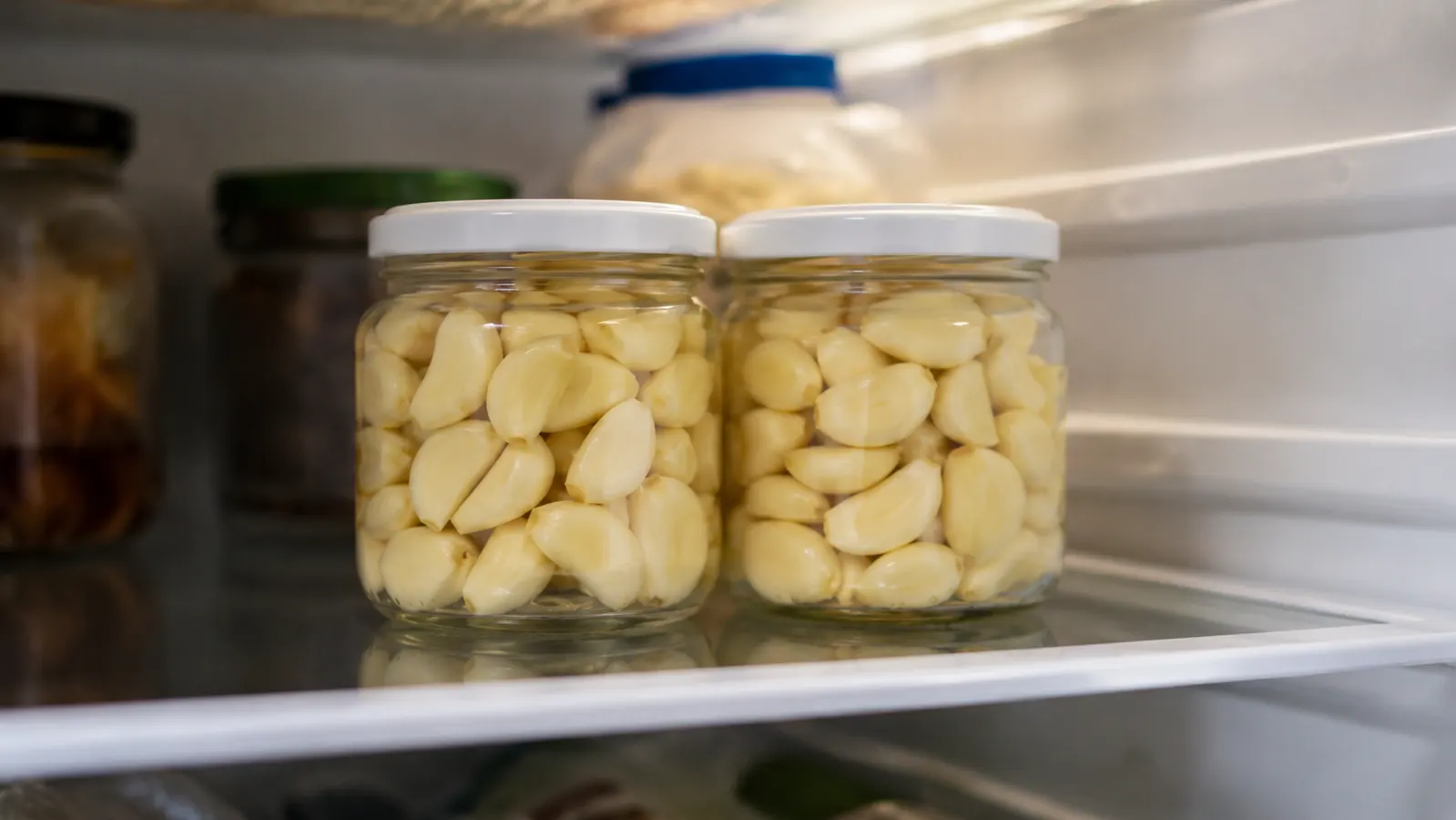
A few habits stack on top of this method if you cook with garlic often enough to justify them. I peel a whole head at once on Sunday, even if I'm only using a few cloves that day, and store the rest peeled in a small glass jar in the fridge. Peeled cloves keep well for about a week that way, and it means the actual peeling step disappears entirely on a Tuesday or Wednesday when I'm short on time. I don't store minced garlic ahead, only peeled whole cloves, since pre-minced garlic loses flavor and texture faster sitting in the fridge, and there's a real food safety reason to be careful with garlic held in oil at room temperature, so I keep anything peeled or minced refrigerated rather than left out on the counter.
Rinsing the press immediately after use matters more than it sounds like it should. Garlic paste that sits in the holes for even twenty minutes starts to dry and stick, and at that point you're reaching for a toothpick to dig it out instead of a quick rinse under warm water. I keep mine right next to the sink for that reason, not in a drawer, so cleaning it takes ten seconds instead of becoming a small chore I put off. The scraper that comes with this particular Vantic press is honestly more useful for cleanup than it looks, it fits right into the perforated plate and clears out anything the water alone leaves behind.
If you cook with a lot of garlic in a single sitting, roasting or braising for a crowd for instance, the palm-smash-and-roll method in steps one through three scales fine for a dozen cloves or more, it just takes longer in total. For that volume I still crack and peel in batches of five or six rather than trying to do the whole pile at once, it keeps the rhythm consistent and I don't lose track of which cloves are done. For roasting whole cloves specifically, you can actually skip peeling altogether and roast the head intact, but for anything going into a press or getting minced, peeled first is the only way that works.
Store-bought pre-peeled garlic from the produce section is worth mentioning too, since it's the obvious shortcut some people already use. It saves the peeling step entirely, but I've found it dries out faster once opened and the flavor is noticeably flatter than a clove peeled the same day you cook it. For me it's a fine backup for a week I know is going to be slammed, not something I'd rely on regularly once the peeling itself stopped being the bottleneck. I still keep a jar in the fridge as backup for the weeks I know I won't have time to peel anything fresh, but it's never replaced the press as the everyday method.
The peeling is the part worth fixing first
If garlic prep is the step that makes you skip recipes, a rocker press with a built-in peeler sleeve solves the slow part, not just the mincing. Check today's price and see if it's in stock.
Amazon Check Today's Price on Amazon →