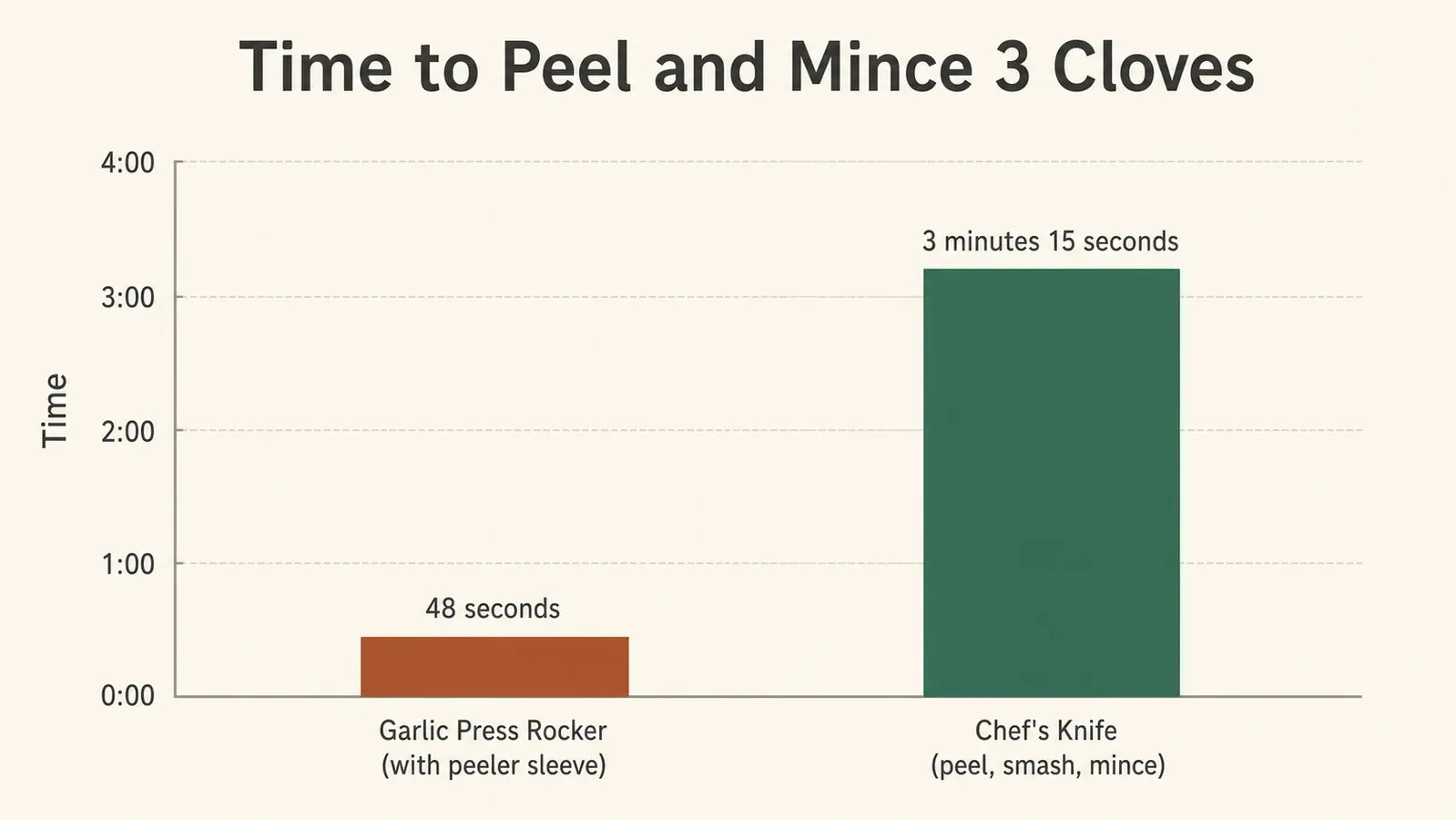
Short answer: the Vantic Garlic Press Rocker is faster, and it isn't close. On a normal Tuesday night, peeling and mincing three cloves by hand with a chef's knife takes me a little over three minutes once you count the peeling, the smashing to loosen the skin, and the actual mincing with a rock-chop motion. The same three cloves through the press, using the rubber peeler sleeve that comes with it, takes under a minute. That's the honest math. But time isn't the only thing that matters in a kitchen, and mincing by hand still wins on a few fronts the press can't touch, which is why I still keep both in my drawer instead of retiring the knife entirely.
I've cooked dinner most nights for years, and garlic goes into more of those meals than I'd guess if you asked me cold. I ran this comparison the way I actually cook, not as a lab test. Same cutting board, same knife I've had for a decade, same Vantic press I've used three to four nights a week for over a year, same kitchen, same tired-after-work energy level on a Tuesday. No stopwatch theatrics, just a kitchen timer on my phone running while I did what I'd normally do to get dinner on the table.
| What Matters | Vantic Garlic Press Rocker | Mincing With a Chef's Knife |
|---|---|---|
| Time for 3 cloves | About 48 seconds start to finish, including peeling with the rubber sleeve | About 3 minutes 15 seconds, including peeling, smashing, and rock-chop mincing |
| Texture produced | Uniform, fine mince every time, almost a paste on the first press | Ranges from rough chop to fine mince depending on how much time and patience I have |
| Hands-on effort | One rocking press per clove, minimal grip strength needed | Full knife control the entire time, more demanding on hand and wrist strength |
| Smell on hands | Minimal, garlic mostly stays in the press chamber and prep bowl | Noticeable, garlic oil coats fingers during peeling and mincing |
| Cleanup | Rinse and scrape the press holes, about 15 seconds with the included scraper | Wipe the board and knife, no clogged holes to deal with, roughly 10 seconds |
| Best for large batches | Slower per clove past six or seven, since it's a one-clove-at-a-time chamber | Scales better for a whole head at once, one continuous mincing motion |
| Learning curve | None, works the same on your first use as your fiftieth | Speed improves with knife skill, a beginner is much slower than an experienced cook |
| Upfront cost | A dedicated single-purpose tool you have to buy and store | Zero extra cost if you already own a chef's knife and cutting board |
How I Timed Both Methods
I picked a weeknight when I was making a simple garlic butter pasta, the kind of dinner where garlic is the whole flavor base and there's no getting around mincing at least three cloves. I ran the knife method first, on a Tuesday, timing from the moment I picked up an unpeeled clove to the moment a pile of minced garlic hit the pan. Then I ran the exact same recipe two nights later with the press, same three cloves from the same bag of garlic, same starting point, same phone timer. I wanted the comparison to reflect a real dinner, not a controlled kitchen lab where every variable is perfect and nobody's checking the oven timer at the same time.
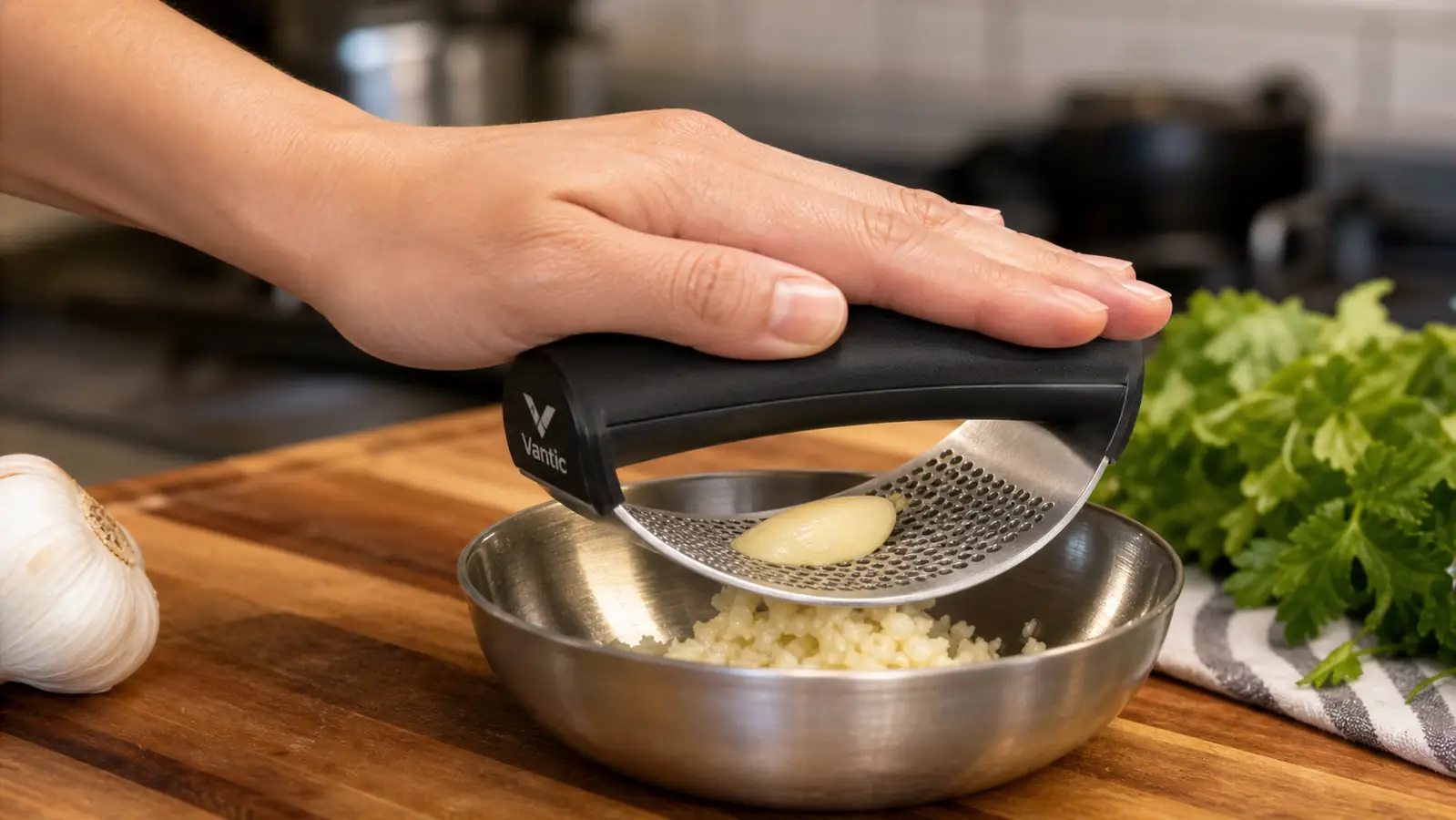
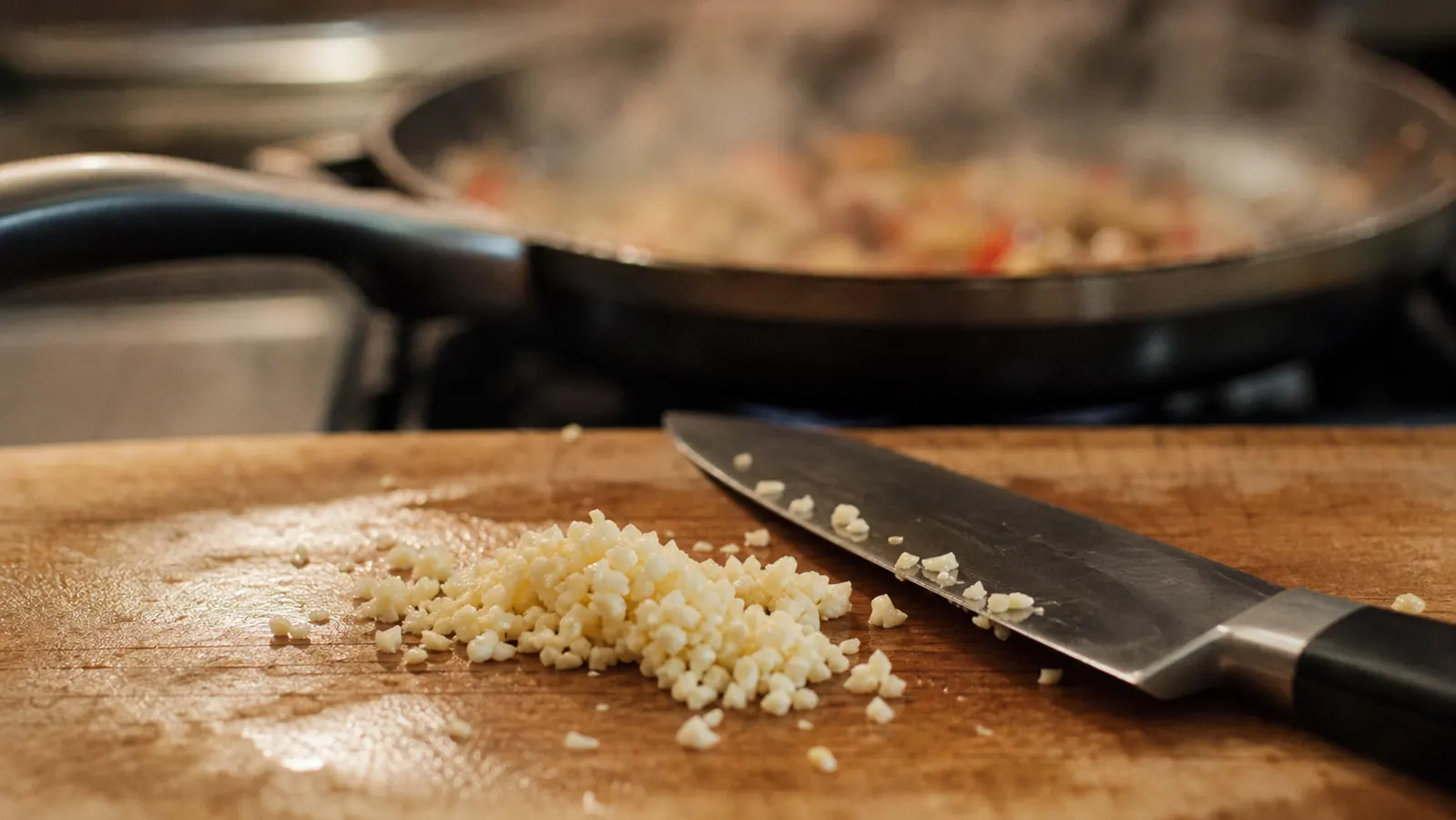
The knife method breaks into three real steps that most stopwatch comparisons skip over: peeling the papery skin off, which usually means a smash with the flat of the blade to loosen it first, then the actual mincing, which for me is a rock-chop motion back and forth until the pile is fine enough. Each of those steps adds up, and peeling turned out to be the slowest part, not the mincing itself. The press collapses those into essentially one motion, roll the clove in the peeler sleeve, drop it in the chamber, rock the handle down. There's no separate peeling step to slow things down.
Where the Garlic Press Rocker Wins
Speed is the obvious win, but it's the peeling step specifically where the press pulls ahead, more than the actual mincing motion does. Peeling a clove with a knife means smashing it flat first to loosen the skin, then picking papery bits off with your fingernails, which is fiddly and slows down fast when your hands are also wet or greasy from the rest of dinner prep. The rubber peeler sleeve that comes with the Vantic turns that into a few seconds of rolling the clove under your palm on the counter. Once I stopped fighting the skin, the rest of the process barely took any time at all.
It's also more consistent. Every clove that goes through the press comes out roughly the same fineness, which matters more than I expected for something like a pan sauce where you want the garlic to melt into the butter rather than leave uneven chunks that burn before the rest catches up. My knife mince varies depending on how rushed I am, some nights it's a fine mince, other nights, especially late in the week when I'm tired, it's closer to a rough chop that I tell myself is fine but really isn't.
The other real advantage is hand strength. My husband has some grip weakness in his right hand from an old wrist injury, and mincing garlic with a knife is genuinely uncomfortable for him after a few cloves. The press works with a rocking motion using body weight and a lever instead of a tight grip, and he can use it without any of the strain a repeated chopping motion causes. If hand fatigue, arthritis, or a wrist injury is part of the picture in your kitchen, that's not a minor convenience, it's the difference between garlic being on the menu or getting quietly skipped.
Where Mincing by Hand Wins
The knife pulls ahead the moment you're cooking for a crowd. If a recipe calls for a full head of garlic, which happens on holidays or when I'm making a big batch of roasted garlic hummus, the press's one-clove-at-a-time chamber turns into a bottleneck. Reloading it clove by clove ten or twelve times in a row is slower than just working through the whole head with a knife in one continuous motion once you've got a rhythm going. For small everyday amounts the press wins easily. For genuinely large batches, the math flips.
The knife also wins on texture control, which sounds like a small thing until you actually need it. Some recipes want thin slices for a stir-fry, or roughly smashed cloves for infusing oil, or a rough chop for a chunky salsa where you don't want the garlic disappearing into paste. The press only really does one thing, a fine, near-uniform mince. A knife handles the entire range from paper-thin slices to a rough smash, and that flexibility is something no single-purpose gadget replaces. I still reach for the knife any time a recipe specifies anything other than minced garlic.
There's also the simple fact that a knife needs nothing extra. No gadget to store, no chamber to scrape out, no extra piece sitting in a kitchen drawer taking up space next to the can opener and the measuring spoons. If you already own a decent chef's knife, which most kitchens do, mincing by hand costs you nothing beyond a few more minutes at the cutting board. For someone who cooks with garlic only occasionally, that tradeoff, a few extra minutes a week in exchange for owning one less single-purpose tool, is a genuinely reasonable one, not a compromise.
Tired of the peeling step eating your prep time?
The rubber peeler sleeve alone is what closes most of the time gap between a knife and this press. See today's price and current availability on Amazon.
Amazon Check Today's Price on Amazon →The knife isn't slower because mincing takes longer. It's slower because peeling does, and that's the exact step the press's rubber sleeve was built to shortcut.
The Time Difference, Clove by Clove
Broken down clove by clove, the gap holds up consistently rather than being a one-time fluke from a good or bad night. Averaged across a few repeat runs, one clove through the press, peeled and minced, lands around 15 to 16 seconds. One clove by hand, peeled with a smash and mincing with a rock-chop, lands closer to 60 to 65 seconds. That's roughly four times faster per clove, and it scales in a predictable way, three cloves takes about three times as long as one, whether you're using the press or the knife, since neither method gets meaningfully faster or slower with small increases in volume.
Where that gap actually matters is the accumulation across a week, not any single dinner. If garlic shows up in dinner three or four nights a week the way it does in my house, the time saved with the press adds up to something closer to ten or fifteen minutes over the course of a week, which isn't dramatic on any one night but does add up if you're the kind of cook trying to get dinner on the table in under thirty minutes most nights. On a night where every minute before the pan hits the heat matters, that's a real difference, not a rounding error.
Cleanup: The Part Nobody Talks About
Cleanup time is close enough between the two that it doesn't meaningfully change the overall math, but the type of cleanup is different, and which one bothers you is a personal preference more than a clear win. The knife and cutting board wipe down fast, no crevices, no small holes to worry about, just a rinse and a wipe. The press needs its holes cleared with the included scraper or dried garlic sets in like cement, which takes about fifteen seconds if you do it right after use, longer if you let it sit.
The other cleanup difference is on your hands, not the tools. Mincing by hand with a knife means garlic oil ends up on your fingers, under your nails sometimes, and that smell lingers through the rest of dinner prep and doesn't fully wash off with a quick rinse. The press keeps most of the garlic contained to the chamber and the prep bowl, so my hands come out of the process smelling noticeably less like garlic. It's a small thing, but if you're someone who's bothered by lingering smells on your hands through the rest of the evening, it's worth factoring in alongside the raw time savings.
Who Should Buy Which
Buy the garlic press if you cook with garlic several nights a week, you're usually working with one to four cloves at a time, and shaving a couple of minutes off prep on a rushed weeknight actually matters to your routine. It's also the better call if hand strength, arthritis, or a wrist injury makes repeated chopping uncomfortable, since the rocking motion takes far less grip than a knife does. I already covered the full year of using this specific Vantic in my long-term review, and covered the two real annoyances that don't show up in the marketing photos in my honest review, if you want the fuller picture before buying.
Stick with the knife if you regularly cook for a crowd and go through a full head of garlic at once, if a recipe calls for anything other than a fine mince, like slices or a rough smash, or if you just don't want another single-purpose gadget taking up drawer space for a task you don't do that often. Plenty of good cooks never own a garlic press and don't need one. For my own kitchen, where garlic shows up in most weeknight dinners and the peeling step was the part I dreaded most, the press earned its place. Your answer depends on how often garlic actually shows up on your cutting board.
Ready to cut your garlic prep down to under a minute?
For everyday cooking, the press beats a knife on speed by a wide margin, mostly by shortcutting the peeling step. Check today's price on Amazon before your next grocery run.
Amazon Check Today's Price on Amazon →