
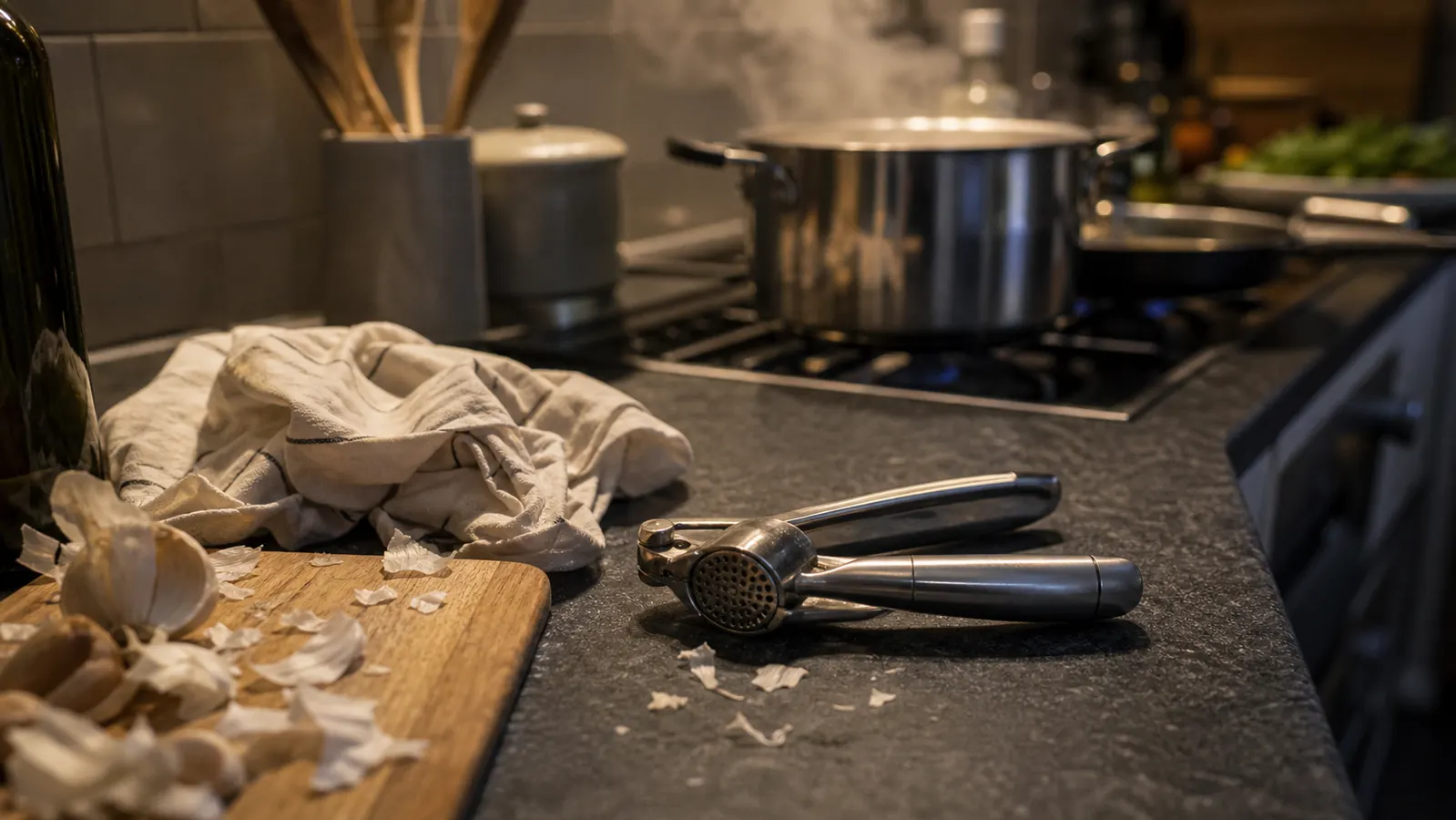
Before I bought this Vantic garlic press, I did what I always do with a budget kitchen gadget: I read every one-star review I could find first. There were complaints about garlic squeezing out the sides instead of through the holes, about a rubber sleeve that supposedly held onto smell for days, about a chamber too small for anything but the puniest clove. I bought it anyway, because the four- and five-star reviews outnumbered the one-star ones by a wide margin, and because I was tired of my knuckles smelling like garlic every time I minced by hand with a knife.
This is the honest version of that decision. I already wrote up a full long-term review after a year of near-nightly use, and I stand behind it, this Vantic press is the best one I've owned. But that piece skipped over the specific complaints I went in worried about. This one doesn't. Here's which ones turned out to be real, which ones I never ran into, and where the press genuinely falls short.
The Quick Verdict
A genuinely useful press with two real annoyances nobody mentions in the listing photos: garlic that squeezes out the sides on jumbo cloves, and a peeler sleeve that picks up odor faster than you'd expect.
Amazon Check Today's Price →Wondering if the one-star reviews are onto something?
I checked the most common complaints about this press myself over months of regular use. Here's the one I ended up keeping anyway, and today's price on Amazon.
Amazon Check Today's Price on Amazon →How I Actually Used It
I'm not a food blogger running controlled tests in a test kitchen. I'm someone who cooks dinner most nights because otherwise nobody eats, and garlic ends up in a lot of what I make. Taco filling on Tuesdays, a pot of chili that simmers most of a Sunday, roasted vegetables that go in the oven while I'm still unloading groceries, garlic knots when I'm feeling ambitious and have extra dough. None of that is glamorous cooking, and none of it gives a gadget an easy pass. If something's annoying to use on a rushed Tuesday, I notice.
I used it the way most people actually use a kitchen tool, which is to say inconsistently. Some nights I rinsed it immediately. Other nights it sat in the sink until the next morning with dried garlic caked in the holes. I wanted to know if it would hold up to real habits, not just the best-case scenario the product photos show, where every clove is uniform and every use ends with an immediate rinse under running water.
Before this press, I'd gone through a stretch where I skipped garlic in recipes that called for it, not because I didn't want it, but because peeling and mincing by hand felt like one more thing standing between me and dinner being done. That's the kind of quiet compromise a bad kitchen tool talks you into without you noticing, and it's part of why I was willing to try something new even after reading complaints about it.
That's the frame for everything below. I'm not grading this press against a lab standard. I'm grading it against a real kitchen drawer, a real dishwasher schedule, and the specific complaints I read before I ever clicked buy.
The Complaint About Garlic Squeezing Out the Sides
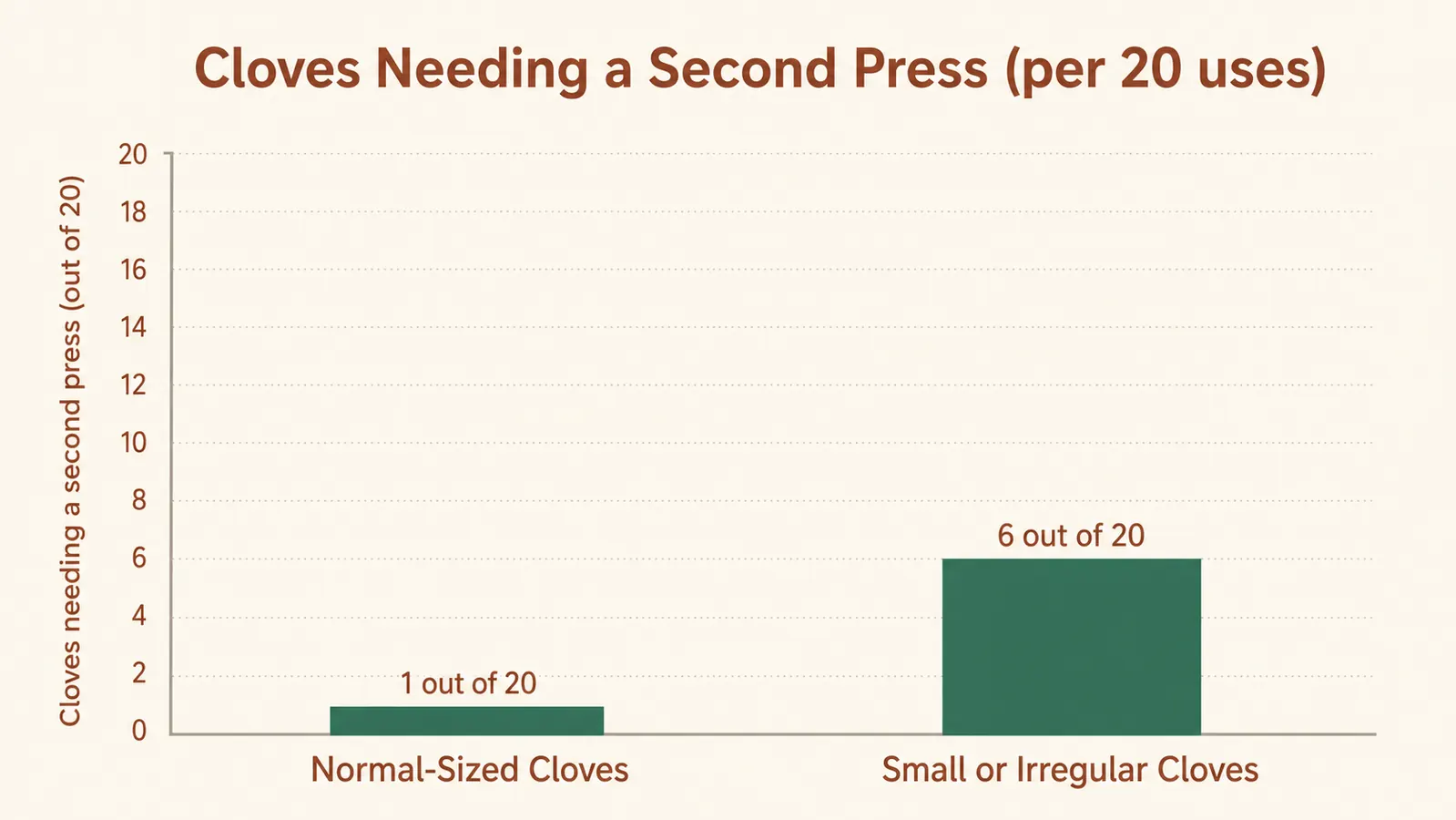
This one turned out to be true, at least sometimes. If you set a clove dead center in the trough, the lid rocks down and forces it cleanly through the holes with no mess. But if the clove is on the larger side, or if it's an odd, lopsided shape the way garlic sometimes is toward the middle of a head, pulp can squeeze out past the edge of the trough instead of going through the holes at the bottom. When that happens you end up with a smear across the outside of the press and on your hand instead of a clean pile of minced garlic in the bowl.
It doesn't happen constantly, but it happens more than the five-star reviews let on. In my experience it's mostly a jumbo-clove problem. Standard grocery store garlic gives me clean presses almost every time. The oversized cloves you sometimes get toward the outer layers of a head are the ones that squeeze out the side. The fix is simple once you know it, cut an oversized clove roughly in half before pressing, but nobody tells you that up front, and I went through a few messy presses before I figured it out myself.
The Peeler Sleeve Holds Onto Smell Longer Than You'd Think
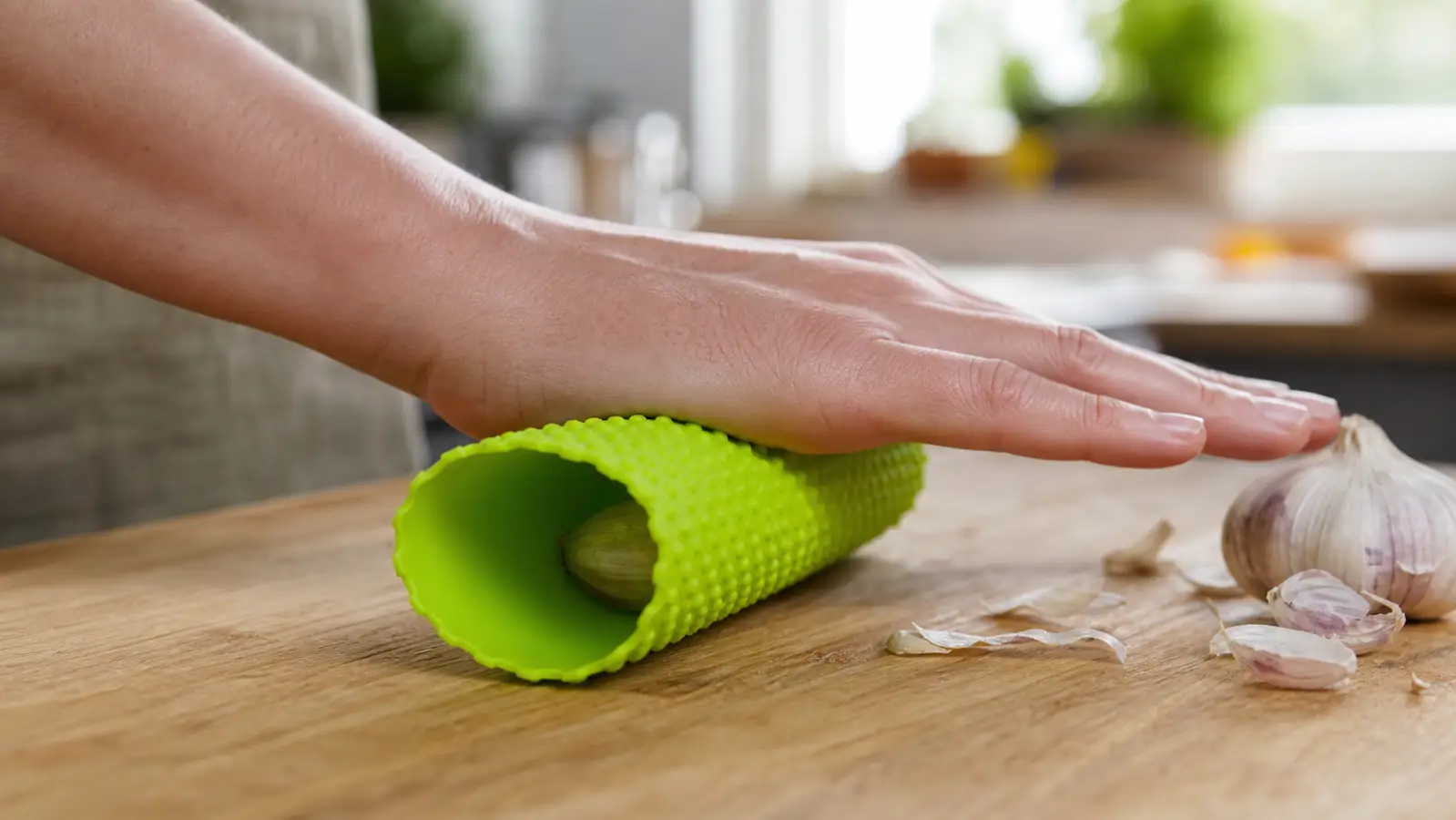
The rubber peeler sleeve that comes with this press is genuinely one of my favorite parts of the whole kit, and I said so in my long-term review. What I didn't get into there is that it holds onto garlic smell longer than the stainless press itself does. A quick rinse under hot water isn't enough. I've hand washed it with dish soap and still caught a faint garlic smell on it the next day, which isn't something I ran into with the stainless trough or the handle.
It's not a dealbreaker, and I haven't found it transfers to food or hands in any way that matters. But if you're someone who's sensitive to lingering smells in a kitchen drawer, or you store your utensils in a shared space, it's worth knowing before you buy. A short soak in warm water with a little baking soda cuts the smell down, and running it through the dishwasher on the top rack helps more than hand washing does. I do that about once a week now, and it's stopped being an issue, but it took me a few weeks to land on that routine.
Is It Actually Worth More Than the Cheap Presses
I've owned the three-dollar plastic garlic presses from the grocery store checkout aisle before, the kind that come free with a spice rack or get thrown in as a bonus item. They work exactly once as well as this one does, on day one. Where the Vantic earns its place is in month three, month six, month twelve, when the plastic ones have already cracked at the hinge or started leaking garlic paste through a stress fracture nobody warned you about.
That said, I want to be straight about what you're paying for. This isn't a premium, heirloom-quality tool that will outlive you. It's a solid, well-made stainless press that costs more than a bargain-bin plastic one and less than the boutique garlic presses some cookware brands sell for considerably more. If you're deciding between this and one of those pricier options, the honest answer is that the extra cost on the high end mostly buys you a nicer-looking handle, not meaningfully better performance. Check today's price before you buy, since it moves around, but this sits comfortably in the middle of the field, not the bottom and not the top.
The Chamber Is Smaller Than the Photos Make It Look
Product photos have a way of making everything look a little more generous than it is in your hand, and this press is no exception. In the listing images, the chamber looks like it could handle a hefty clove without any fuss. In my kitchen, a genuinely large clove, the kind you get from an elephant garlic bulb or the outer rows of a big head, is a tight fit. It'll go in, but you'll feel resistance, and it's more likely to be the squeezing-out-the-side situation I described above.
For standard supermarket garlic, this is a non-issue and I'd call the complaint overblown in most of the reviews I read. But if you tend to buy elephant garlic for its milder flavor, or you grow your own and end up with larger cloves than the grocery store sells, know that you'll be cutting those in half before they go in. It's a minor extra step, not a dealbreaker, but it's exactly the kind of detail that doesn't show up until you've actually used the thing a few times.
What the Amazon Q&A Doesn't Tell You About the Hinge
A few questions in the Amazon Q&A section ask about the hinge loosening over time, and the answers from other buyers are mixed, some say it's fine, others don't say much of anything useful. Here's my actual experience. The hinge action is slightly stiffer on day one than it is now, which I think is normal break-in rather than a flaw. It's loosened just enough to feel smooth rather than sluggish, and it hasn't gone further than that into wobbly or loose territory.
What I haven't experienced, despite specifically watching for it because of those Q&A threads, is any side-to-side play at the pin or any grinding feeling when I press down. I'd call the hinge one of the more reliably good parts of this product. If you're worried about it failing early based on scattered online complaints, my experience says that's not the common outcome, though I obviously can't speak to every unit that ships.
The Weight and Feel in Hand
This press is heavier than it looks in photos, and that's mostly a good thing. There's real heft to the stainless body, enough that it doesn't feel flimsy or hollow the way some of the lighter presses I've tried do. But it also means it's not the kind of tool you'd want to hand to someone with limited grip strength expecting it to feel light. It takes a firm, deliberate push rather than a gentle squeeze, and while that push is easier than a squeeze-handle press, it's not effortless.
The handle itself is plain stainless with a few shallow ridges for grip, no rubber coating, no ergonomic curve. It's fine in a dry hand. When my hands are wet from rinsing vegetables or the handle has a little olive oil on it from the cutting board, it gets noticeably more slippery than I'd like. I've never dropped it, but I've had a couple of moments where I had to readjust my grip mid-press, which isn't something I ran into with my old squeeze-style press and its textured plastic handles.

What I'd Buy Instead If I Were Starting Over
Part of an honest review is admitting whether you'd make the same choice again, and I've thought about this one enough to have a real answer. If the chamber-size and smell complaints are dealbreakers for you specifically, the alternative worth considering is a two-handed squeeze-style press with a wider basket, which tends to fit oversized cloves more easily even though it's harder on your hands and clogs faster with garlic fiber, something I lived with for years before switching. It's a real tradeoff, not a clear upgrade, and I wouldn't call it the better option for most people.
But for my own kitchen, standard cloves, weeknight cooking, a press that gets rinsed inconsistently, I'd buy this one again without much hesitation. The two annoyances I've laid out here are real, but they're both the kind of thing you learn to work around in the first couple of weeks, not ongoing frustrations that build up over months. That's the difference between a flawed tool and a bad one, and this lands closer to the first.
What I Liked
- Held up to inconsistent rinsing habits without clogging permanently
- Hinge action smoothed out with use rather than loosening or wobbling
- Peeler sleeve genuinely speeds up the slowest part of using any press
- Clean presses on standard-sized cloves nearly every time
- Reasonable middle-ground price against both bargain plastic presses and boutique versions
Where It Falls Short
- Jumbo or oddly shaped cloves can squeeze pulp out the side instead of through the holes
- Rubber peeler sleeve holds onto garlic smell longer than the stainless parts do
- Chamber is a tight fit for elephant garlic or oversized cloves from a big head
- Requires cutting larger cloves in half first, which the listing photos don't show
- Still needs a real rinse or dishwasher cycle, not a wipe-and-forget tool
The listing photos make peeling and pressing look like one smooth motion. In my kitchen it's two separate steps, and skipping the peeling step is where most of the frustration starts.
Who This Is For
If you cook with standard grocery store garlic most weeks and you're replacing a plastic press that's already cracked or clogged beyond saving, this is a solid, honest upgrade. It's also a good pick if you've been burned by vague marketing photos before and just want a straight answer on what to expect, because once you know to cut oversized cloves in half and give the peeler sleeve an occasional deeper clean, the two real annoyances here mostly disappear. For comparing it directly against mincing by hand, I broke down the actual time difference in garlic press versus mincing by hand.
Who Should Skip It
If you regularly cook with elephant garlic or oversized cloves and don't want the extra step of cutting them down first, or if you're sensitive to any lingering smell on kitchen tools and don't want to add a weekly deep-clean step to your routine, this press will annoy you more than it helps. It's also not the right pick if you want something you can rinse once and forget about for a week, since dried garlic in the holes is genuinely harder to clear the longer it sits.
Now that you know the real tradeoffs, still worth it?
For standard grocery store garlic and normal weeknight cooking, I think it is. Check today's price on Amazon and decide for yourself.
Amazon Check Today's Price on Amazon →