
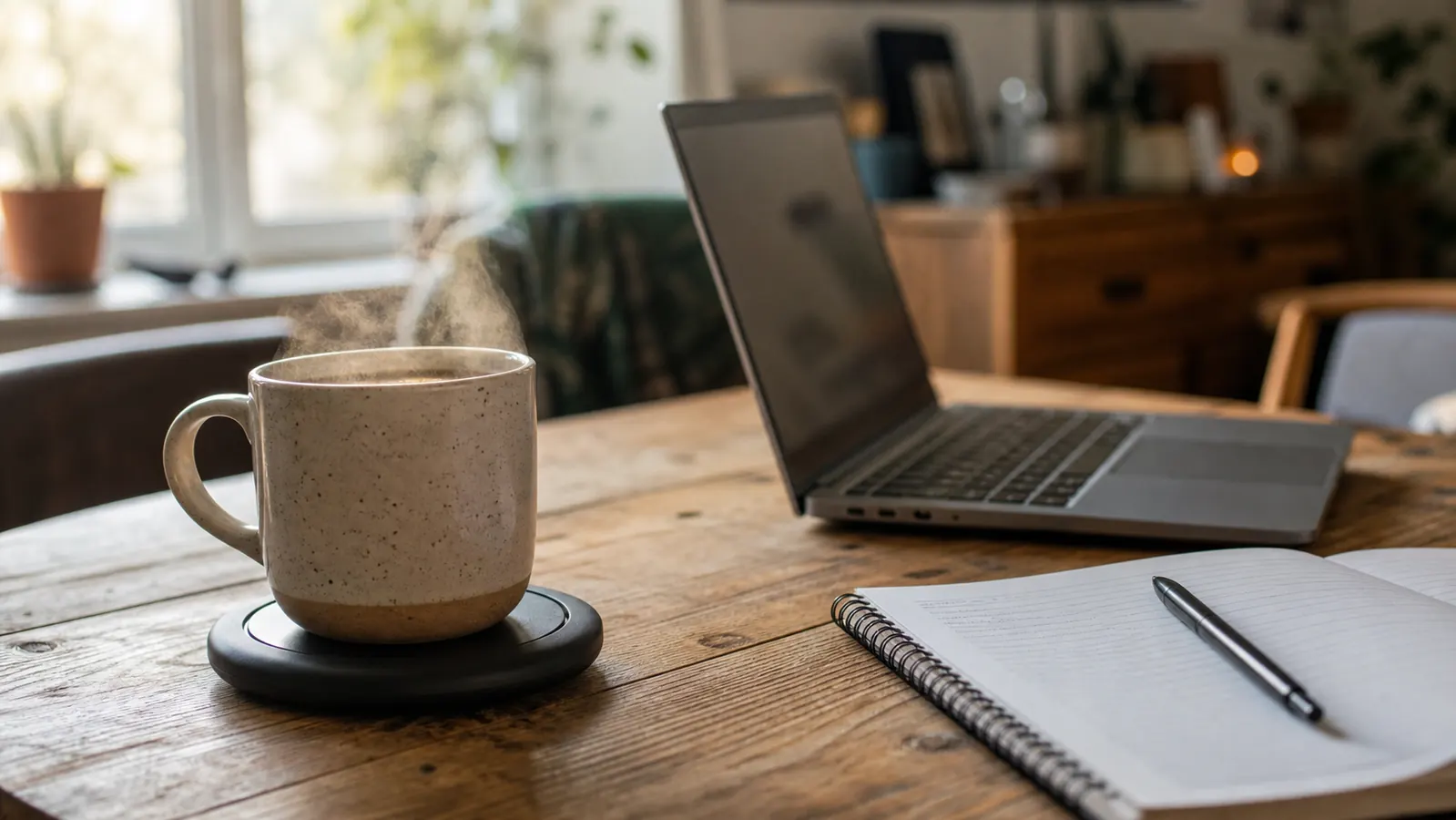
If you've microwaved the same cup of coffee twice before ten in the morning, you already know the actual problem isn't the coffee. It's that nothing on your desk is holding the temperature once you pour it, so the first few sips are the only ones that taste like they're supposed to. The fix people usually reach for first is a better travel mug, and that helps some, but it doesn't solve the version of the problem where you can see how much coffee is left, and it doesn't solve reheating a cup you've forgotten about for forty minutes. A mug warmer solves a narrower problem than a travel mug does, and that narrowness is exactly why it works. It has one job: hold a mug that's already hot at a steady, drinkable temperature for as long as it's sitting there.
This isn't a review of any one warmer, it's a walkthrough of how to actually set one up so it works the first day instead of the third week, using the BESTINNKITS gravity-induction warmer as the reference point since it's the model most of the troubleshooting below applies to directly. If you're deciding whether to buy one at all, the long-term review of this warmer covers six months of daily use in more detail. This piece is just the setup, step by step, so you're not guessing.
Skip the guesswork and start with the warmer that's built for a desk, not a candle.
The BESTINNKITS mug warmer uses a weight sensor instead of a dial, so it turns off on its own when the mug comes off the plate. That single detail is most of what makes it safe to leave running all day.
Amazon Check Today's Price on Amazon →Step 1: Figure Out Why Your Coffee Is Actually Going Cold
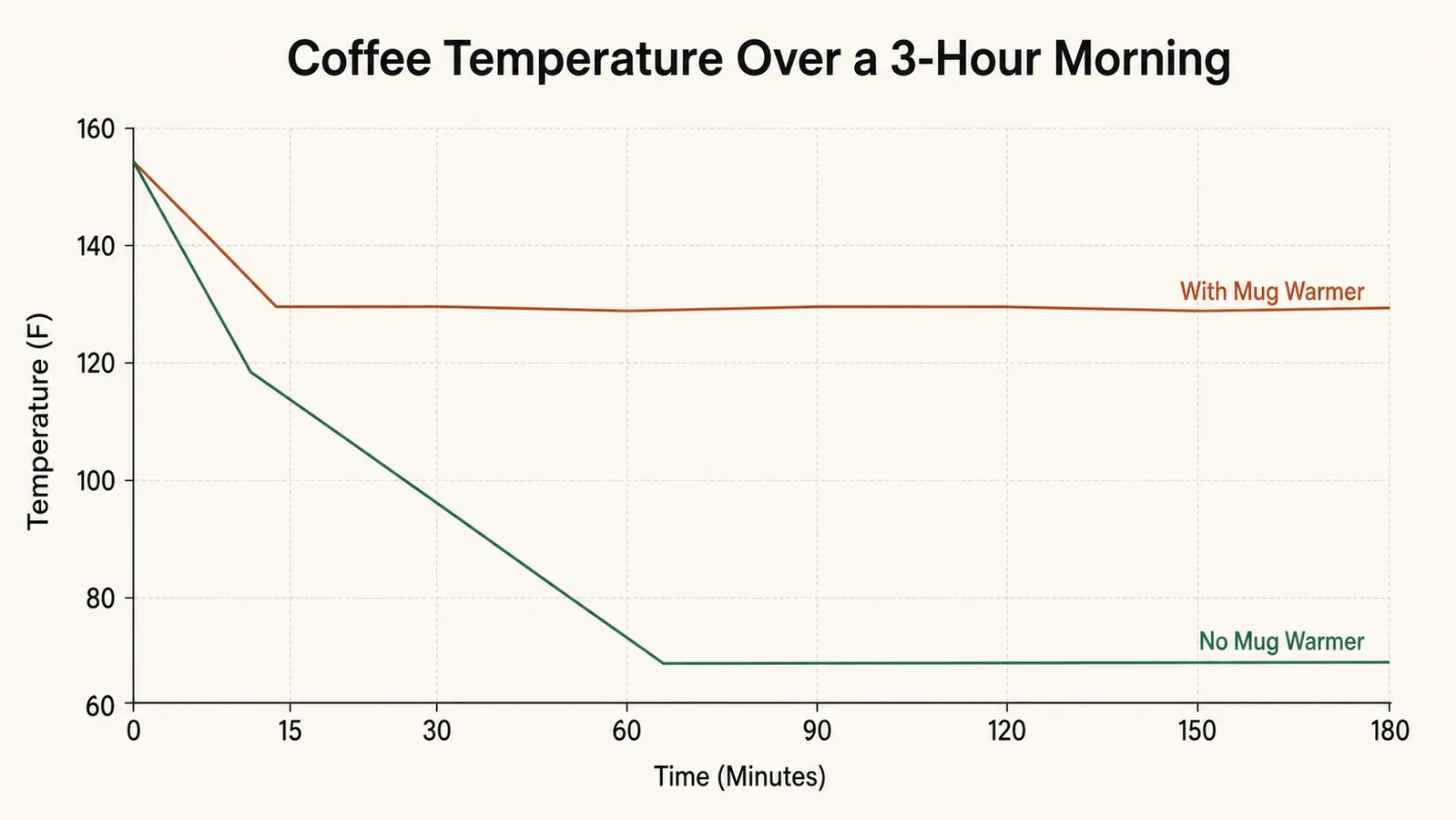
Before buying anything, pay attention for one day to when your coffee actually goes cold. For most desk workers it's not one big gap, it's a string of small ones: a ten-minute call that runs to twenty-five, a Slack thread that eats your attention for half an hour, a trip to grab a document from another room. None of those individually feels like enough time to matter, but coffee sitting uncovered in a ceramic mug drops fast, usually into the range where it starts tasting flat within the first fifteen to twenty minutes.
This step matters because it tells you whether a mug warmer is even the right tool. If your coffee goes cold because you leave your desk for an hour or more at a stretch, no warmer fixes that, since it only maintains temperature, it doesn't restore heat to a cup that's already gone room-temperature. But if the pattern is short interruptions spread across a morning, which is the far more common case, a warmer is built exactly for that gap.
A simple way to test this before you spend anything is to just note the time you pour each cup for a single workday, then note the time you actually finish it. If most cups take longer than thirty minutes to finish and you're leaving the desk in short bursts rather than long ones, that's the exact pattern a warmer is built to cover. If your gaps run closer to an hour or two, the fix is more likely to be brewing smaller amounts more often, which is worth knowing before you add a warmer to a routine that doesn't need one.
Step 2: Pick a Mug That Actually Works With a Warmer
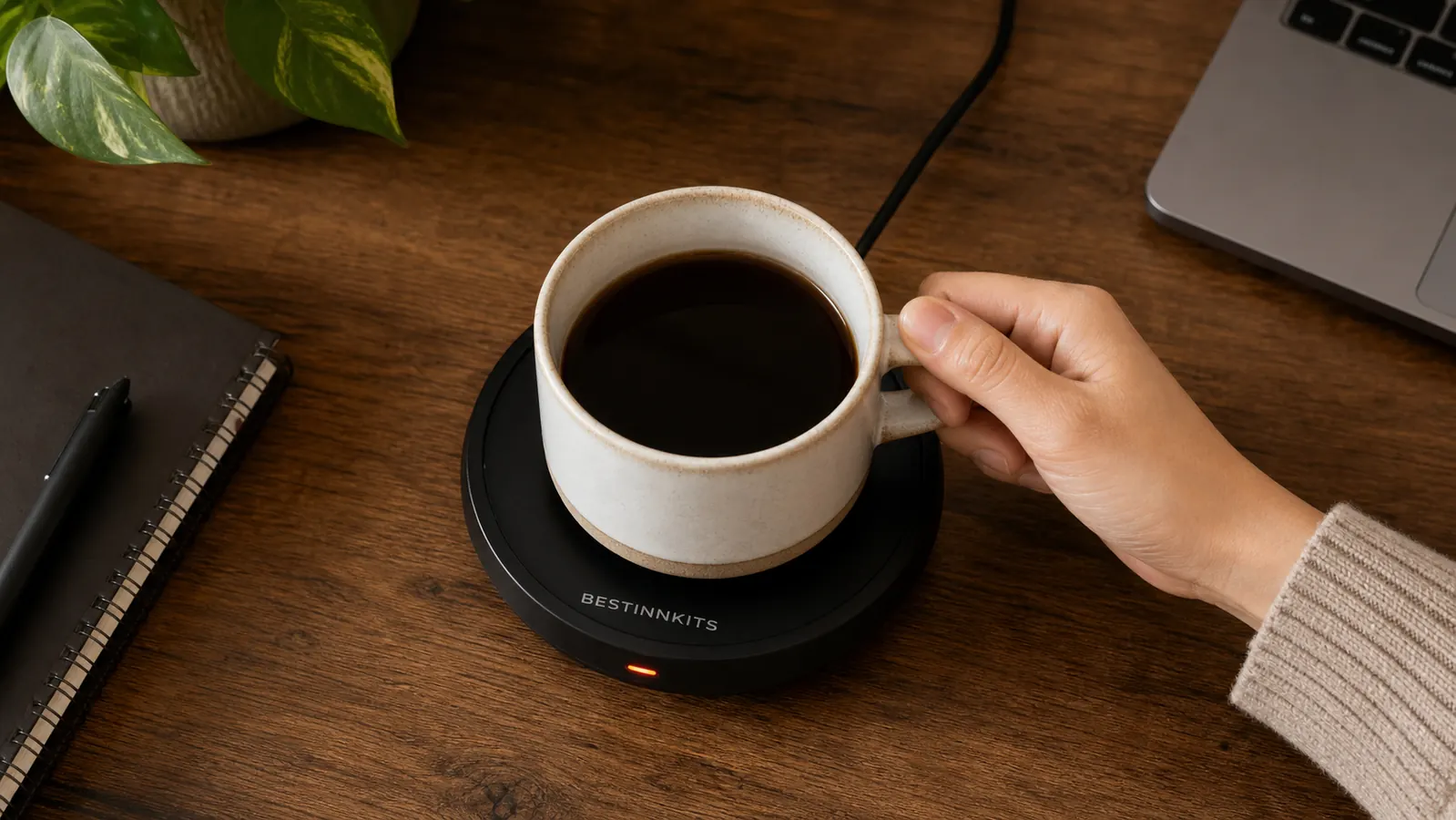
This is the step people skip, and it's the one that causes most of the frustrated one-star reviews on any mug warmer listing. Gravity-induction warmers like this one detect weight through a flat plate, which means the mug needs a wide, flat base making real contact with the surface. A standard ceramic mug, the kind with a proper foot ring on the bottom, works reliably almost every time. A narrow-base travel tumbler, the kind built to tuck into a cup holder, often doesn't make enough contact to trigger the sensor consistently.
If you don't already have a mug that fits the bill, look for one with a base at least three inches across and a flat, not curved, bottom. You don't need anything fancy, in fact a heavier mug actually helps here since more weight registers more reliably on the sensor. Set aside the mug you plan to use before the warmer even arrives, that way step 3 goes smoothly instead of becoming a scavenger hunt through the cabinet.
Step 3: Set Up the Placement Before You Ever Pour Coffee
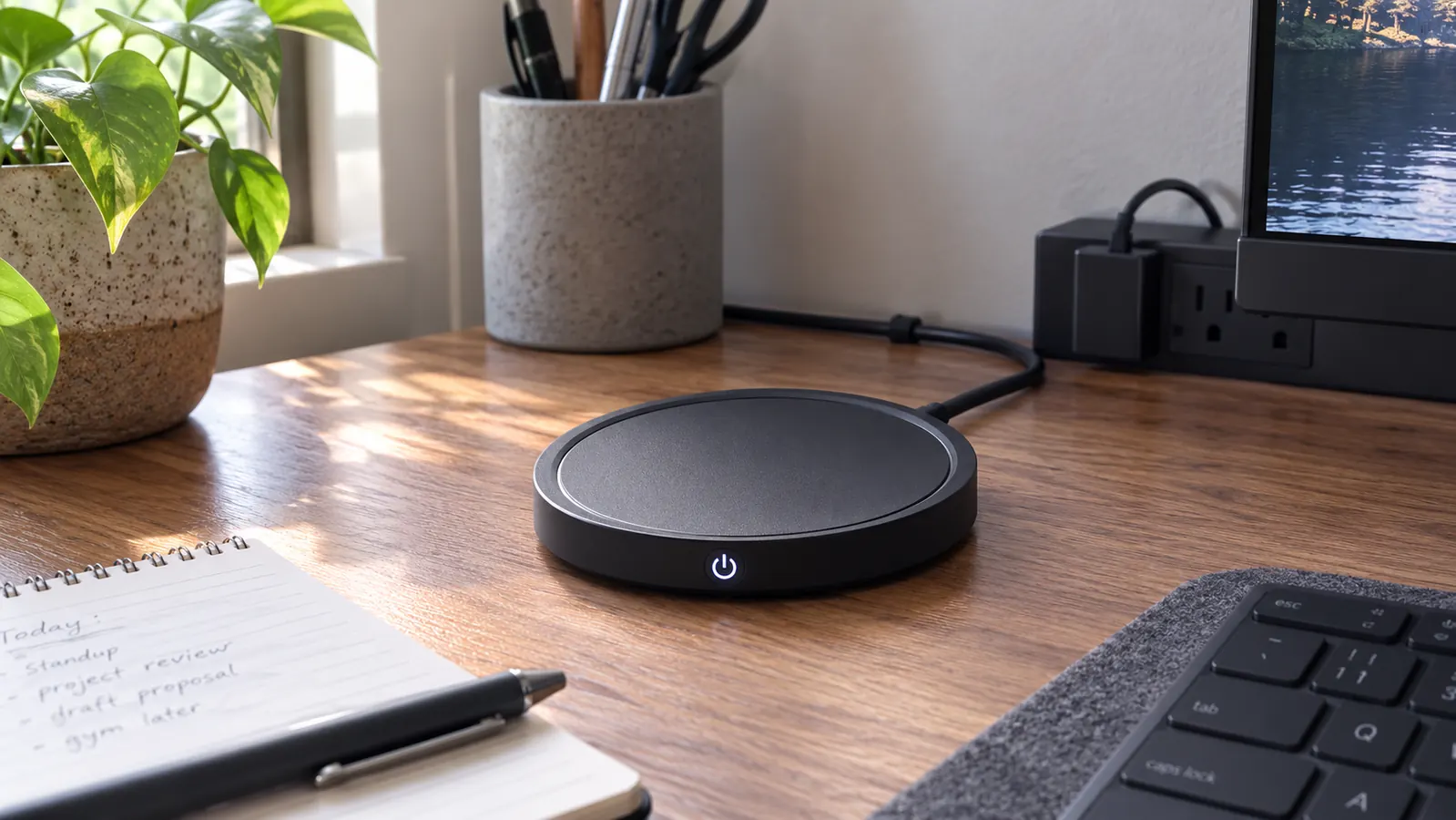
Placement matters more than it sounds like it should. Put the BESTINNKITS somewhere it can stay permanently, not somewhere you'll need to move it to reach the keyboard, because a warmer that gets shuffled to the side of the desk every time you sit down stops getting used within a week. A spot to the left or right of the keyboard, within easy reach without stretching, is what actually gets used daily.
Check the cord length against your outlet before you commit to a spot. Most warmers in this category run a cord in the four-foot range, which reaches most under-desk outlets or a power strip without an extension cord, but it's worth measuring rather than assuming. And keep the plate a few inches clear of your keyboard or mouse pad. It doesn't run hot enough to damage anything nearby, but a mug of coffee that close to your keyboard is its own risk regardless of the warmer.
If your only nearby outlet is on a power strip shared with a monitor or a space heater, plug the warmer in on its own if you can. It doesn't draw much power on its own, but a crowded strip is the more common reason a plate seems to run cool or trip a breaker, and it's an easy thing to rule out before assuming the unit itself is underperforming.
Step 4: Set Realistic Expectations for the Temperature Ceiling
This is the step that prevents the most common disappointment. A warmer like this one holds coffee in roughly the 125 to 131 degree range, which is a genuinely pleasant drinking temperature, close to how coffee tastes about five minutes after you pour it. It is not going to keep coffee at fresh-off-the-burner temperature all day, and it will not reheat a cup that's already dropped to room temperature. If you set a cold mug on the plate expecting it to climb back up to steaming, you'll be disappointed within the first few minutes.
The habit that actually works is pouring the coffee, setting the mug on the warmer immediately, and letting it settle into that steady range before you take the first sip. Pour, place, then start your first task of the morning. That order matters more than it seems like it should, because the BESTINNKITS is maintaining heat, not generating it from scratch.
It's also worth knowing the sensor responds to weight, not heat, which is why an empty mug left on the plate won't turn it on, and why a very light mug can sometimes sit right on the edge of triggering it. Pressing the mug down firmly for a second when you first set it down is usually enough to confirm the indicator light is on before you walk away, rather than finding out twenty minutes later that it never engaged.
Step 5: Build the Daily Habit So It Actually Sticks
The last step is the one that determines whether this becomes a permanent fixture on your desk or a gadget that quietly disappears into a drawer after two weeks. Wipe the plate with a damp cloth whenever a coffee ring builds up, which happens faster than you'd think if a mug overflows slightly during pouring, and do it before it dries rather than after. A dried ring takes real scrubbing, a fresh one takes a single wipe.
Get in the habit of centering the mug rather than setting it down at whatever angle is fastest, especially if your mug is on the lighter end. A mug set down off-center is the single most common reason the sensor fails to trigger, and it's a habit that takes about three days to become automatic. Once it does, you'll stop thinking about the warmer at all, which is really the goal. It should feel like a coaster that happens to keep your coffee warm, not a gadget you have to manage.
Troubleshooting the Two Most Common Problems
The indicator light doesn't turn on. Nine times out of ten this comes down to either the mug or the placement, not a defective unit. Check that the mug's base is flat and at least loosely centered on the plate, then check that the outlet or power strip is actually live by testing it with something else. If both check out and the light still doesn't come on with a full, flat-bottomed mug centered on the plate, that's the point where it's worth reaching out about a replacement rather than assuming you've done something wrong.
The coffee still tastes lukewarm by mid-morning. This almost always traces back to Step 4. If the coffee was already cooling before it hit the plate, or if it's a large pour that's been sitting for over an hour before the first sip, the warmer is maintaining a temperature that's lower than you're expecting simply because it was already lower when it landed on the plate. Pour, place immediately, and drink within the first hour or two rather than letting a single large mug stretch across an entire morning, and this stops being an issue.
What Else Helps
A warmer solves the desk problem, but it's not the only piece worth thinking about if cold coffee is a recurring frustration rather than an occasional one. Brewing a slightly smaller pour and topping off partway through the morning keeps the coffee closer to fresh than one large mug that sits for three hours straight, warmer or not. And if you're someone who leaves the desk for genuinely long stretches, an hour or more at a time, it's worth reading the mug warmer versus thermal mug comparison before you buy anything, since a sealed thermal mug solves a different version of this problem and the two aren't really interchangeable.
It's also worth matching the tool to the room, not just the routine. A warmer works best somewhere you're sitting still for long stretches, a desk, a sewing table, a spot next to a laptop for video calls. If you're moving between rooms through the morning, cooking breakfast, getting kids out the door, then back at a desk an hour later, a thermal mug that travels with you will end up doing more of the actual work, and the warmer becomes the thing that holds the last cup of the morning once you finally sit down.
The warmer doesn't fix a bad habit, it removes the reason you needed the habit in the first place.
Set it up once and you'll stop thinking about cold coffee entirely.
The BESTINNKITS mug warmer is a small, inexpensive fix for a habit most desk workers have been quietly living with for years. Follow the steps above and it works from day one.
Amazon See Current Price on Amazon →